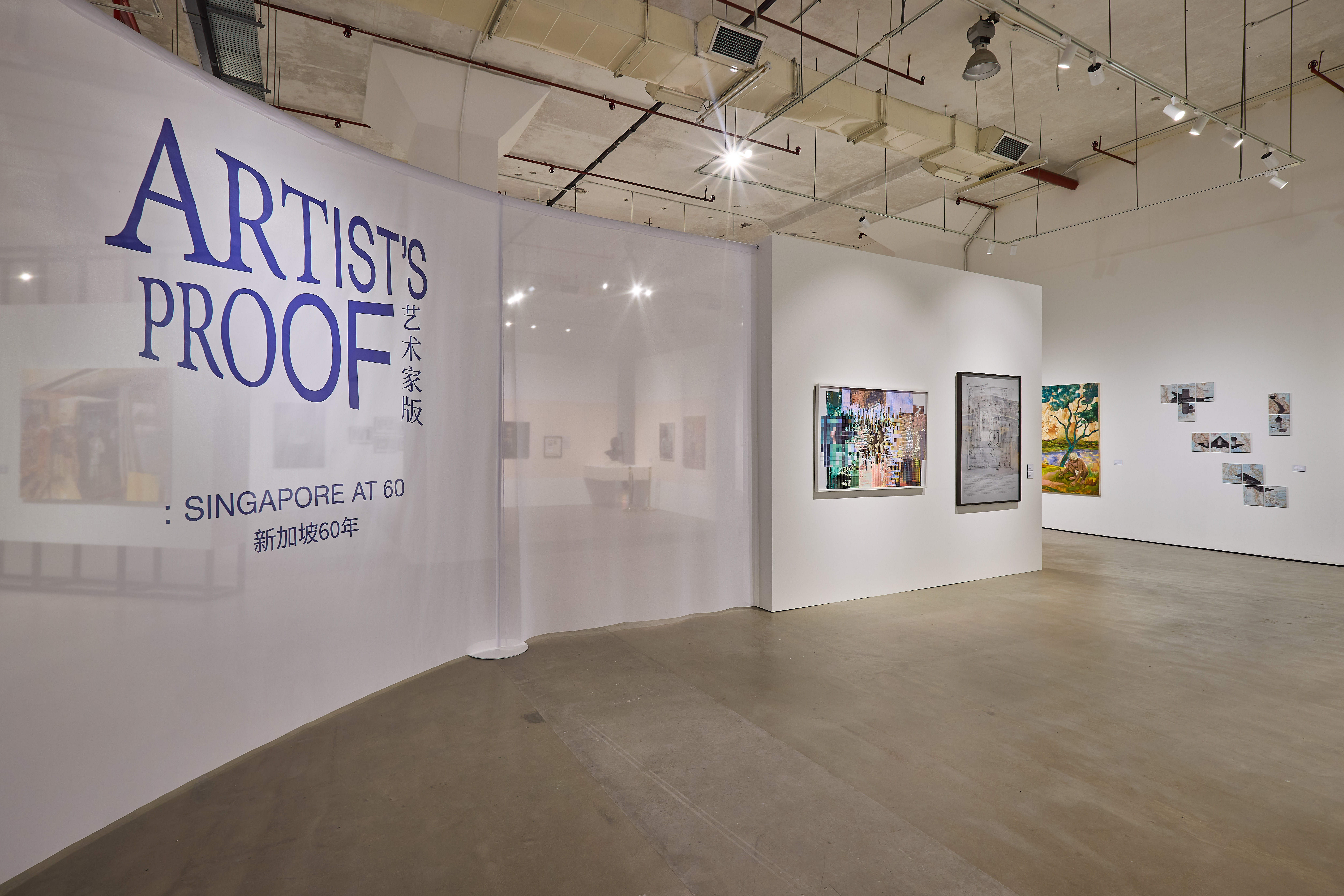

As Artist’s Proof: Singapore at 60 invites us to reflect on Singapore’s evolving story through art, Artitute had the chance for an in-depth conversation with two remarkable yet humble figures behind this landmark exhibition: Mr Chong Huai Seng, a distinguished collector, and Mr Kwok Kian Chow, an influential leader in Singapore’s arts scene. In this extended interview, they share personal stories, inspirations, and insights that shaped the show, offering a rare glimpse into the heart of Artist’s Proof and the vision that brought it to life.
Collector’s Perspective: Mr Chong Huai Seng
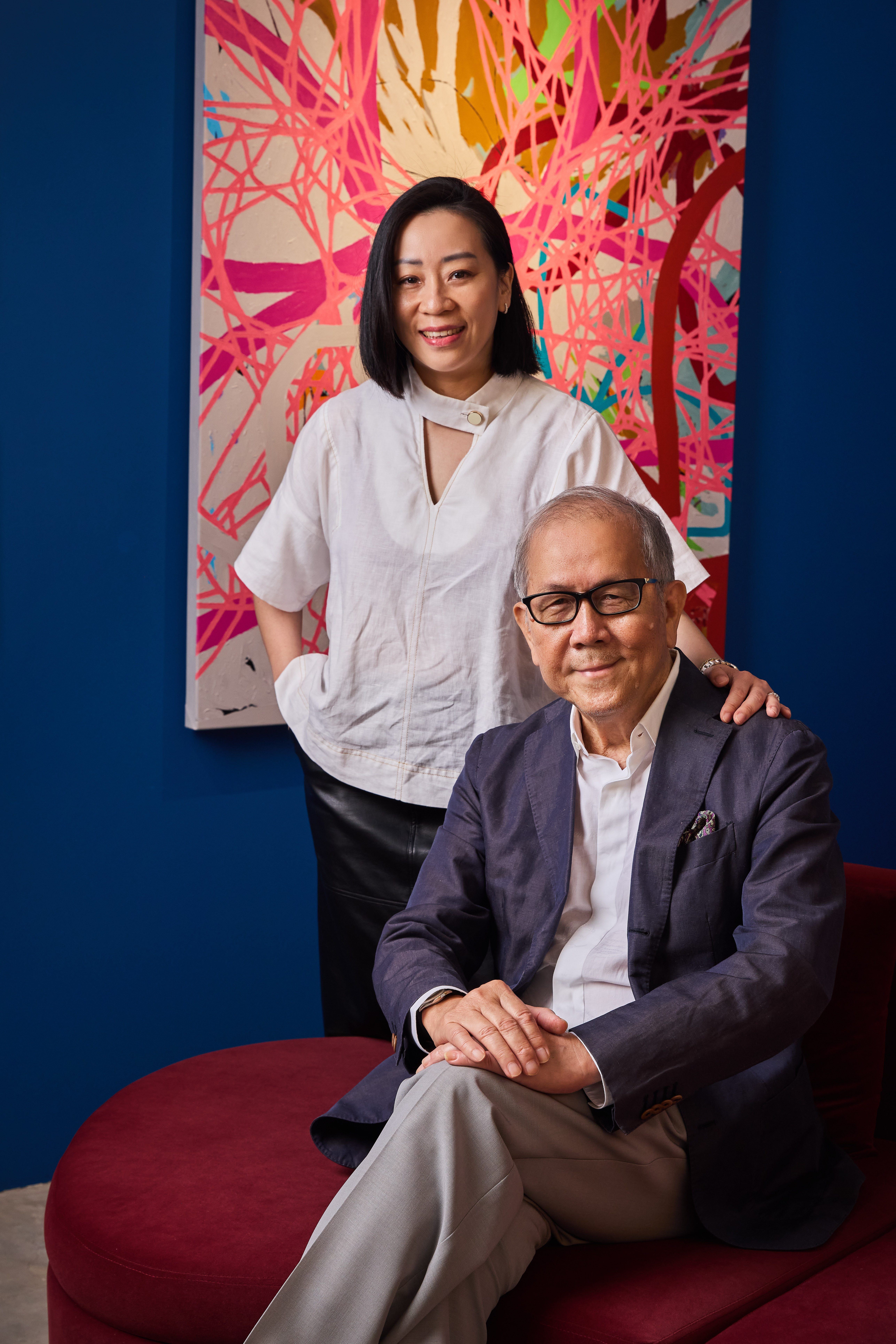
ARTITUTE: You are known as one of Singapore’s most prominent art collectors with a wide-ranging collection. Could you share which Singapore artist’s work was the first piece you collected? How did your interest in collecting Singapore art begin, and how has your collection grown over the years?
Mr Chong Huai Seng: During my frequent travels for business in the 1990s, I fell in love with art, and started out collecting European artworks. I remember some of the earliest pieces by a local artist that I acquired for my collection are ceramic pots by Iskander Jalil. I remember purchasing a few directly from his studio in the early 1990s. At the time, the Economic Development Board (EDB) office at Raffles City – where I often had meetings at as an EDB alumnus – had several of his ceramic works on display and I thought that they were beautiful. Back then, the pieces were also relatively affordable, priced around $200–$300 each, quite a contrast to the few thousand dollars they command today.
I started collecting Singaporean art more seriously in the late 2000s, collecting works by artists such as Cheong Soo Pieng, Siew Hock Meng, Ho Chee Lick, Tan Choh Tee and Wong Keen.
Art has always held an immense beauty and power for me: it serves as a vital conduit for documenting pivotal moments and lived experiences, while simultaneously providing an invaluable platform for diverse viewpoints to be expressed and debated. Over the years, my personal collection has very much become almost like a diary to me, with every single piece I collect holding a unique memory and story that I treasure.
As I learn about, meet, and even work with new artists – especially contemporary artists with exciting practices – my passion for the arts grows. Through Artist’s Proof: Singapore at 60, I hope to showcase the vibrancy and dynamism of Singapore’s flourishing arts scene, and to cultivate a stronger culture of art patronage in Singapore. Collectors and patrons are vital to supporting younger, up-and-coming and emerging artists, and their contributions are crucial in fostering a stronger and more sustainable arts ecosystem in Singapore.
ARTITUTE: When acquiring a work of art, what usually draws you in? Is it the artist’s reputation, the story behind the piece, or something more instinctive and emotional?
Mr Chong Huai Seng: In the early days of collecting Singapore art, I was drawn to the water colour works of senior artists like Siew Hock Meng, Tong Chin Sye, Ong Kim Seng and others. Later on, I also admired and followed the oil paintings of Tan Chor Tee and Tay Boon Pin who painted local landscapes of our busy Singapore river and old shop houses in Chinatown. Over the last decade, I have also followed and collected our younger artists such as Dawn Ng, Hilmi Johandi, Kharulddin Wahab, Loi Cai Xiang and Ming Wong, many of whom are featured in Artist’s Proof: Singapore at 60.
For me, potential and meaning have always taken precedence over trends. While I have a deep appreciation for the artistic practices of established artists, I am also drawn to seeking out ‘hidden gems’ – emerging or lesser-known artists – whose work and art style catch my attention. I believe in nurturing talent and recognising potential early, especially among younger artists who may not yet be widely recognised but have something compelling to say through their practice.
One example that’s particularly close to my heart is Hilmi Johandi. I first encountered his work in 2012 at the Affordable Art Fair. I found his works very interesting and I subsequently commissioned him to create a portrait of my family. Today, Hilmi is represented by Ota Fine Arts, an internationally recognised gallery, and it’s been a privilege to witness the growth of his career and artistic voice over the years. We’re happy to be showcasing a few of his works as part of Artist’s Proof: Singapore at 60, including the very portrait he created of our family.
ARTITUTE: Ning mentioned that the exhibition took around two years to develop and that it evolved significantly during the process. What was your original vision for Artist’s Proof, and how did it grow into what we see today?
Mr Chong Huai Seng: The genesis of this exhibition can be traced back to 2014, when I was given the rare opportunity to acquire the artist’s proof of a bust of the late Mr Lee Kuan Yew by Royal Academician Sydney Harpley. Given Mr Lee’s well-known aversion to monuments or artworks made in his likeness, such creations were rare and withheld from public display. Harpley’s bust of Mr Lee was one of only two exceptions and was briefly displayed in Mr Lee’s office at the Istana in 1983 and at the Parliament House. The moment I saw it in person, I knew that this was extremely special and acquired it. Remembering Mr. Lee’s sentiments towards monuments, I did not publicly exhibit it at the time. Yet, I strongly felt that such a significant artwork should be shared with others, and I made a promise to myself to do so at a future date that coincides with an important milestone for Singapore.
While Ning was aware of my intentions to exhibit the bust, it was only a couple of years ago that we intentionally started planning for this exhibition. It was an opportune moment with the upcoming diamond jubilee of Singapore’s independence and a decade since Mr Lee Kuan Yew’s passing, offering a timely moment to reflect on our journey as a nation.
While the exhibition evolved, the vision and intention of the exhibition has not changed. As a private organisation, we had the opportunity to consider perspectives of Singapore beyond those in our public museums and express multiple stories about Singapore’s modern and contemporary Art. AP60 not only allows artists and artworks to share their stories and perspectives, it also invites visitors to find personal meaning in each work.
As we worked together to develop the exhibition, Ning also suggested commissioning fresh works by both leading contemporary and young Singaporean artists – an idea I wholeheartedly supported. What began as a modest exhibition has since grown into The Culture Story’s most ambitious project yet, both in scale and personal significance with a total of 95 works, including 10 new commissioned artworks & a commissioned music composition. Together, they provide profound and unique insights into Singapore’s evolving narrative, probing pertinent issues across different periods, reflecting on the nation’s past, present and future.
ARTITUTE: I imagine you have many more Singapore artworks in your collection beyond the 95 shown in this exhibition. What was the process like in selecting the final pieces? Were there certain themes or considerations that guided your decisions?
Mr Chong Huai Seng: We are incredibly grateful to be working with Kwok Kian Chow as the exhibition’s curator, whose deep knowledge of Singapore’s art history and institutional memory was instrumental in shaping the key narratives of the exhibition, allowing the individual works to truly shine and enhance the narrative of the exhibition. Rather than approaching it from a chronological or strictly historical standpoint, Kian Chow helped us synthesise the various intersecting themes embedded within the artworks, whether personal, political, or poetic, to present a perspective of the Singapore Story that is both resonant and uniquely grounded in the spirit of a private collection.
We had extensive discussions with Kian Chow, where I shared about my vision and intention for the exhibition. In tandem with Kian Chow’s curatorial direction, we selected artworks and developed the exhibition with works that explore themes of time and space through four narrative strands — first, a survey of Singapore’s socio-economic development through early paintings and photographs that capture Singapore’s evolving cityscape over the past 60 years; second, a telling of Singapore’s art history from the 1950s to the present; third, diaspora stories of Singapore’s brightest artists practicing overseas; and finally, a critical look at the complex relationship between politics, artistic expression, and citizenry.
ARTITUTE: Are there any artworks in the exhibition that are especially meaningful to you on a personal level? Could you share the story behind one or two of them?
Mr Chong Huai Seng: My personal favourites in the show are in the section called Kallang Kallang which has many artworks recalling cherished memories from when I was growing up. It includes two nostalgic photos by Darren Soh of Selegie House and Golden Mile. Selegie House is where I used to live with my grandmother while attending my secondary school, Raffles Institution, in the mid 1960s; and Golden Mile is where I hung out most weekends with my best friend’s family, who were the developers of the shopping mall and apartments. There is also the 2013 commissioned portrait of my whole family outside our home in London by Hilmi Johandi, a young artist I spotted when he was showing at the Affordable Art Fair in 2012.
ARTITUTE: I noticed that the late Chng Seok Tin’s prints are part of the exhibition. Could you tell us more about how these works came into your collection and what they represent to you?
Mr Chong Huai Seng: I acquired the two works by Chng Seok Tin featured in Artist’s Proof: Singapore at 60 from Art Commune gallery in Singapore. I have long admired Chng – both as an educator and a very talented artist. After her unfortunate accident in 1988, which resulted in a significant loss of vision, continuing to create art must have been incredibly difficult. Yet she persevered, and I deeply respect her courage and unwavering determination.
The two abstract works on paper are, in my view, her masterpieces – particularly the work Endlessness, which reminds me of Cy Twombly’s scribble drawings.
ARTITUTE: The artist’s proof of the bronze bust of the late Mr Lee Kuan Yew is a rare and significant piece. Could you share the story of how you came to acquire it?
Mr Chong Huai Seng: I’ve long admired the work of Sydney Harpley. Since the early 2000s, I had been inspired by Mr Marshall’s donations of the Sydney Harpley sculptures, Girl on a Swing and Girl on a Bicycle, at the Botanic Gardens and became a passionate collector of Harpley’s bronze pieces. In 2014, I received a call from my contact at Chris Beetles Gallery in London, which represents the estate of Sydney Harpley. Harpley’s widow had been downsizing her home and came across the artist’s proof of the bust. The Gallery then reached out to ask if I might be interested in acquiring it. As soon as I heard, I flew to the UK to view the piece in person, and I knew immediately that I had to bring it home.
ARTITUTE: The exhibition features eleven newly commissioned works. Were these artworks created specifically for Artist’s Proof? What criteria did you consider when selecting the artists, and was Mr Kwok involved in this process?
Mr Chong Huai Seng: We’re proud to present 11 new commissions, created specially for this exhibition. The commissioning process prioritised sparking new conversations and engaging artists whose practices Ning and I have been following but had yet to acquire, broadening the exhibition’s representation of voices.
Responding to the prompt, What does Singapore or being Singaporean mean to you?, the 11 new commissions unveil critical perspectives from leading and up-and-coming contemporary artists, these works provide profound and unique insights into Singapore’s evolving narrative, probing pertinent issues across different periods, from the past to the present. The inclusion of new commissions underscores a belief in providing opportunities for Singapore’s younger generation of artists while maintaining the relevance of senior artists for a sustainable arts future.
In July 2023, we approached Charmaine Toh to be the commissioning curator for this exhibition. We worked closely with Charmaine on the commissioning process for six works, from nominating names and initiating outreach to potential artists, to the final selection, supervising works in development and progress, and to the finished presentation of the artworks for the show. The Culture Story oversaw the process for the other 5 commissions. Over the past two years, we took part in many studio visits and extensive discussions over zoom and in-person with the commissioned artists. The results of this process exceeded my expectations, and we’re happy to platform their voices and talent.
ARTITUTE: Looking ahead, what are your hopes for the Singapore art scene as the nation moves beyond its 60th year of independence? And might we see a follow-up to Artist’s Proof in 10 years’ time to mark Singapore’s 70th milestone?
Mr Chong Huai Seng: As Singapore enters its next chapter beyond 60, my hope is that we’ll continue to see the growth and maturity of our arts audiences – not only in numbers, but in their willingness to engage critically and meaningfully with art, and their ability to appreciate art in context. I believe there is great value in cultivating an appreciation for works that speak to our own heritage, history, and lived experiences. These are stories that deserve to be told and remembered, and it is through art that they are often most powerfully expressed.
At the same time, I hope to see sustained and growing support for our artists – both emerging and established – from collectors, patrons, private corporations and public institutions alike. A thriving and sustainable arts ecosystem requires belief and investment at every level, whether an artist is emerging or established, young or old. As someone who has had the privilege of collecting and experiencing amazing art for many decades, I believe in the power of art to shape cultural memory and identity. It’s my hope that more will join in this shared effort to support and celebrate Singaporean art.
In 10 years’ time, I hope to see a new, younger collector present an Artist’s Proof: Singapore at 70 show with fresh works from their family collection. We’d be happy to license the Artist’s Proof brand to anyone who would like to continue the tradition of celebrating Singapore’s birthday with art. I would be most willing to advise and if need be, perhaps Ning at the Family Office For Art (FOFA) could also help them in producing the show.
Curator’s Perspective: Mr Kwok Kian Chow
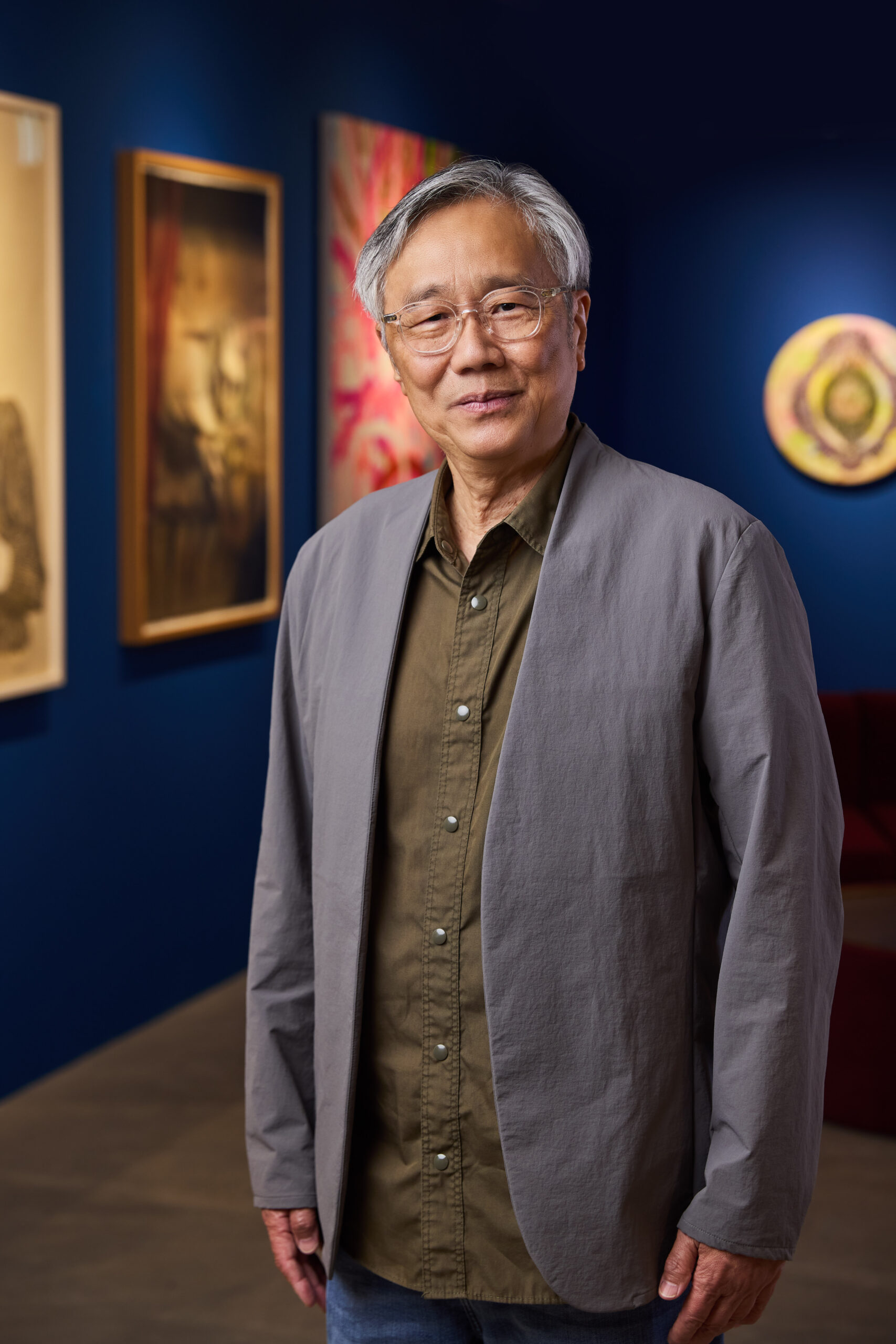
ARTITUTE: How did your collaboration with Mr Chong and The Culture Story come about? Was it a conversation that began informally and grew into a full curatorial partnership?
Mr Kwok Kian Chow: I first met Chong Huai Seng in 2004 in Beijing at the New Xieyi Ink Painting Symposium, which was held alongside the New Xieyi exhibition at the National Art Museum of China (NAMOC). Huai Seng’s passion for contemporary ink painting extended well beyond simply sponsoring the exhibition. I was invited to be a panelist, and I was deeply impressed by his engagement with the vibrant discourse surrounding contemporary ink art. At that time, he was Singapore’s Business Representative in China, and his involvement with the country went far beyond just business interests.
In March of last year (2024), Huai Seng and Ning approached me to see if I would be interested in curating an exhibition for SG60. After reviewing the preliminary artwork list, I found it an easy decision to accept the role. Ultimately, the final list of artworks more than doubled the initial one. With each new addition, particularly the commissioned pieces, my decision to participate became even more compelling. My former colleague Charmaine Toh did an excellent job as the curator for the commissioning of works.
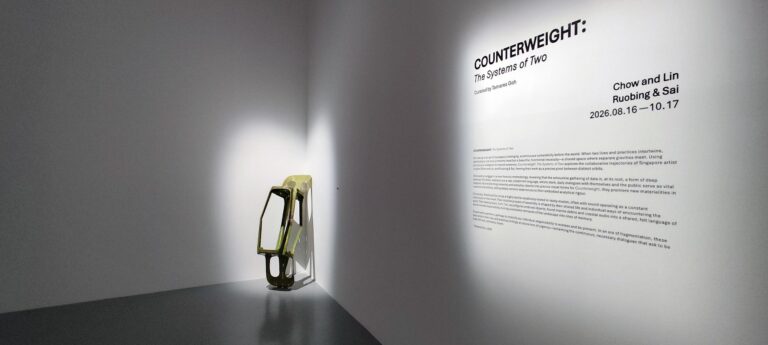
In the case of “I’m Worth My Bread” by Chow and Lin, I engaged the artists from the very beginning, and our first discussion also took place in Beijing. We had the opportunity to align the artistic vision closely with the exhibition’s curatorial theme. It quickly became clear to me that Chow and Lin should be featured as the first work in the exhibition.
ARTITUTE: I am certain Mr Chong’s collection contains more than 95 Singapore artworks. What were the criteria or curatorial considerations you applied when selecting the final works for this exhibition? Also, given the title, are all the works literally artist’s proofs or is the title intended more metaphorically?
Mr Kwok Kian Chow: In our initial meetings, I proposed that the collector’s subjectivity should remain at the centre of the exhibition. Unlike a thematic exhibition in a museum, where the curator selects works based on their interpretation of a theme, my curatorial approach for “Artist’s Proof” focuses on the relationship between the artworks, the discourse, and the collector’s subjectivity. As the curator, my role is to facilitate this presentation. Additionally, given the range of artworks from 1948 to the present, I have incorporated art historical themes to engage with the broader art historical discourse. The Nanyang Style versus the Nanyang Feng is an example.
Most works in the show are unique works. “Artist’s Proof” highlights Sydney Harpley’s Lee Kuan Yew bust. “Artist’s Proof” as a title also highlights Singapore as an artist’s proof, that moment of provisional completion, a work or two to be kept by the artist as artist’s proofs for further contemplation and development. Singapore will perpetually be a work in progress, but SG60 is a moment of provisional completion, a moment of reflection.
ARTITUTE: Are there any artworks in the exhibition that resonate with you personally? Could you share why they are significant to you?
Mr Kwok Kian Chow: I must say that every piece in the exhibition resonates with me. In the Singapore art scene, which often distinguishes between modern and contemporary art, this exhibition integrates both categories and even questions this binary distinction. While conversations around “contemporary” works tend to flourish because they engage with concepts and ideas, making them more “communicative,” this exhibition offers enough diverse entry points to explore various mediums, periods, and modes of expression. It touches on themes such as ink painting, photography, river scenes, gender, labour, migrant workers, politics, and inter-diasporic spaces, prompting reflection on each artwork.
ARTITUTE: Is there a Singapore artist not represented in the exhibition whose work you wish had been included? Who would that be, and what particular work or theme would you have liked to showcase?
Mr Kwok Kian Chow: I mentioned earlier that the exhibition is based on Chong Huai Seng’s collection, highlighting how the subjectivity of the collector can serve as a productive framework. Huai Seng’s collection is exemplary in its scope, expressions, and themes. Naturally, I hope to organise an “Artist’s Proof 2…” Another exhibition I would love to curate would involve bringing together several collections, allowing the artworks and the collectors to engage in conversation.
ARTITUTE: Sydney Harpley’s bust of Mr Lee Kuan Yew is one of the most historically striking works in the exhibition. From a curatorial perspective, what is the significance of this sculpture within the context of Artist’s Proof and Singapore’s visual history?
Mr Kwok Kian Chow: Sydney Harpley expressed his admiration for the sculptures he encountered during his visit to Singapore. However, I have been unable to identify the specific sculptors or sculptures he referred to. Harpley’s work is notable for its sensitive realism, which even led Lee Kuan Yew, initially reluctant to accept an official portrait commission, to agree to it. Importantly, Lee did not want the portrait displayed in public during his lifetime. The completed work was well-received by Lee, who remarked that Harpley had captured him in a “pensive mood.” This acknowledgment highlights Harpley’s grounding passion for down-to-earth realism in the local cultural scene.
ARTITUTE: Are you a collector as well? If so, do you collect works by Singapore artists, and is there a particular piece in your collection that holds personal meaning?
Mr Kwok Kian Chow: As a museum director, my primary responsibility was to seek out works for the museum. However, I sometimes couldn’t resist acquiring a piece or two that the museum did not obtain.
ARTITUTE: Looking ahead, what are your hopes for the Singapore art scene as the nation moves beyond its 60th year of independence? And might we see a follow-up to Artist’s Proof in 10 years’ time to mark Singapore’s 70th milestone?
Mr Kwok Kian Chow: I have made numerous comments about the Singapore art scene in various publications. In Sonny Liew’s “P.A.P. x P.A.,” the artist has incorporated a 1984 quote from Rajaratnam, that “(to) push for historical awareness beyond 1819 would have been a misuse of history…” This statement highlights Singapore’s complex relationship with its colonial history, especially as it contrasts with global arts and cultural movements that emphasise decolonisation and draw inspiration from pre-colonial heritage. I hope to see more artworks such as Suzann Victor’s “Be/longing” and Kanchana Gupta’s “Open and Close #30,” (both in the exhibition). These pieces reflect on colonial history and the displacement of identities. I aspire to see a deeper and more meaningful connection between the vibrant art scene in Singapore and the dynamic global decolonial cultural movements.