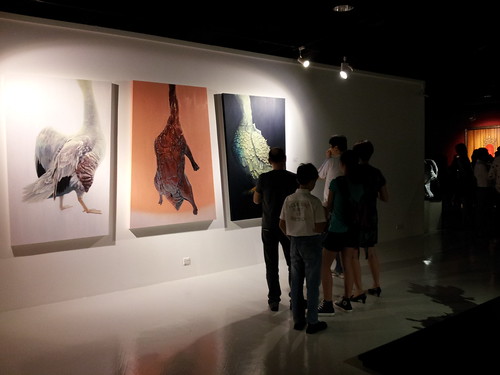
When you see a bird, do you admire the fluffy feathers, think of glistening roasted meat or envision a valuable stuffed showpiece? Does it depend on what you have just done or heard? The truth may just be one duck. (more…)
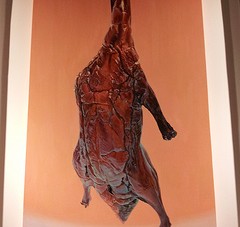
When you see a bird, do you admire the fluffy feathers, think of glistening roasted meat or envision a valuable stuffed showpiece? Does it depend on what you have just done or heard? The truth may just be one duck. (more…)
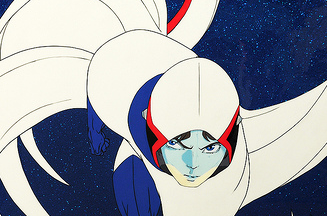
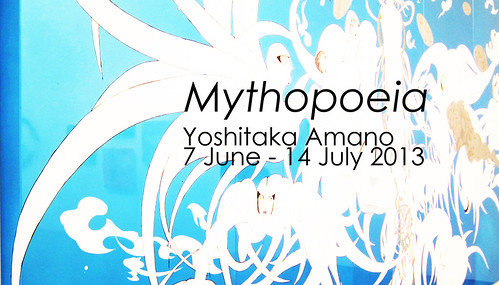
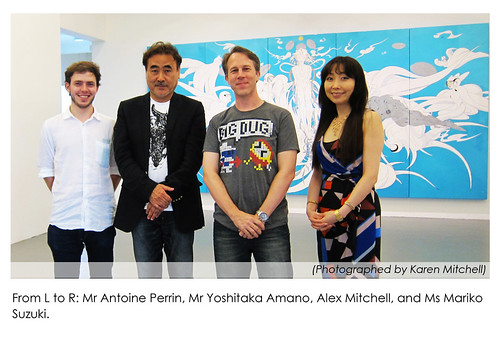
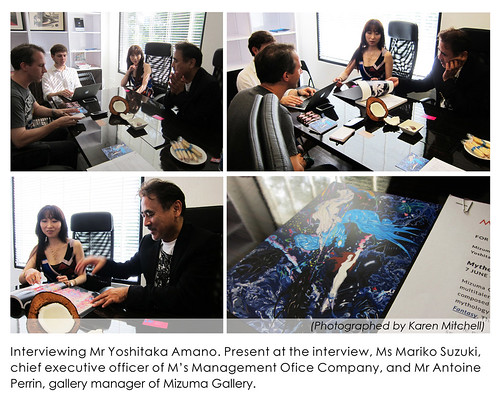
Steam was rising from the tarmac as we pulled into Gillman Barracks for our interview with Mr. Yoshitaka Amano, the artist behind the characters in famous works such as Final Fantasy and Gatchaman. Mythopoeia, his first solo exhibition in Singapore, is being held at Mizuma Gallery from 7 June to 14 July. We had the pleasure of spending a half-hour speaking with Mr. Amano about his work.
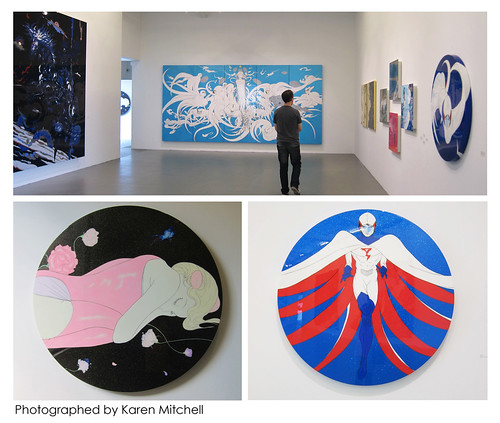
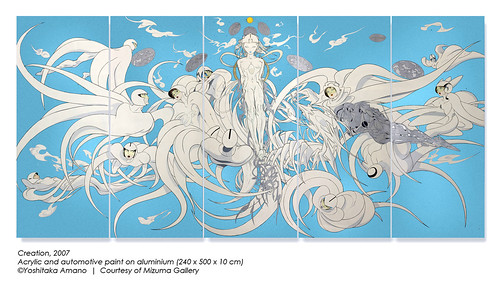
The first thing I noticed when stepping into the gallery was the large, blue and white 5-panel painting on the far wall, flocks of white-caped bird-men circling a serene, androgynous figure floating in their midst. To me, this work captures the spirit of the exhibition – a seamless blending of retro pop icons, fantasy and fine art.
Best known for his commercial work, Mr. Amano has been exhibiting his paintings in art galleries since the 1990s. He feels that his current work, which is built around the idea of a personal mythology, has a clear relationship to his earlier works, and that all of his previous works are represented here to some degree. This comes across clearly in his paintings, which are executed in his distinctive style using automotive paint on aluminium sheets. Looking around the gallery, you can see flowing, bird-like characters reminiscent of Gatchaman, the high gloss of the paint capturing the energy and motion of anime. As Amano observed, he tends to think across media when creating a work, imagining the motion of the camera, for example, when working on a painting.
Although the central theme of the exhibition is mythology, he explained that this mythology is firmly rooted in the everyday. He pointed out that along with the fantasy elements, many of his paintings also contain everyday objects, such as cars and vending machines. This connection to the everyday is one of the reasons for his use of automotive paint, as he feels that cars are very representative of our modern lives.
Comparing his commercial work with his art practice, Amano observed that when creating his own art he feels freer, but he still follows the same process, thinking carefully about what he wants to communicate. The key difference, he suggests, is that for much of his commercial work he needs to consider how his concepts will translate into a different medium – a game or animation, for example – whereas with painting, art is just art, raw and direct.
For me, it was fascinating to see echoes of characters I had enjoyed watching on TV as a child filtered through the lens of fine art. But whether you approach this exhibition as a fan of his commercial work, or with a view to seeing some fine paintings that capture the spirit of fantasy and mythology, you will not be disappointed. The exhibition opens on 7 June, and runs through until 14 July at Mizuma Gallery, Gillman Barracks.
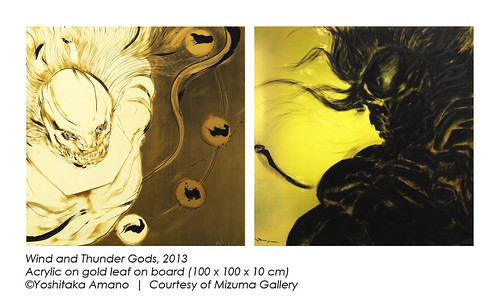
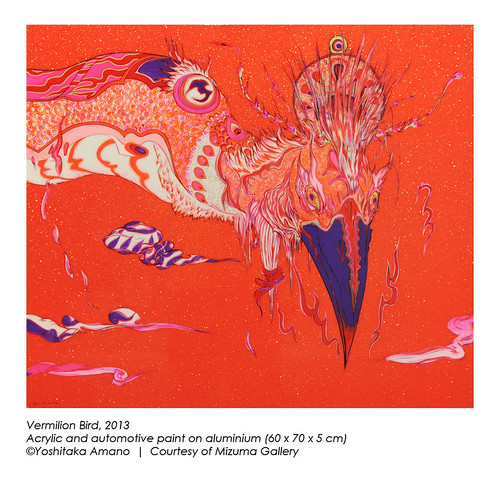
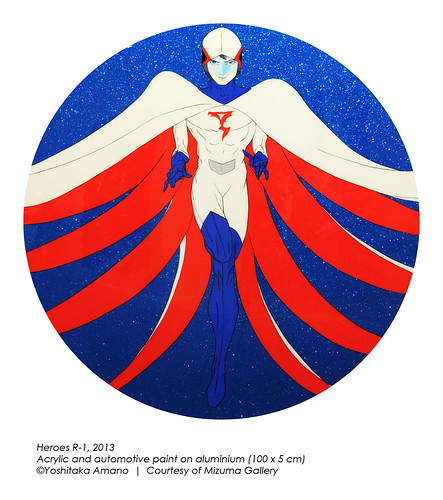
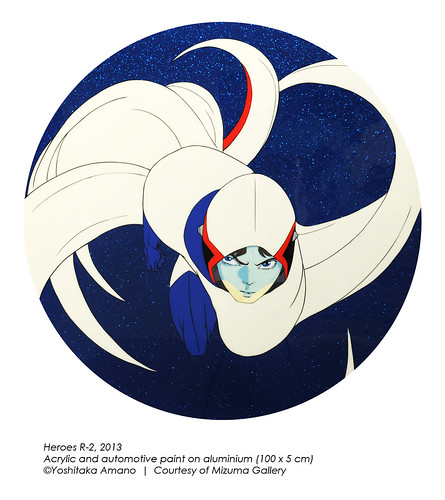
Mizuma Gallery
22 Lock Road #01-34
Gillman Barracks
Singapore 108939
Tue-Sat 11am – 7pm
Sun 11am – 6pm
T. +65 6570 2505
F. +65 6570 2506
Written by Alex Mitchell
Photographed by Karen Mitchell
Photographs of artworks courtesy of Mizuma Gallery
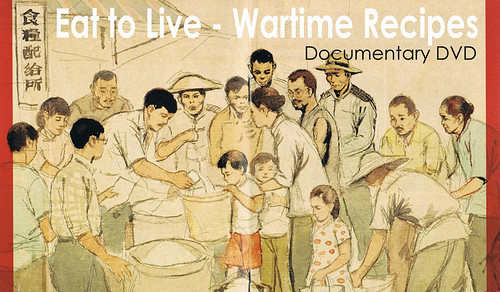
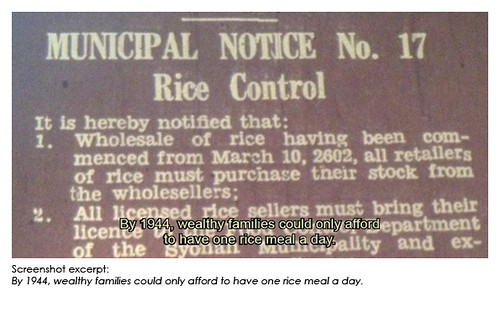
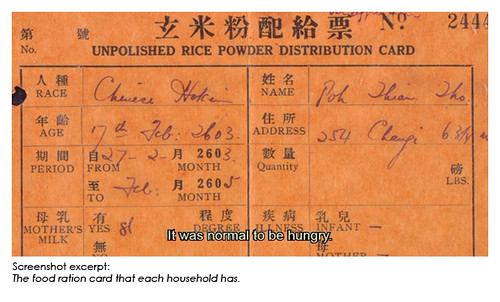
The National Museum of Singapore offers Singaporeans food for thought with a new documentary, Eat to Live: Wartime Recipes. Inspired by the book Wartime Kitchens: Food and Eating in Singapore, 1942 – 1950 (2009), the six-part DVD series explores the struggles and experiences of those who lived through the food-scarce Japanese Occupation from 1942 to 1945. The documentary provides a window into food consumption during those turbulent years, telling stories of resilience through commentaries, archived photographs, and first-hand personal accounts.
Commissioned by the National Museum of Singapore and produced by filmmakers Gözde and Russel Zehnder from locally-based Freestate Productions, Eat to Live: Wartime Recipes forms a tapestry of the food-scarce days when Singapore was known as Syonan-To. It tells of the ingenuity and adaptability demonstrated in the face of hunger, and celebrates the lives of the generation that lived through the Occupation. The documentary also features demonstrations of wartime recipes by renowned local writer and food consultant, Christopher Tan.
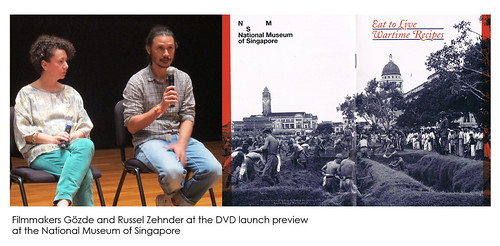
The production of this documentary has Gözde and Russel Zehnder talked and interviewed many individuals who have lived through the occupation, as well as experts and scholars who helped to provide archived photographs, information and stories. The stories were told by these individuals, in their own voice, language, and memories.
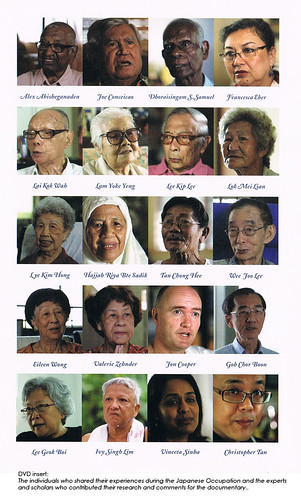
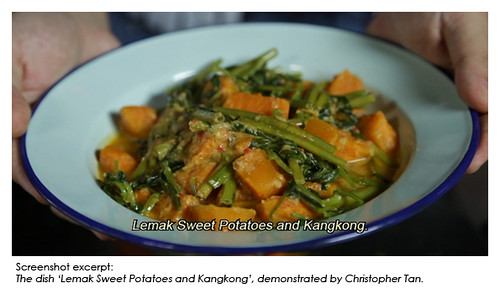
Audiences were treated to the first two episodes at the preview and I am glad to have attended it to share this wonderful production. The stories told are sincere, though not all parts are easy to digest as it dwells into factual issues that have happened, pain that the families and friends have gone through during that period. The editing is nicely crafted, to engage, intrigue and connect the viewers. Even though the focus is on the food that people have to eat during those times, we hear and understand better about the hardships, difficulties that many of the younger generations would not know or learn about from their textbooks. I also like the way how the documentary has introduced and shown respect to the recipes. The stories told by the individuals lead to the reason for that particular dish to be created. This is followed by the demonstration of preparation of the dish by Christopher Tan. The demonstration is simple, with Tan’s clear and easy-to-follow instructions, accompanied by his occasional explanation of how and why people have cooked the dish the way it is during the wartime. It is not just about how it taste, but how it has sustained the human lives.
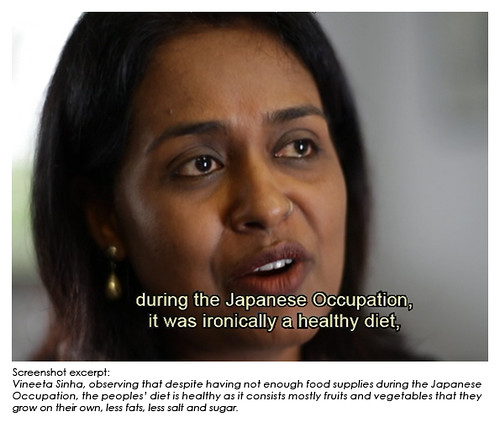
 One of the experts, Vineeta Sinha (Deputy Head of the Department of Sociology and the Head of the Department of South Asian Studies at the National University of Singapore) mentioned in one part of the documentary that, “despite the scarcity of food supplies during those times, people’s diet is ironically a healthy one – with home-grown vegetables and fruits, low in fat, sugar, salt and consist very little meat – people then were eating what we called ‘organic food’ now.”
 The documentaries brought deeper insights to what we eat to survive, to live, or just for pleasure. Food is indeed, the true connection one may have with his roots, his home, his soul.
Building beautiful houses on the limited land we have, merely provide a roof over our head, and in many cases, we do not own the house in Singapore. Growing a seed that may become food for our survival on the limited land, may instead, encourages, and creates an opportunity of self-sustainability for many of us.
Food for thought.
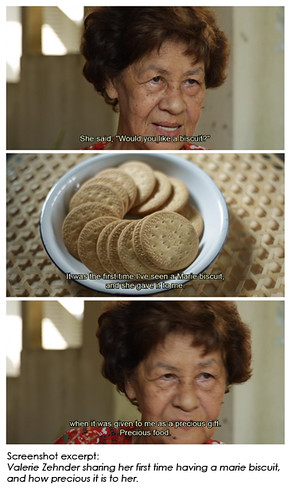
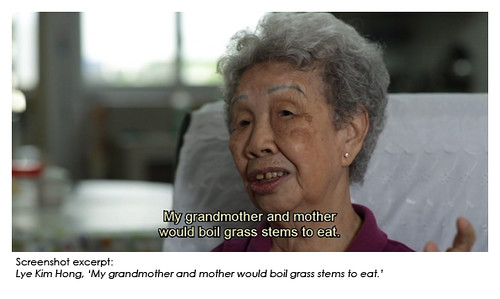
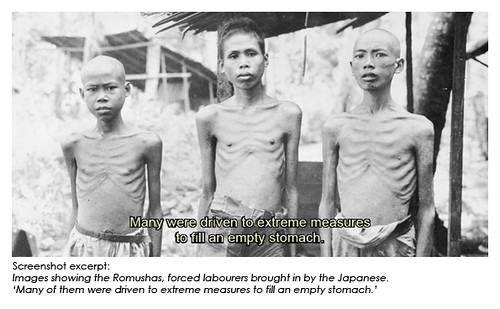
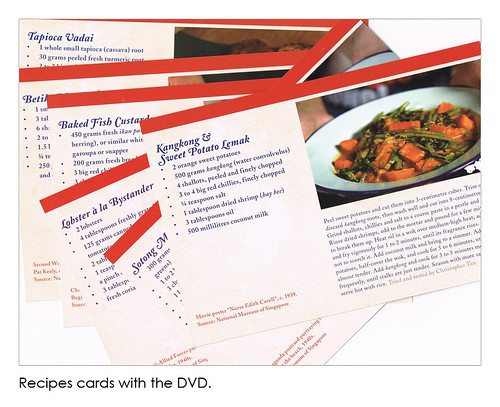
The six episodes are:
1. Food as Power and Control
2. Living off the Land
3. Fishing for Food
4. Extreme Hunger
5. Food of the imagination
6. Celebrations
The six recipes are:
1. Tapioca vadai
2. Sweet Potatoes and Kangkong
3. Sotong with Kiam Chye
4. Savoury Papaya Soup
5. Lobster ala bystander
6. Baked Fish Custard and Gulu Melaka Blancmange
About the filmmakers:
Gözde Zehnder and Russel Zehnder have been making short films together since 1997. They have an extensive track record of travel, youth, lifestyle, fashion and arts related projects under freestate productions – a stable space for the exchange of ideas, images and vision. Since 2007 they have extended their focus on documentary work mostly related to history, art, architecture and heritage.
The Eat to Live: Wartime Recipes DVD is distributed by Objectifs Films and retails at the National Museum of Singapore at $20.
Written and photographed by Karen Mitchell
Screenshots taken from the DVD, edited by Karen Mitchell