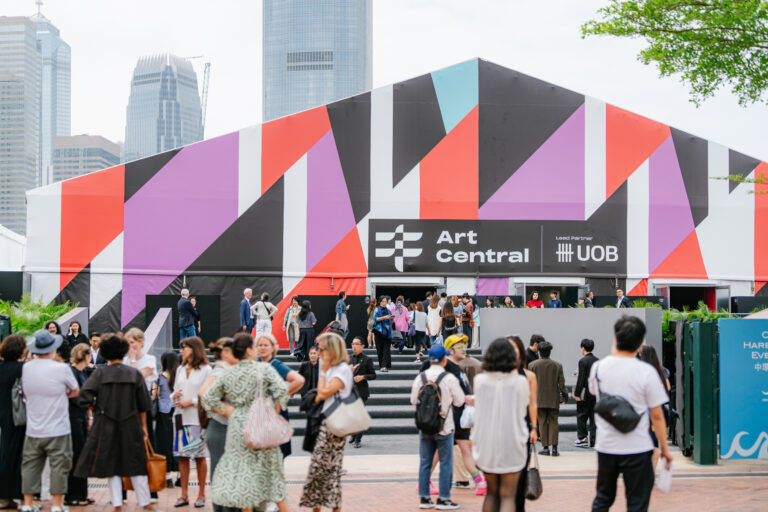
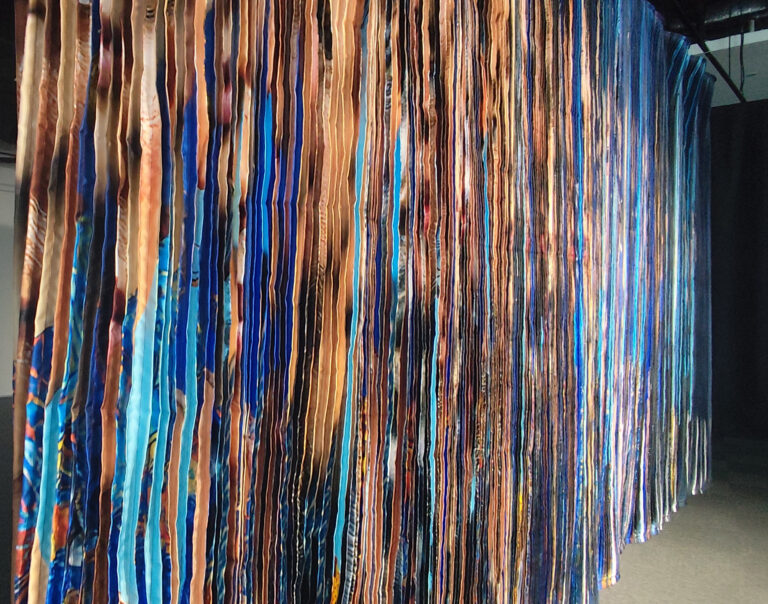
Now in its fourth edition, ART SG, Southeast Asia’s leading international art fair presented by Founding and Lead Partner UBS, opens in Singapore from 23 to 25 January 2026 at Marina Bay Sands. With over 100 exhibitors from more than 30 countries and territories, the fair expands its platform with deeper partnerships and programming, signalling a more expansive and inclusive chapter for contemporary art in the region and beyond.
This year marks the first time that S.E.A. Focus is presented within ART SG, offering a distinctive curatorial platform under the theme The Humane Agency to spotlight Southeast Asian contemporary art and artists as agents of compassion. Curated by John Tung, the platform foreground Southeast Asian contemporary art and artists as agents of care, empathy, and social imagination. Tung’s curatorial framework considers how artists respond to shared conditions of precarity, environmental urgency, and social responsibility, positioning art as an active proposition for more humane futures rather than a passive reflection of crisis.
The fair also unveils the ART SG FUTURES Prize presented by UBS to an outstanding emerging artist featured in the FUTURES sector and continues the SAM ART SG Fund for the second year, supporting acquisitions for the Singapore Art Museum’s collection of international contemporary art from a Southeast Asian perspective.
In a first-of-its-kind cultural sponsorship, the the TVS Initiative for Indian and South Asian Contemporary Art is curatorially advised by Studio Public Memory and led by Srinivas Aditya Mopidevi, brings robust attention to Indian and South Asian contemporary practices. The UBS Art Collection presents Indonesian performance artist Melati Suryodarmo’s I Love You (2007) at the UBS Art Studio. A new curatorial collaboration with Rockbund Art Museum, Shanghai introduces a dedicated Performance Art sector at the fair, and the offsite immersive project Wan Hai Hotel: Singapore Strait opens at The Warehouse Hotel in Chinatown as part of the wider Singapore Art Week program. The Institutum and Hampi Art Labs debut a collaboration foregrounding ecological research by artists Robert Zhao and Atul Bhalla.
Magnus Renfrew, Co-founder of ART SG, remarks that the fair continues to grow as a platform for contemporary art in Southeast Asia and beyond, noting the debut of S.E.A. Focus and the fair’s potential to connect galleries, artists, and institutions internationally. Jin Yee Young, Co-Head UBS Global Wealth Management Asia Pacific and Country Head UBS Singapore, highlights Singapore’s optimism about the global art market and UBS’s commitment to supporting emerging artists, reiterating the importance of ART SG as a place for artistic dialogue and engagement.
At Artitute we like to highlight not only what is seen, but why it matters and how it resonates. We look toward artists whose practices think deeply about identity, ecology, time, space, community, and narrative. Within ART SG 2026 several figures and collectives embody these concerns in ways that feel urgent, reflective, and generative.
John Clang: Intimacy, Ritual, and Presence
One of the most compelling presences at the fair is John Clang, whose performance works invite intimate engagement and reflection. Within the newly introduced Performance Art sector curated by X Zhu-Nowell, Clang presents works such as Nine Chairs, Table of Inquiry, and Reading by an Artist, which unfold as relational encounters between artist and viewer. His practice draws on concepts of time, domestic ritual, and Purple Star Astrology, exploring how energy, presence and meaning emerge in shared moments.
Clang’s presence extends beyond the fair halls into the city’s fabric through his participation in Wan Hai Hotel: Singapore Strait at The Warehouse Hotel in Chinatown. This immersive exhibition, co-presented by ART SG and Rockbund Art Museum, transforms the hotel into a site of performance, installation, conversation, and encounter. Clang’s Reading by an Artist, a thirty-minute performative exchange between artist and one viewer at a time by reservation, recurs across several days of the project, inviting visitors into a personal yet public act of articulation and presence.
The Wan Hai Hotel project itself engages maritime histories and relations through works by over twenty artists, examining the Singapore Strait not only as a passage of commerce but as a lived zone shaped by movement, memory, and power relations, bringing these themes into architectural and social space.
Warin Lab Contemporary: Ecological Inquiry and Material Poetics
At Warin Lab Contemporary, the practices of Imhathai Suwatthanasilp and Prach Pimarnman foreground ecological and material inquiry. Suwatthanasilp’s work begins with human hair as both personal archive and metaphor for ecological loss, asking how life forms far smaller than us reflect broader patterns of environmental collapse. Imagined futures such as Under the Dark Sun consider life in altered planetary conditions, connecting seasonal cycles, microbes, and human routines in poetic, speculative exploration.
Prach Pimarnman’s work traces land transformation through materials such as charcoal and brick dust from local environments, using these elemental residues to document ecological change over time. Together these practices demonstrate how material histories and environmental systems can be read through deeply embodied artistic inquiry.
Yeo Workshop: Rewriting Myths Through Female Narratives
Yeo Workshop’s presentation of Citra Sasmita highlights a powerful reconfiguration of myth and tradition. Grounded in Balinese temple art and the Ramayana, Sasmita reclaims and reimagines narratives that have historically marginalised women, bringing forward perspectives of empowerment, embodiment, spirituality, and material symbolism. Her use of traditional motifs such as lotus and fire here becomes a language of resilience, rebirth, and empathy, producing works that are formally rich and conceptually layered.
Chow and Lin at Whitestone Gallery: Data, Grain, and Systems of Care
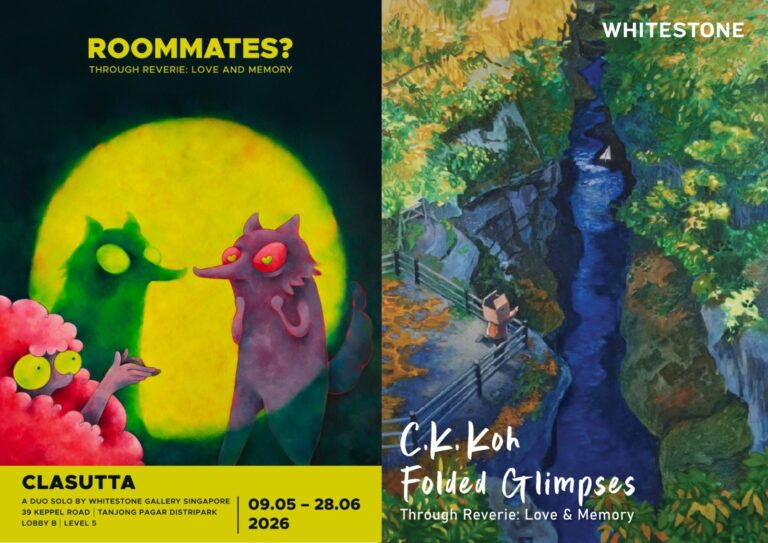
Within Whitestone Gallery’s presentation, the collaborative practice Chow and Lin unfolds Even If It Looks Like Grass, a project that triangulates agriculture, satellite imagery, and contemporary data infrastructures. Beginning with wheat as a foundational human crop and moving through systems that now underpin digital economies, the work reflects on how human societies cultivate both food and information, and how these systems shape care, labour, dependency, and environmental consequence. Through research and visual enquiry, they offer a framework to rethink agriculture, data, and human intention as deeply entangled realms.
A Fair Attuned to Experience
ART SG 2026 feels attentive, expansive, and present. With a curated Platform of large-scale installations and performances, an experimental FILM program titled Would You Tell Me a Story Until I Fall Asleep? inviting contemplative engagement, and a robust TALKS program featuring panels and conversations with international artists, curators, and thinkers including Melati Suryodarmo, Jitish Kallat, Ibrahim Mahama and others, the fair situates art as generator of dialogue, community, and reflection.
ART SG opens its public days from 23 to 25 January 2026 with an opening Vernissage on 22 January, at Marina Bay Sands Convention Hall, Level 1 and Basement 1, Singapore. Alongside the fair, programmes across Singapore Art Week offer expanded opportunities for activation, conversation, performance, film, and reflection.
For full details on exhibitions, film screenings, talks and public programmes, visit the official ART SG platform, film and talks pages.
I had the pleasure of attending the opening reception of Sama Sama on 8 August 2025, an iconic date that seemed fitting for such a landmark exhibition. Held at Whitestone Gallery Singapore, the evening was nothing short of electric: a full-house reception with guests spilling out into the lobby, all gathered to celebrate SG60 with the works of 60 contemporary local artists and collectives. Curated by Dr. Wang Ruobing, Sama Sama captures the spirit of artistic togetherness, threading individual practices into a larger story of Singapore’s evolving cultural journey.
Sama Sama by Wang Roubing at Whitestone Gallery
The exhibition’s title, “Sama Sama,” derived from Bahasa Malay, one of Singapore’s official mother tongue languages, and is familiar to many Singaporeans. It means “all together” or “togetherness,” while also carrying connotations of reciprocity (“you’re welcome”) and similarity (“same”). This layered expression frames the curatorial concept, inviting a revisitation of Singapore’s history and cultural trajectory through the collective voices of its contemporary artists. From its humble origins to its transformation into a global city-state, Singapore’s journey has been defined by resilience, imagination, and the unity of its people, values that underpin this exhibition.
Featuring 60 works spanning generations and practices, Sama Sama brings together names such as Anthony Chin, Boedi Widjaja, Boo Sze Yang, Chow and Lin, Cynthia Delaney Suwito, Heman Chong, Ian Tee, Jackson Tan, Lai Yu Tong, Lee Wen, Milenko Prvački, Ng Hui Hsien, Post-Museum, Dr. S. Chandrasekaran, Sim Chi Yin, and Zarina Muhammad, among many others. The show traverses a wide range of mediums, from painting and printmaking to film, photography, installation, socially engaged practice, and performance, reflecting the diversity and richness of contemporary art in Singapore.
What struck me most was how the works collectively embody a set of core values: freedom, diversity, inclusiveness, resistance, and imagination. This is not a conventional survey of contemporary art history, but a group show alive with layered interpretations, material experimentation, and poetic connections. Each artwork holds its own narrative, resonating with history while speaking to the urgencies of the present and the uncertainties of the future. Together, these works stand as an artistic statement on 60 years of nation-building, sama-sama in Sama Sama.
With so many remarkable contributions, it would be impossible to do justice to every artist in a single article. For this feature, I would like to highlight a selection of works that personally stirred deep emotions and prompted reflection, not as a hierarchy, but as glimpses into the profound encounters this exhibition makes possible.
Randy Chan – In the Shape of Absence
At the entrance, Randy Chan’s monumental installation In the Shape of Absence commanded attention. Constructed from reclaimed timber, the skeletal frame resembled a house both remembered and lost. It leaned and fractured, an architectural ghost that invited visitors to step inside absence itself, to consider what defines home when its physical structure has disappeared. Known for his boundary-crossing practice between architecture and art, Chan once again demonstrated how space can become both memory and stage.
Nearby, Anthony Chin’sS$1,996/- S$831.06 was a quieter yet equally provocative reflection. Comprising a precarious pillar of S$1 coins, the work emerged from a failed grant application, a donation drive, and the realities of artistic survival. More than a sculptural object, it stood as a critique of fragility within Singapore’s art ecosystem, questioning the sustainability of creativity in a system where value is often measured in hard currency.
Anthony Chin – S$1,996/- S$831.06
Boedi Widjaja’sCosmic Strangers, Cardinal Nodes pulled us into an entirely different dimension. Combining a muon tracker, meteorite fragments, and augmented reality projections of a hypercube, the work shimmered with cosmic temporality. It was both deeply personal and expansively universal, linking Widjaja’s diasporic reflections with the particles that traverse the universe.
Boedi Widjaja – Cosmic Strangers, Cardinal Nodes
Emotion ran deep in Boo Sze Yang’s paintings from his 29.03.15 series. Instead of direct portraits of Singapore’s founding father, Lee Kuan Yew, Boo turned his gaze to the citizens who stood in mourning that day. Blurred forms under umbrellas became symbols of quiet resilience, capturing the shared emotional weight of collective memory.
Boo Sze Yang – 29.03.15 #21
The collaborative duo Chow & Lin approached the question of humanity through numbers. Their long-term project The Poverty Line used the language of food photography to illustrate what daily sustenance looks like at the poverty line across 38 countries. Displayed as stark still-life compositions, their prints were a sobering reminder that statistics are lived realities.
Chow and Lin – The Poverty Line (2010 – 2025)
Meanwhile, Cynthia Delaney Suwito brought a gentle touch of absurdity with her performance Knitting Noodles. Using instant noodles as yarn, she knitted fragile strips that threatened to crumble with each stitch. I had a chance to chat with her during the opening, and she spoke about patience, presence, and the meditative focus required to keep the noodles intact. It was a poetic contradiction, the fast-food symbol of modern life slowed into fragile, time-consuming labour — a lesson in fragility and mindfulness.
Green Zeng’sMalayan Exchange series reimagined Singapore’s currency notes, inscribing forgotten activists, overlooked histories, and fragments of national identity onto imagined banknotes. I was particularly struck by how the reverse side juxtaposed silhouettes of Lee Kuan Yew with maps of Singapore, a layered reminder of how history is remembered and circulated.
Green Zeng – Malayan Exchange (Study of a Note of the Future) Blue, Orange, Green, Red, Purple, Yellow
Justin Lee’sTogether, Forever brought a burst of brightness and playfulness. Recasting the once-ubiquitous HDB metal gate into a pop-inspired artwork, Lee paid tribute to the heartlands where community, memory, and daily life intertwine. His work felt like a love letter to Singapore’s shared spaces, lighthearted yet deeply rooted.
Justin Lee – Together, Forever. 人人愛我,我愛人人
No survey of Singapore art would be complete without honouring pioneers. Sama Sama paid tribute to the late Chng Seok Tin, a visionary printmaker who continued to create even after losing much of her sight. Her Printmaker’s Hand was displayed alongside Tan Ngiap Heng’s poignant portrait of her, in which Chng’s own artwork is projected across her figure, as though enveloping her in the embrace of her practice. The pairing was both tender and powerful, encapsulating how community and art entwine.
Chng Seok Tin – Printmaker’s Hand (Tien Wei Woon’s Collection)
Tan Ngiap Heng – portraits of Chng Seok Tin
The late Lee Wen was also remembered through his iconic Journey of a Yellow Man. A pioneering performance artist, Lee carried his alter-ego across the world, interrogating identity and belonging with humour and subversion. His enduring presence at Sama Sama reminded us of the importance of questioning, resisting, and imagining anew.
Lee Wen – Journey of a yellow man no. 13: Fragmented bodies/shifting ground
As the night drew to a close, despite Whitestone gallery manager, Priscilla’s playful attempts to usher us out, no one seemed in a hurry to leave. The gallery buzzed with conversations, laughter, and reunions. For me, it was a night not just of art, but of community, a reminder that art is as much about people as it is about objects.
“Sama Sama” runs until 28 September 5 October 2025 at Whitestone Gallery. Take your time to return, wander, and reflect. As Singapore turns 60, this exhibition invites us to remember where we’ve been, to celebrate who we are, and to imagine, together, what comes next.
As Artist’s Proof: Singapore at 60 invites us to reflect on Singapore’s evolving story through art, Artitute had the chance for an in-depth conversation with two remarkable yet humble figures behind this landmark exhibition: Mr Chong Huai Seng, a distinguished collector, and Mr Kwok Kian Chow, an influential leader in Singapore’s arts scene. In this extended interview, they share personal stories, inspirations, and insights that shaped the show, offering a rare glimpse into the heart of Artist’s Proof and the vision that brought it to life.
Collector’s Perspective: Mr Chong Huai Seng
Chong Huai Seng and Ning Chong. Image courtesy of The Culture Story
ARTITUTE: You are known as one of Singapore’s most prominent art collectors with a wide-ranging collection. Could you share which Singapore artist’s work was the first piece you collected? How did your interest in collecting Singapore art begin, and how has your collection grown over the years?
Mr Chong Huai Seng: During my frequent travels for business in the 1990s, I fell in love with art, and started out collecting European artworks. I remember some of the earliest pieces by a local artist that I acquired for my collection are ceramic pots by Iskander Jalil. I remember purchasing a few directly from his studio in the early 1990s. At the time, the Economic Development Board (EDB) office at Raffles City – where I often had meetings at as an EDB alumnus – had several of his ceramic works on display and I thought that they were beautiful. Back then, the pieces were also relatively affordable, priced around $200–$300 each, quite a contrast to the few thousand dollars they command today.
I started collecting Singaporean art more seriously in the late 2000s, collecting works by artists such as Cheong Soo Pieng, Siew Hock Meng, Ho Chee Lick, Tan Choh Tee and Wong Keen.
Art has always held an immense beauty and power for me: it serves as a vital conduit for documenting pivotal moments and lived experiences, while simultaneously providing an invaluable platform for diverse viewpoints to be expressed and debated. Over the years, my personal collection has very much become almost like a diary to me, with every single piece I collect holding a unique memory and story that I treasure.
As I learn about, meet, and even work with new artists – especially contemporary artists with exciting practices – my passion for the arts grows. Through Artist’s Proof: Singapore at 60, I hope to showcase the vibrancy and dynamism of Singapore’s flourishing arts scene, and to cultivate a stronger culture of art patronage in Singapore. Collectors and patrons are vital to supporting younger, up-and-coming and emerging artists, and their contributions are crucial in fostering a stronger and more sustainable arts ecosystem in Singapore.
ARTITUTE: When acquiring a work of art, what usually draws you in? Is it the artist’s reputation, the story behind the piece, or something more instinctive and emotional?
Mr Chong Huai Seng: In the early days of collecting Singapore art, I was drawn to the water colour works of senior artists like Siew Hock Meng, Tong Chin Sye, Ong Kim Seng and others. Later on, I also admired and followed the oil paintings of Tan Chor Tee and Tay Boon Pin who painted local landscapes of our busy Singapore river and old shop houses in Chinatown. Over the last decade, I have also followed and collected our younger artists such as Dawn Ng, Hilmi Johandi, Kharulddin Wahab, Loi Cai Xiang and Ming Wong, many of whom are featured in Artist’s Proof: Singapore at 60.
For me, potential and meaning have always taken precedence over trends. While I have a deep appreciation for the artistic practices of established artists, I am also drawn to seeking out ‘hidden gems’ – emerging or lesser-known artists – whose work and art style catch my attention. I believe in nurturing talent and recognising potential early, especially among younger artists who may not yet be widely recognised but have something compelling to say through their practice.
One example that’s particularly close to my heart is Hilmi Johandi. I first encountered his work in 2012 at the Affordable Art Fair. I found his works very interesting and I subsequently commissioned him to create a portrait of my family. Today, Hilmi is represented by Ota Fine Arts, an internationally recognised gallery, and it’s been a privilege to witness the growth of his career and artistic voice over the years. We’re happy to be showcasing a few of his works as part of Artist’s Proof: Singapore at 60, including the very portrait he created of our family.
ARTITUTE: Ning mentioned that the exhibition took around two years to develop and that it evolved significantly during the process. What was your original vision for Artist’s Proof, and how did it grow into what we see today?
Mr Chong Huai Seng: The genesis of this exhibition can be traced back to 2014, when I was given the rare opportunity to acquire the artist’s proof of a bust of the lateMr Lee Kuan Yew by Royal Academician Sydney Harpley. Given Mr Lee’s well-known aversion to monuments or artworks made in his likeness, such creations were rare and withheld from public display. Harpley’s bust of Mr Lee was one of only two exceptions and was briefly displayed in Mr Lee’s office at the Istana in 1983 and at the Parliament House. The moment I saw it in person,I knew that this was extremely special and acquired it. Remembering Mr. Lee’s sentiments towards monuments, I did not publicly exhibit it at the time. Yet, I strongly felt that such a significant artwork should be shared with others, and I made a promise to myself to do so at a future date that coincides with an important milestone for Singapore.
While Ning was aware of my intentions to exhibit the bust, it was only a couple of years ago that we intentionally started planning for this exhibition. It was an opportune moment with the upcoming diamond jubilee of Singapore’s independence and a decade since Mr Lee Kuan Yew’s passing, offering a timely moment to reflect on our journey as a nation.
While the exhibition evolved, the vision and intention of the exhibition has not changed. As a private organisation, we had the opportunity to consider perspectives of Singapore beyond those in our public museums and express multiple stories about Singapore’s modern and contemporary Art. AP60 not only allows artists and artworks to share their stories and perspectives, it also invites visitors to find personal meaning in each work.
As we worked together to develop the exhibition, Ning also suggested commissioning fresh works by both leading contemporary and young Singaporean artists – an idea I wholeheartedly supported. What began as a modest exhibition has since grown into The Culture Story’s most ambitious project yet, both in scale and personal significance with a total of 95 works, including 10 new commissioned artworks & a commissioned music composition. Together, they provide profound and unique insights into Singapore’s evolving narrative, probing pertinent issues across different periods, reflecting on the nation’s past, present and future.
ARTITUTE: I imagine you have many more Singapore artworks in your collection beyond the 95 shown in this exhibition. What was the process like in selecting the final pieces? Were there certain themes or considerations that guided your decisions?
Mr Chong Huai Seng: We are incredibly grateful to be working with Kwok Kian Chow as the exhibition’s curator, whose deep knowledge of Singapore’s art history and institutional memory was instrumental in shaping the key narratives of the exhibition, allowing the individual works to truly shine and enhance the narrative of the exhibition. Rather than approaching it from a chronological or strictly historical standpoint, Kian Chow helped us synthesise the various intersecting themes embedded within the artworks, whether personal, political, or poetic, to present a perspective of the Singapore Story that is both resonant and uniquely grounded in the spirit of a private collection.
We had extensive discussions with Kian Chow, where I shared about my vision and intention for the exhibition. In tandem with Kian Chow’s curatorial direction, we selected artworks and developed the exhibition with works that explore themes of time and space through four narrative strands — first, a survey of Singapore’s socio-economic development through early paintings and photographs that capture Singapore’s evolving cityscape over the past 60 years; second, a telling of Singapore’s art history from the 1950s to the present; third, diaspora stories of Singapore’s brightest artists practicing overseas; and finally, a critical look at the complex relationship between politics, artistic expression, and citizenry.
ARTITUTE: Are there any artworks in the exhibition that are especially meaningful to you on a personal level? Could you share the story behind one or two of them?
Mr Chong Huai Seng: My personal favourites in the show are in the section called Kallang Kallang which has many artworks recalling cherished memories from when I was growing up. It includes two nostalgic photos by Darren Soh of Selegie House and Golden Mile. Selegie House is where I used to live with my grandmother while attending my secondary school, Raffles Institution, in the mid 1960s; and Golden Mile is where I hung out most weekends with my best friend’s family, who were the developers of the shopping mall and apartments. There is also the 2013 commissioned portrait of my whole family outside our home in London by Hilmi Johandi, a young artist I spotted when he was showing at the Affordable Art Fair in 2012.
ARTITUTE: I noticed that the late Chng Seok Tin’s prints are part of the exhibition. Could you tell us more about how these works came into your collection and what they represent to you?
Mr Chong Huai Seng: I acquired the two works by Chng Seok Tin featured in Artist’s Proof: Singapore at 60 from Art Commune gallery in Singapore. I have long admired Chng – both as an educator and a very talented artist. After her unfortunate accident in 1988, which resulted in a significant loss of vision, continuing to create art must have been incredibly difficult. Yet she persevered, and I deeply respect her courage and unwavering determination.
The two abstract works on paper are, in my view, her masterpieces – particularly the work Endlessness, which reminds me of Cy Twombly’s scribble drawings.
ARTITUTE: The artist’s proof of the bronze bust of the late Mr Lee Kuan Yew is a rare and significant piece. Could you share the story of how you came to acquire it?
Mr Chong Huai Seng: I’ve long admired the work of Sydney Harpley. Since the early 2000s, I had been inspired by Mr Marshall’s donations of the Sydney Harpley sculptures, Girl on a Swing and Girl on a Bicycle, at the Botanic Gardens and became a passionate collector of Harpley’s bronze pieces. In 2014, I received a call from my contact at Chris Beetles Gallery in London, which represents the estate of Sydney Harpley. Harpley’s widow had been downsizing her home and came across the artist’s proof of the bust. The Gallery then reached out to ask if I might be interested in acquiring it. As soon as I heard, I flew to the UK to view the piece in person, and I knew immediately that I had to bring it home.
ARTITUTE: The exhibition features eleven newly commissioned works. Were these artworks created specifically for Artist’s Proof? What criteria did you consider when selecting the artists, and was Mr Kwok involved in this process?
Mr Chong Huai Seng: We’re proud to present 11 new commissions, created specially for this exhibition. The commissioning process prioritised sparking new conversations and engaging artists whose practices Ning and I have been following but had yet to acquire, broadening the exhibition’s representation of voices.
Responding to the prompt, What does Singapore or being Singaporean mean to you?, the 11 new commissions unveil critical perspectives from leading and up-and-coming contemporary artists, these works provide profound and unique insights into Singapore’s evolving narrative, probing pertinent issues across different periods, from the past to the present. The inclusion of new commissions underscores a belief in providing opportunities for Singapore’s younger generation of artists while maintaining the relevance of senior artists for a sustainable arts future.
In July 2023, we approached Charmaine Toh to be the commissioning curator for this exhibition. We worked closely with Charmaine on the commissioning process for six works, from nominating names and initiating outreach to potential artists, to the final selection, supervising works in development and progress, and to the finished presentation of the artworks for the show. The Culture Story oversaw the process for the other 5 commissions. Over the past two years, we took part in many studio visits and extensive discussions over zoom and in-person with the commissioned artists. The results of this process exceeded my expectations, and we’re happy to platform their voices and talent.
ARTITUTE: Looking ahead, what are your hopes for the Singapore art scene as the nation moves beyond its 60th year of independence? And might we see a follow-up to Artist’s Proof in 10 years’ time to mark Singapore’s 70th milestone?
Mr Chong Huai Seng: As Singapore enters its next chapter beyond 60, my hope is that we’ll continue to see the growth and maturity of our arts audiences – not only in numbers, but in their willingness to engage critically and meaningfully with art, and their ability to appreciate art in context. I believe there is great value in cultivating an appreciation for works that speak to our own heritage, history, and lived experiences. These are stories that deserve to be told and remembered, and it is through art that they are often most powerfully expressed.
At the same time, I hope to see sustained and growing support for our artists – both emerging and established – from collectors, patrons, private corporations and public institutions alike. A thriving and sustainable arts ecosystem requires belief and investment at every level, whether an artist is emerging or established, young or old. As someone who has had the privilege of collecting and experiencing amazing art for many decades, I believe in the power of art to shape cultural memory and identity. It’s my hope that more will join in this shared effort to support and celebrate Singaporean art.
In 10 years’ time, I hope to see a new, younger collector present an Artist’s Proof: Singapore at 70 show with fresh works from their family collection. We’d be happy to license the Artist’s Proof brand to anyone who would like to continue the tradition of celebrating Singapore’s birthday with art. I would be most willing to advise and if need be, perhaps Ning at the Family Office For Art (FOFA) could also help them in producing the show.
Curator’s Perspective: Mr Kwok Kian Chow
Mr Kwok Kian Chow. Image courtesy of The Culture Story
ARTITUTE: How did your collaboration with Mr Chong and The Culture Story come about? Was it a conversation that began informally and grew into a full curatorial partnership?
Mr Kwok Kian Chow: I first met Chong Huai Seng in 2004 in Beijing at the New Xieyi Ink Painting Symposium, which was held alongside the New Xieyi exhibition at the National Art Museum of China (NAMOC). Huai Seng’s passion for contemporary ink painting extended well beyond simply sponsoring the exhibition. I was invited to be a panelist, and I was deeply impressed by his engagement with the vibrant discourse surrounding contemporary ink art. At that time, he was Singapore’s Business Representative in China, and his involvement with the country went far beyond just business interests.
In March of last year (2024), Huai Seng and Ning approached me to see if I would be interested in curating an exhibition for SG60. After reviewing the preliminary artwork list, I found it an easy decision to accept the role. Ultimately, the final list of artworks more than doubled the initial one. With each new addition, particularly the commissioned pieces, my decision to participate became even more compelling. My former colleague Charmaine Toh did an excellent job as the curator for the commissioning of works.
In the case of “I’m Worth My Bread” by Chow and Lin, I engaged the artists from the very beginning, and our first discussion also took place in Beijing. We had the opportunity to align the artistic vision closely with the exhibition’s curatorial theme. It quickly became clear to me that Chow and Lin should be featured as the first work in the exhibition.
ARTITUTE: I am certain Mr Chong’s collection contains more than 95 Singapore artworks. What were the criteria or curatorial considerations you applied when selecting the final works for this exhibition? Also, given the title, are all the works literally artist’s proofs or is the title intended more metaphorically?
Mr Kwok Kian Chow: In our initial meetings, I proposed that the collector’s subjectivity should remain at the centre of the exhibition. Unlike a thematic exhibition in a museum, where the curator selects works based on their interpretation of a theme, my curatorial approach for “Artist’s Proof” focuses on the relationship between the artworks, the discourse, and the collector’s subjectivity. As the curator, my role is to facilitate this presentation. Additionally, given the range of artworks from 1948 to the present, I have incorporated art historical themes to engage with the broader art historical discourse. The Nanyang Style versus the Nanyang Feng is an example.
Most works in the show are unique works. “Artist’s Proof” highlights Sydney Harpley’s Lee Kuan Yew bust. “Artist’s Proof” as a title also highlights Singapore as an artist’s proof, that moment of provisional completion, a work or two to be kept by the artist as artist’s proofs for further contemplation and development. Singapore will perpetually be a work in progress, but SG60 is a moment of provisional completion, a moment of reflection.
ARTITUTE: Are there any artworks in the exhibition that resonate with you personally? Could you share why they are significant to you?
Mr Kwok Kian Chow: I must say that every piece in the exhibition resonates with me. In the Singapore art scene, which often distinguishes between modern and contemporary art, this exhibition integrates both categories and even questions this binary distinction. While conversations around “contemporary” works tend to flourish because they engage with concepts and ideas, making them more “communicative,” this exhibition offers enough diverse entry points to explore various mediums, periods, and modes of expression. It touches on themes such as ink painting, photography, river scenes, gender, labour, migrant workers, politics, and inter-diasporic spaces, prompting reflection on each artwork.
ARTITUTE: Is there a Singapore artist not represented in the exhibition whose work you wish had been included? Who would that be, and what particular work or theme would you have liked to showcase?
Mr Kwok Kian Chow: I mentioned earlier that the exhibition is based on Chong Huai Seng’s collection, highlighting how the subjectivity of the collector can serve as a productive framework. Huai Seng’s collection is exemplary in its scope, expressions, and themes. Naturally, I hope to organise an “Artist’s Proof 2…” Another exhibition I would love to curate would involve bringing together several collections, allowing the artworks and the collectors to engage in conversation.
ARTITUTE: Sydney Harpley’s bust of Mr Lee Kuan Yew is one of the most historically striking works in the exhibition. From a curatorial perspective, what is the significance of this sculpture within the context of Artist’s Proof and Singapore’s visual history?
Mr Kwok Kian Chow: Sydney Harpley expressed his admiration for the sculptures he encountered during his visit to Singapore. However, I have been unable to identify the specific sculptors or sculptures he referred to. Harpley’s work is notable for its sensitive realism, which even led Lee Kuan Yew, initially reluctant to accept an official portrait commission, to agree to it. Importantly, Lee did not want the portrait displayed in public during his lifetime. The completed work was well-received by Lee, who remarked that Harpley had captured him in a “pensive mood.” This acknowledgment highlights Harpley’s grounding passion for down-to-earth realism in the local cultural scene.
ARTITUTE: Are you a collector as well? If so, do you collect works by Singapore artists, and is there a particular piece in your collection that holds personal meaning?
Mr Kwok Kian Chow: As a museum director, my primary responsibility was to seek out works for the museum. However, I sometimes couldn’t resist acquiring a piece or two that the museum did not obtain.
ARTITUTE: Looking ahead, what are your hopes for the Singapore art scene as the nation moves beyond its 60th year of independence? And might we see a follow-up to Artist’s Proof in 10 years’ time to mark Singapore’s 70th milestone?
Mr Kwok Kian Chow: I have made numerous comments about the Singapore art scene in various publications. In Sonny Liew’s “P.A.P. x P.A.,” the artist has incorporated a 1984 quote from Rajaratnam, that “(to) push for historical awareness beyond 1819 would have been a misuse of history…” This statement highlights Singapore’s complex relationship with its colonial history, especially as it contrasts with global arts and cultural movements that emphasise decolonisation and draw inspiration from pre-colonial heritage. I hope to see more artworks such as Suzann Victor’s “Be/longing” and Kanchana Gupta’s “Open and Close #30,” (both in the exhibition). These pieces reflect on colonial history and the displacement of identities. I aspire to see a deeper and more meaningful connection between the vibrant art scene in Singapore and the dynamic global decolonial cultural movements.