
There is a buoyant energy in Playscapes of Dreams that instantly disarms, a kind of visual lightness that invites curiosity before deeper reflection sets in. On view at Whitestone Gallery Singapore from 24 January to 14 March 2026, this duo exhibition brings together two artists from different cultural contexts, British pop artist Philip Colbert and Japanese contemporary artist Aruta Soup. Despite their distinct visual languages, both share a commitment to play as a way of understanding the world.
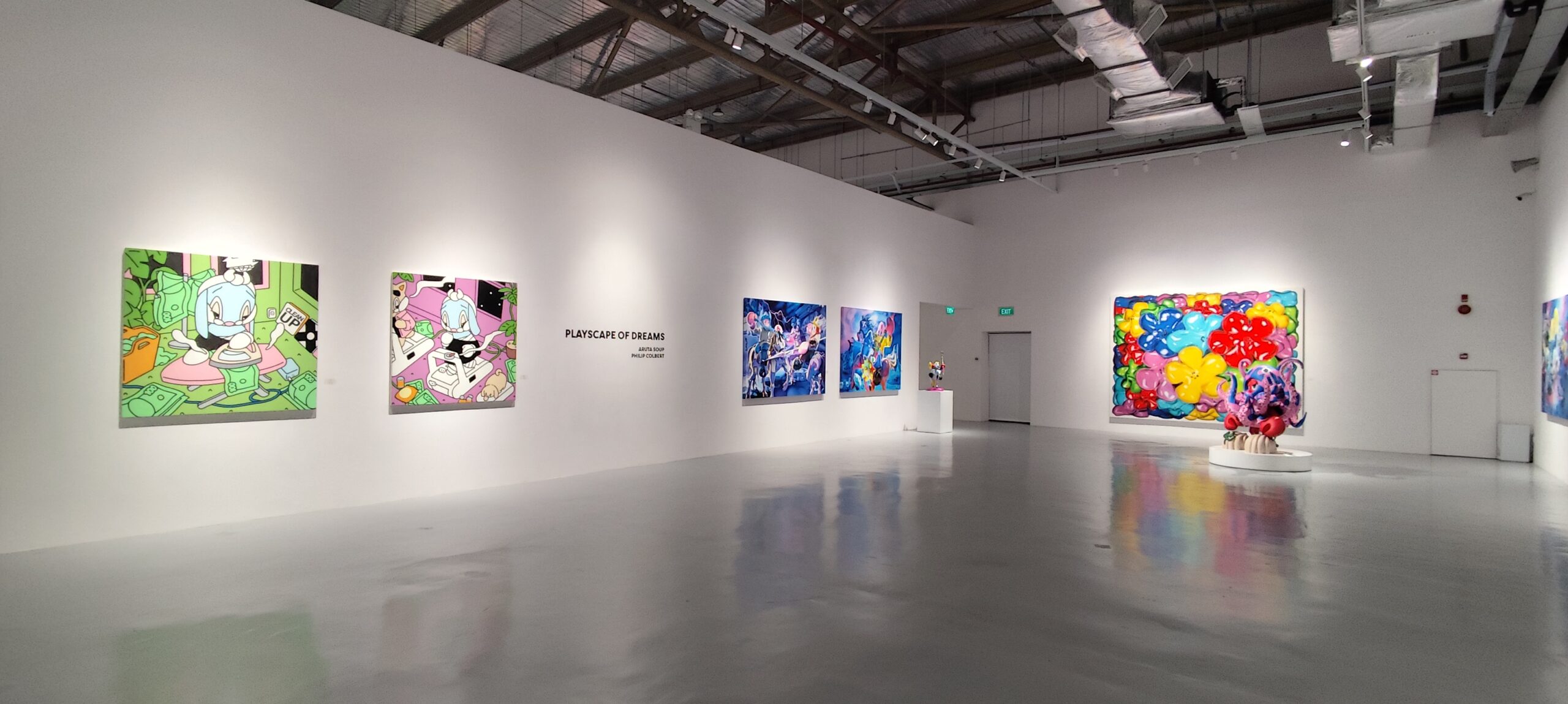
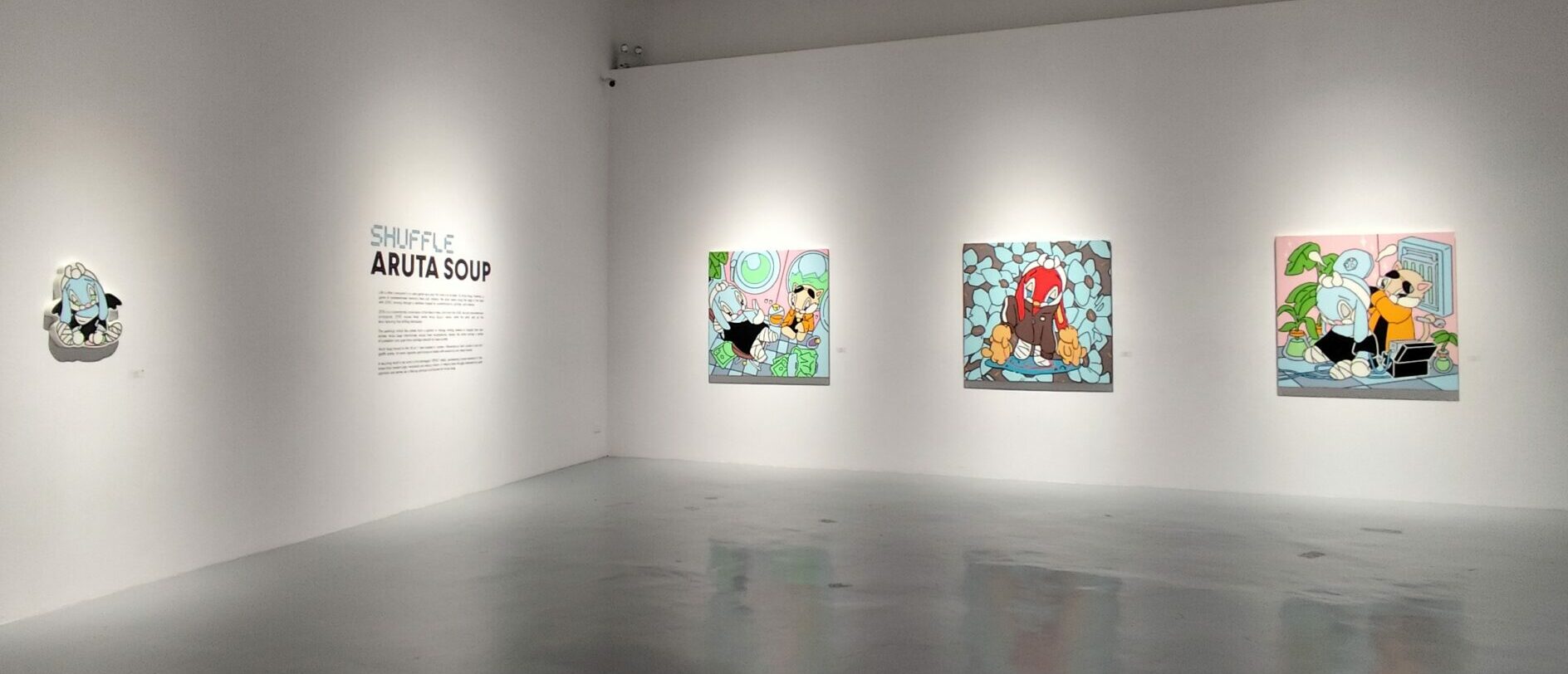
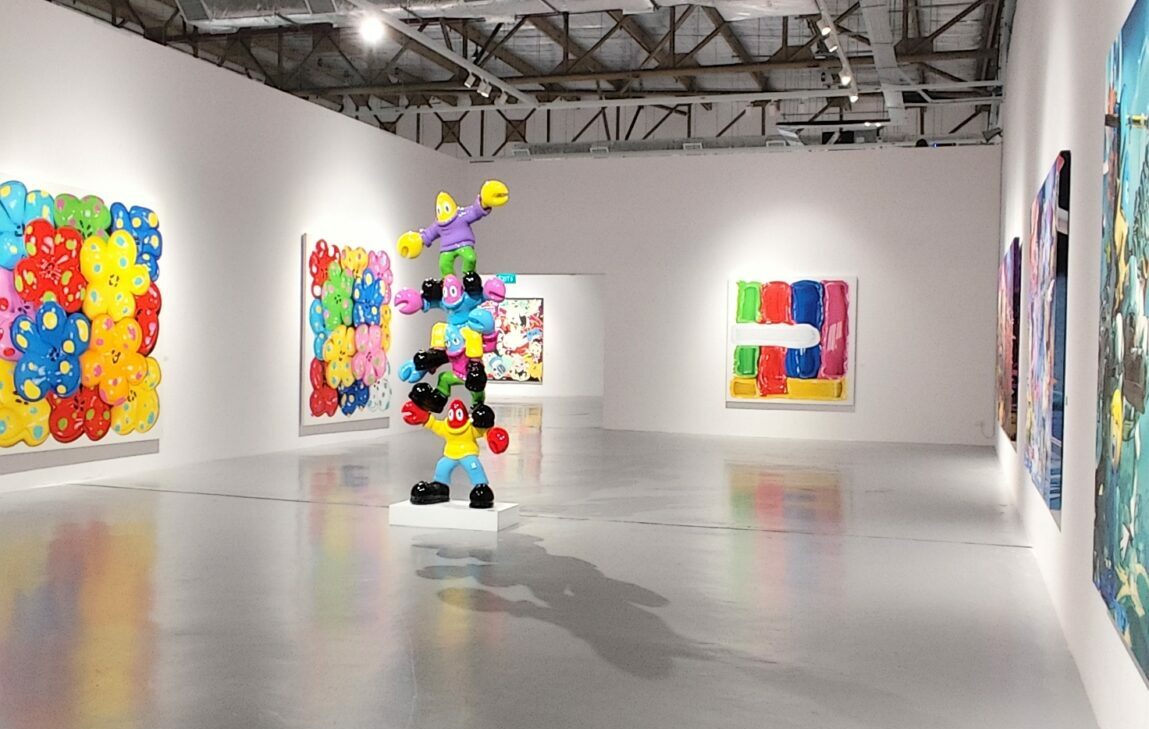
Entering the gallery, visitors are met with Colbert’s hyper-saturated pop imagery alongside Aruta’s whimsical, illustrative works. Each artist inhabits a clearly defined universe, yet their works sit in conversation with one another, creating a space where imagination, humour and reflection coexist. The exhibition unfolds not as a clash of styles, but as a shared terrain shaped by contemporary life and visual culture. Within this curatorial framework, Colbert’s Temple of the Sunflower unfolds as a vibrant, myth-laden universe, while Aruta Soup’s Shuffle introduces a fractured, ever-shifting logic, together forming parallel playscapes that invite viewers to move between spectacle and introspection.
 Aruta Soup and the Bunny That Never Stays Still
Aruta Soup’s practice centres around ZERO, a recurring rabbit figure that is at once cheeky and quietly introspective. ZERO is cute but sad, carrying a sense of loneliness that feels deeply familiar. Often appearing alone, the bunny has the presence of a shy, introverted character, observing the world from a gentle distance while continuing to move through it.
Aruta Soup’s recurring character, ZERO, similarly embodies endurance and regeneration. Often depicted as a rabbit wrapped in bandages, ZERO emerges from the pressures and contradictions of contemporary society, where individuals are constantly wounded by information overload yet compelled to continue. For Aruta Soup, ZERO represents both vulnerability and optimism, a figure caught in inner conflict but persistently capable of renewal. More than a recurring motif, ZERO functions as a spiritual companion, one that the artist returns to at different stages of his life.
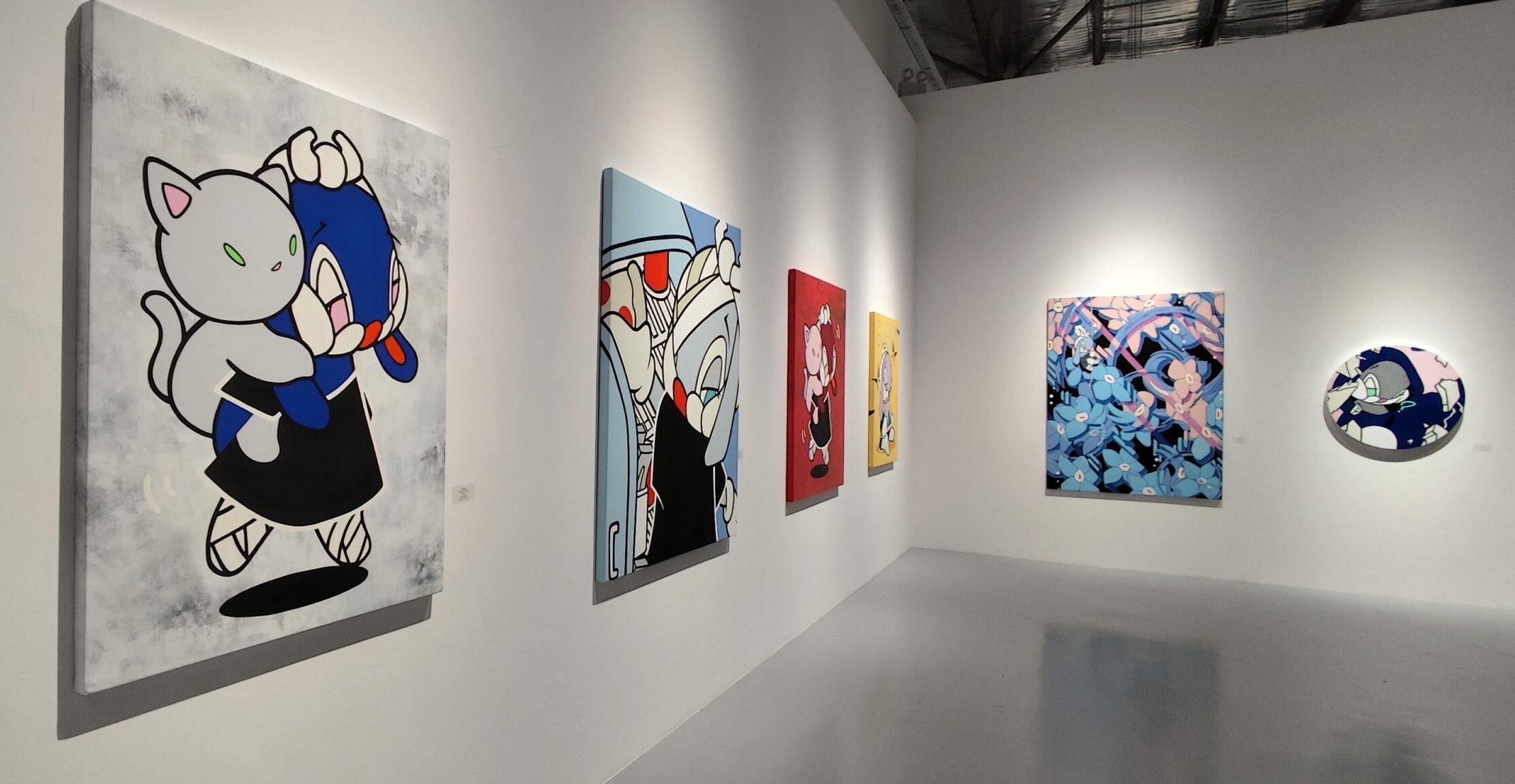 First encountered during Whitestone Gallery’s presentation at ArtSG during Singapore Art Week, ZERO stood out for its playful charm and emotional resonance. In a chance conversation at the gallery, Aruta shared that the bunny represents him personally. Living with ADHD, he finds it difficult to remain still, constantly moving from one idea to the next. Like a bunny that never stops bouncing, ZERO becomes a quiet self-portrait shaped by motion and restlessness.
ZERO appears in ordinary, almost mundane situations, ironing clothes, exercising on a treadmill, or navigating domestic routines. These scenes soften the boundary between reality and imagination, revealing a tenderness beneath the humour. Through fluid, hand-drawn lines and sensitive use of colour, Aruta resists the flatness of digital imagery. His works feel tactile and human, grounded in emotional honesty. ZERO may be small and shy, but it carries a quiet resilience that lingers long after the viewer moves on.
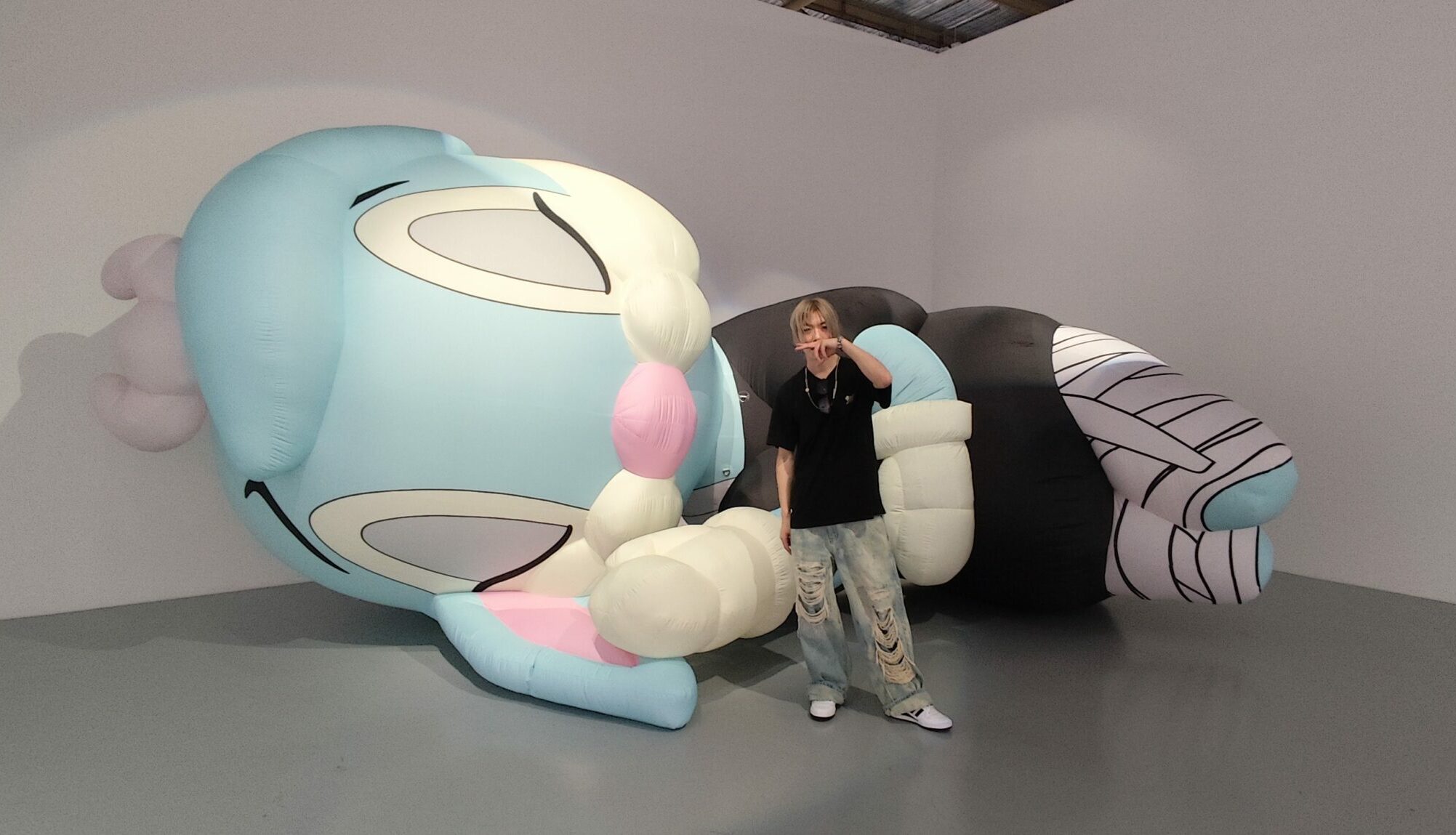 In the inner rooms of the gallery, an inflatable bunny offers one of the exhibition’s most affecting moments. Much like its character, the work feels quiet and introverted, almost retreating into the space. Yet its softness and cuteness radiate warmth, bringing an unexpected sense of comfort and joy to anyone who encounters it.
 Philip Colbert and the Language of Pop
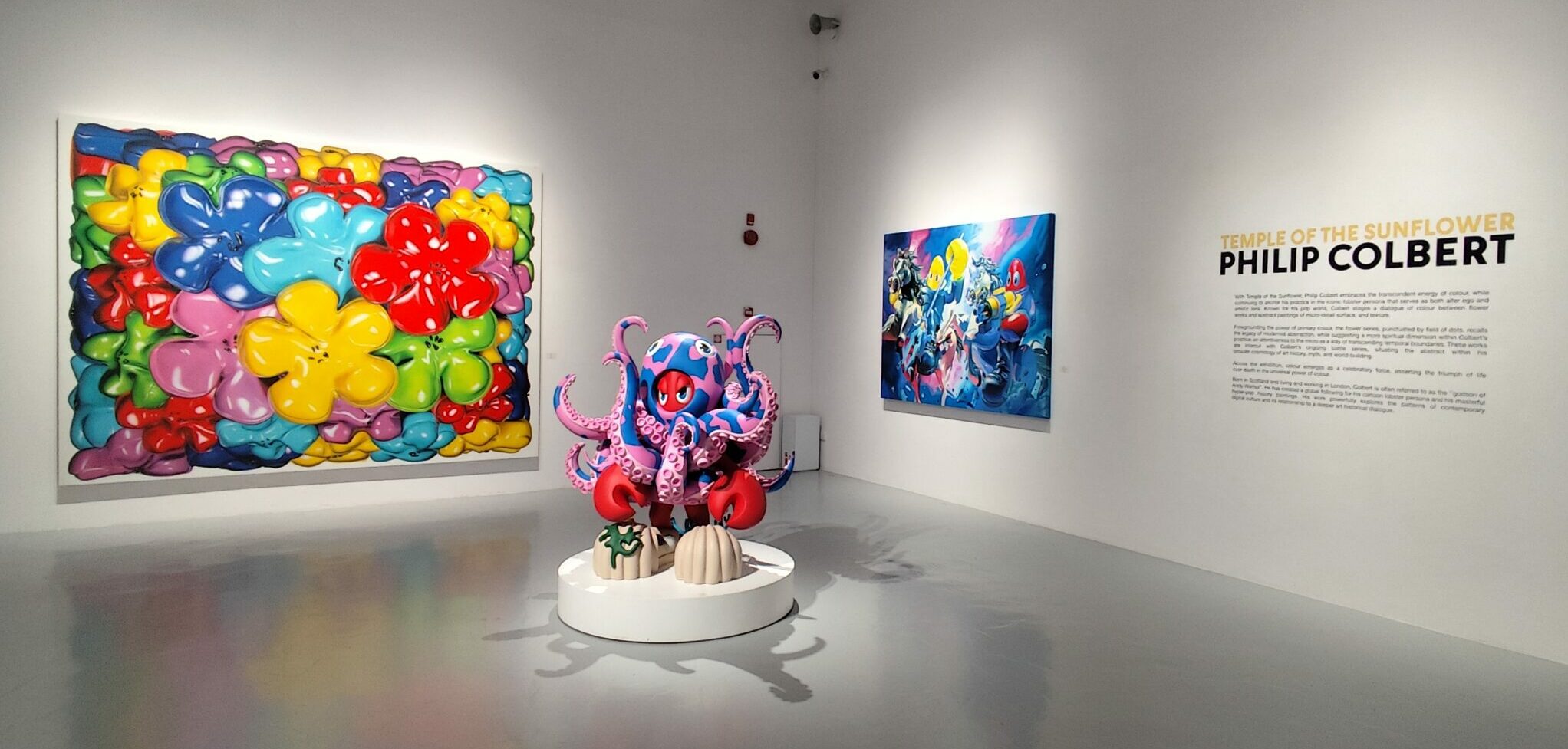
In contrast, Philip Colbert’s works operate at a higher visual frequency, bold, loud and unapologetically exuberant. Immediately upon entering the gallery, visitors are confronted by Lobstar Octopus ⅓ from 2022, a large painted stainless steel sculpture measuring 145.0 by 95.0 by 130.0 centimetres. Positioned prominently at the entrance, the work is impossible to miss and sets the tone for Colbert’s universe from the very first step inside.
Central to Colbert’s practice is the lobster, a figure that has become his unmistakable signature. Drawing from Surrealism, Dutch still lifes and classical imagery, Colbert transforms the lobster into a contemporary icon that moves fluidly across time, art history and pop culture. In this exhibition, the lobster appears disguised as an octopus, reinforcing the artist’s fascination with transformation, disguise and the absurdity of modern identity.
Alongside the sea creatures are Colbert’s brightly coloured, pop-inflected floral paintings. Saturated with colour and visual density, the works reflect the overstimulation of contemporary consumer culture while maintaining a sense of humour and visual pleasure. Colbert has built an international reputation for creating works that are both instantly recognisable and widely collectable, often bridging high art and popular culture with ease.
Play as a Way of Seeing
What ultimately unites Colbert and Aruta Soup is not stylistic similarity, but a shared sensibility. Both artists use humour and playfulness as tools for reflection. Their characters, the lobster and the bunny, function as narrative anchors that move through chaos, repetition and uncertainty, mirroring the rhythms of contemporary life.
Seen together, their works form a gentle dialogue between spectacle and intimacy, excess and restraint. Playscapes of Dreams invites viewers to slow down, look closely and recognise the emotional undercurrents beneath its colourful surfaces. It suggests that play is not an escape from reality, but a way of engaging with it, offering moments of warmth, resilience and imagination in an ever-moving world.
Visitors are encouraged to experience Playscapes of Dreams in person, to step into these parallel worlds and spend time with the characters that inhabit them.
Exhibition details
Exhibition: Philip Colbert × Aruta Soup: Playscapes of Dreams
Artists: Philip Colbert, Aruta Soup
Venue: Whitestone Gallery Singapore, 39 Keppel Road #05-03/06, Tanjong Pagar Distripark, Singapore 089065
Dates: 24 January to 14 March 2026