
I had the pleasure of attending the opening reception of Sama Sama on 8 August 2025, an iconic date that seemed fitting for such a landmark exhibition. Held at Whitestone Gallery Singapore, the evening was nothing short of electric: a full-house reception with guests spilling out into the lobby, all gathered to celebrate SG60 with the works of 60 contemporary local artists and collectives. Curated by Dr. Wang Ruobing, Sama Sama captures the spirit of artistic togetherness, threading individual practices into a larger story of Singapore’s evolving cultural journey.
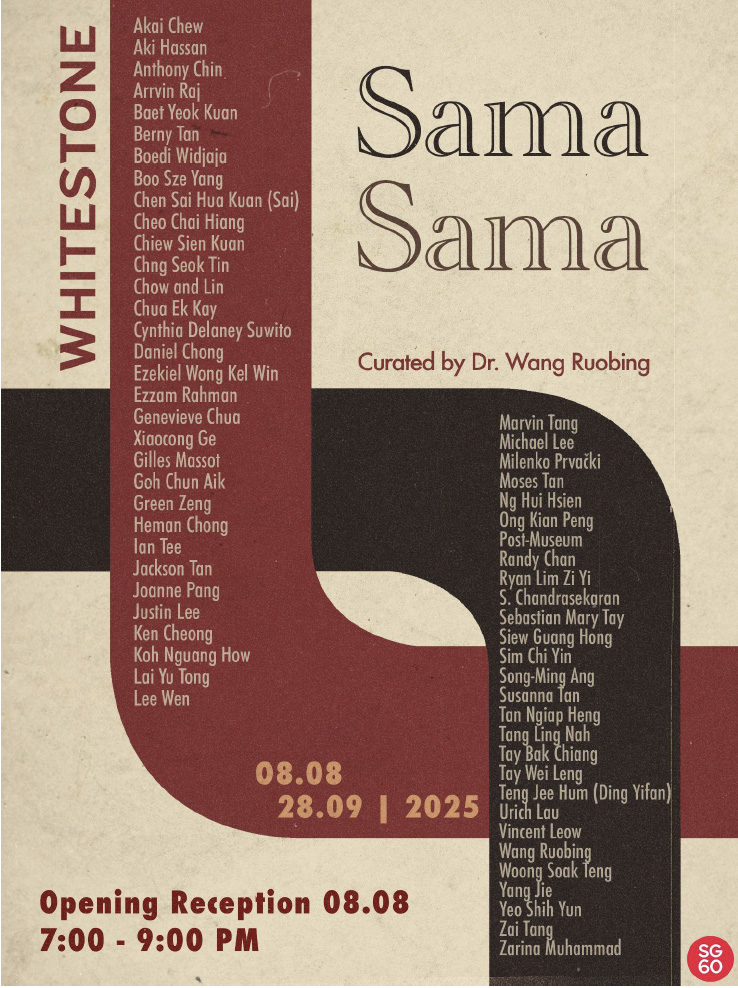
The exhibition’s title, “Sama Sama,” derived from Bahasa Malay, one of Singapore’s official mother tongue languages, and is familiar to many Singaporeans. It means “all together” or “togetherness,” while also carrying connotations of reciprocity (“you’re welcome”) and similarity (“same”). This layered expression frames the curatorial concept, inviting a revisitation of Singapore’s history and cultural trajectory through the collective voices of its contemporary artists. From its humble origins to its transformation into a global city-state, Singapore’s journey has been defined by resilience, imagination, and the unity of its people, values that underpin this exhibition.
Featuring 60 works spanning generations and practices, Sama Sama brings together names such as Anthony Chin, Boedi Widjaja, Boo Sze Yang, Chow and Lin, Cynthia Delaney Suwito, Heman Chong, Ian Tee, Jackson Tan, Lai Yu Tong, Lee Wen, Milenko Prvački, Ng Hui Hsien, Post-Museum, Dr. S. Chandrasekaran, Sim Chi Yin, and Zarina Muhammad, among many others. The show traverses a wide range of mediums, from painting and printmaking to film, photography, installation, socially engaged practice, and performance, reflecting the diversity and richness of contemporary art in Singapore.
What struck me most was how the works collectively embody a set of core values: freedom, diversity, inclusiveness, resistance, and imagination. This is not a conventional survey of contemporary art history, but a group show alive with layered interpretations, material experimentation, and poetic connections. Each artwork holds its own narrative, resonating with history while speaking to the urgencies of the present and the uncertainties of the future. Together, these works stand as an artistic statement on 60 years of nation-building, sama-sama in Sama Sama.
With so many remarkable contributions, it would be impossible to do justice to every artist in a single article. For this feature, I would like to highlight a selection of works that personally stirred deep emotions and prompted reflection, not as a hierarchy, but as glimpses into the profound encounters this exhibition makes possible.
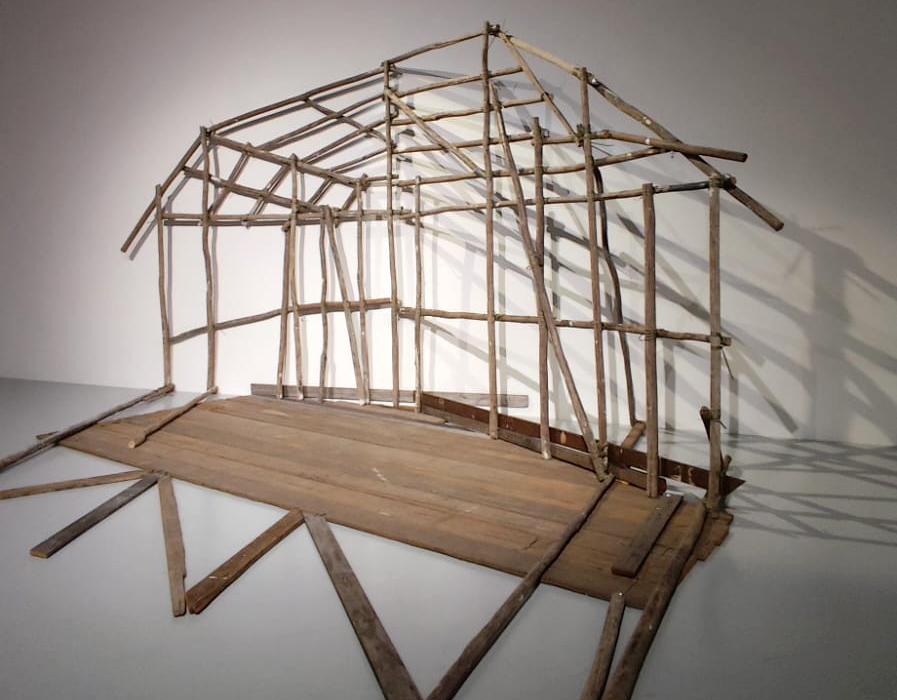
At the entrance, Randy Chan’s monumental installation In the Shape of Absence commanded attention. Constructed from reclaimed timber, the skeletal frame resembled a house both remembered and lost. It leaned and fractured, an architectural ghost that invited visitors to step inside absence itself, to consider what defines home when its physical structure has disappeared. Known for his boundary-crossing practice between architecture and art, Chan once again demonstrated how space can become both memory and stage.
Nearby, Anthony Chin’s S$1,996/- S$831.06 was a quieter yet equally provocative reflection. Comprising a precarious pillar of S$1 coins, the work emerged from a failed grant application, a donation drive, and the realities of artistic survival. More than a sculptural object, it stood as a critique of fragility within Singapore’s art ecosystem, questioning the sustainability of creativity in a system where value is often measured in hard currency.
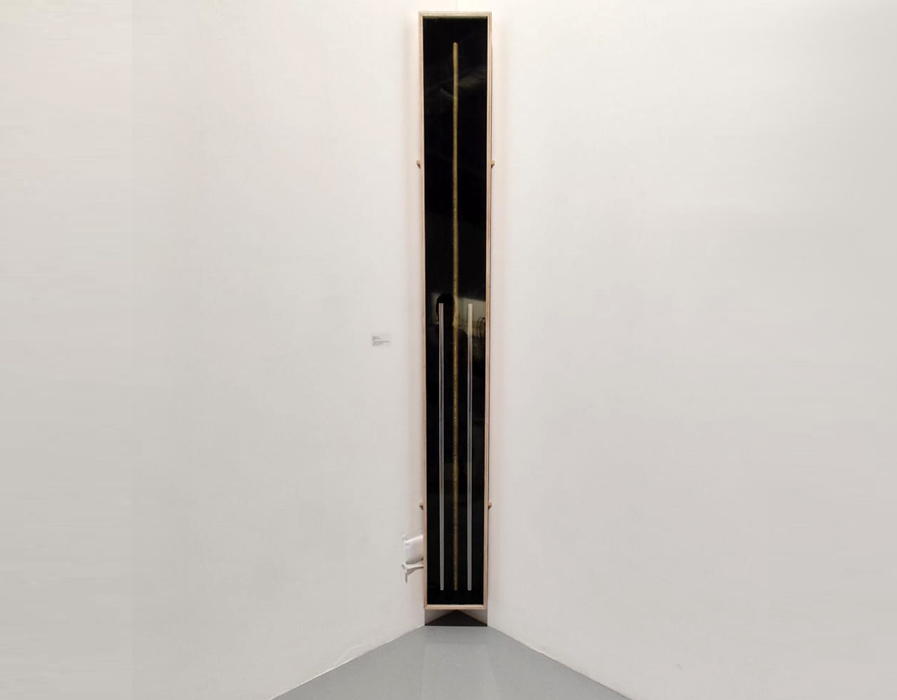
Boedi Widjaja’s Cosmic Strangers, Cardinal Nodes pulled us into an entirely different dimension. Combining a muon tracker, meteorite fragments, and augmented reality projections of a hypercube, the work shimmered with cosmic temporality. It was both deeply personal and expansively universal, linking Widjaja’s diasporic reflections with the particles that traverse the universe.
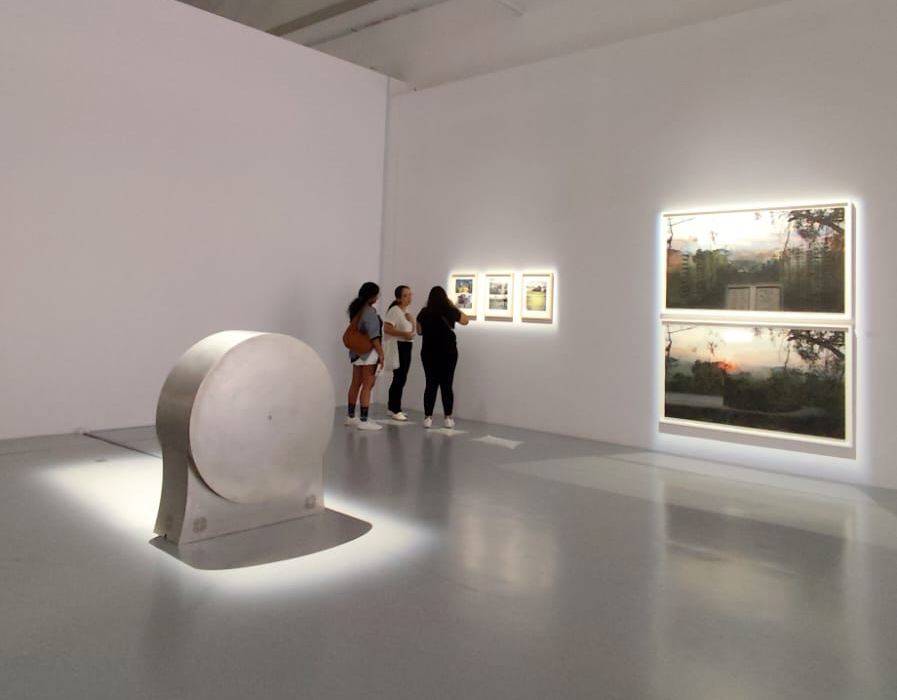
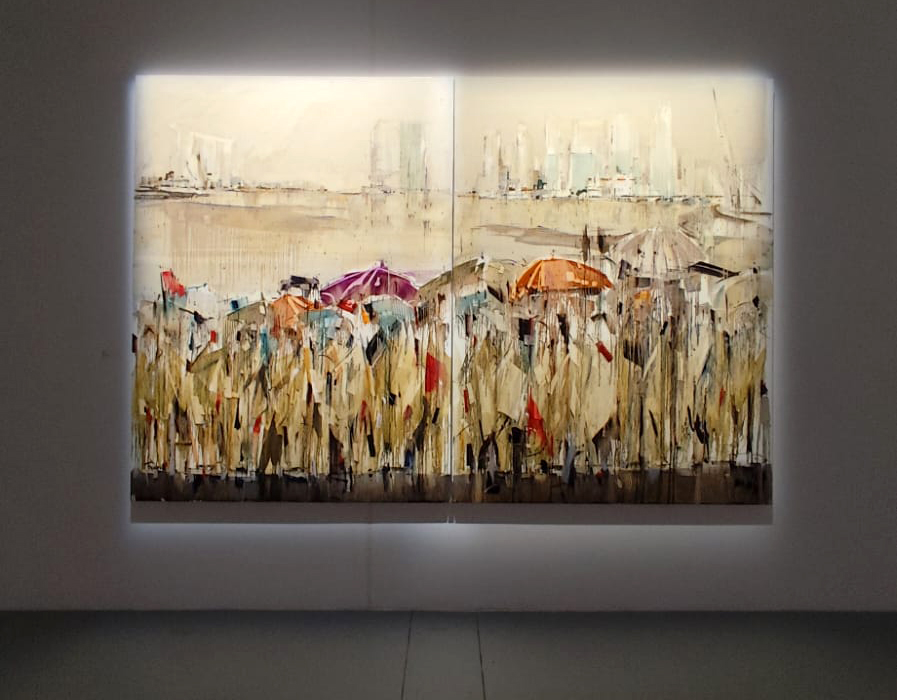
Emotion ran deep in Boo Sze Yang’s paintings from his 29.03.15 series. Instead of direct portraits of Singapore’s founding father, Lee Kuan Yew, Boo turned his gaze to the citizens who stood in mourning that day. Blurred forms under umbrellas became symbols of quiet resilience, capturing the shared emotional weight of collective memory.
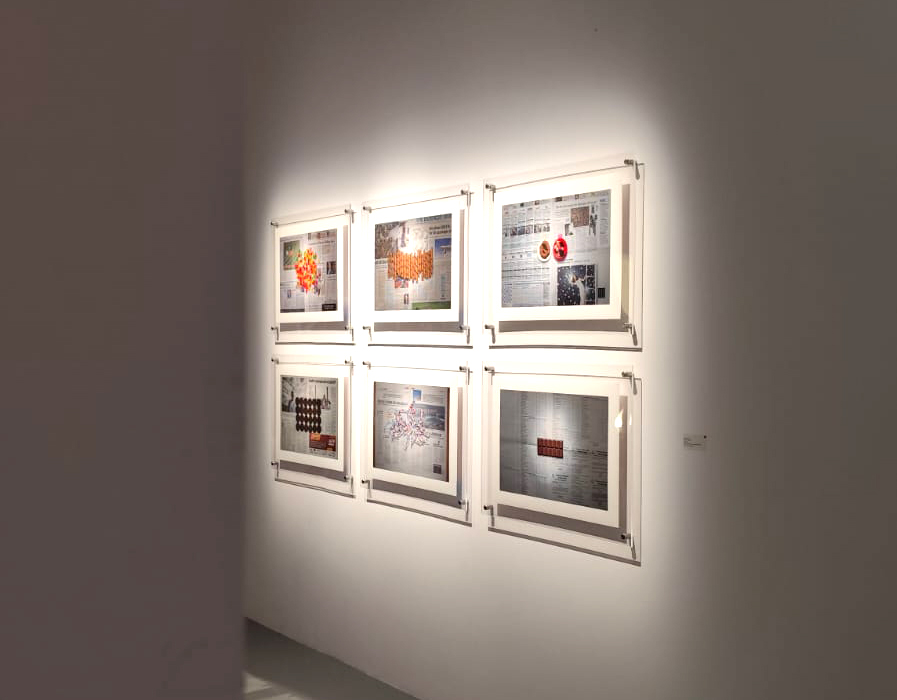
The collaborative duo Chow & Lin approached the question of humanity through numbers. Their long-term project The Poverty Line used the language of food photography to illustrate what daily sustenance looks like at the poverty line across 38 countries. Displayed as stark still-life compositions, their prints were a sobering reminder that statistics are lived realities.
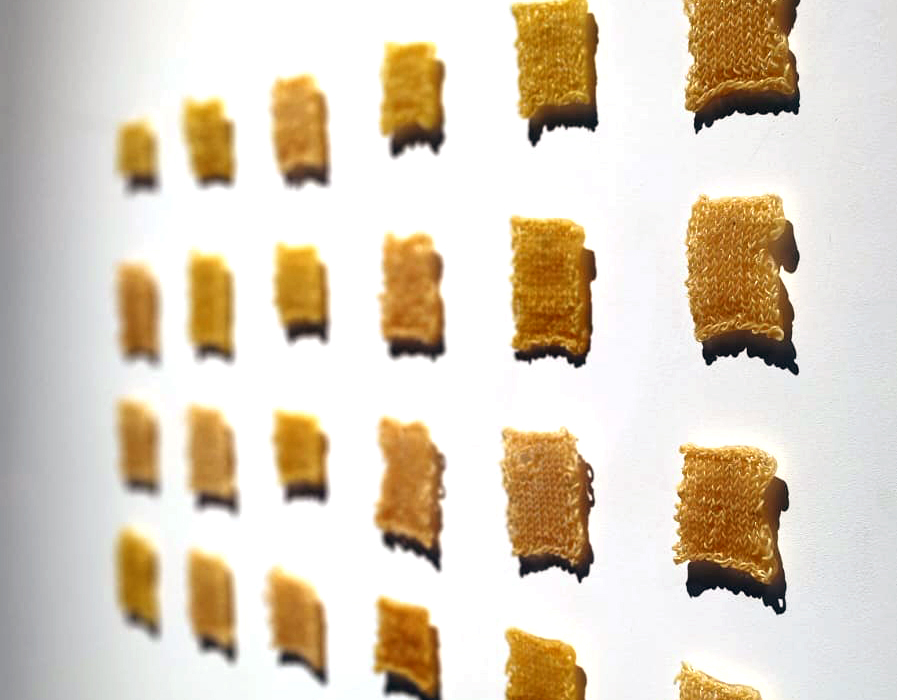
Meanwhile, Cynthia Delaney Suwito brought a gentle touch of absurdity with her performance Knitting Noodles. Using instant noodles as yarn, she knitted fragile strips that threatened to crumble with each stitch. I had a chance to chat with her during the opening, and she spoke about patience, presence, and the meditative focus required to keep the noodles intact. It was a poetic contradiction, the fast-food symbol of modern life slowed into fragile, time-consuming labour — a lesson in fragility and mindfulness.
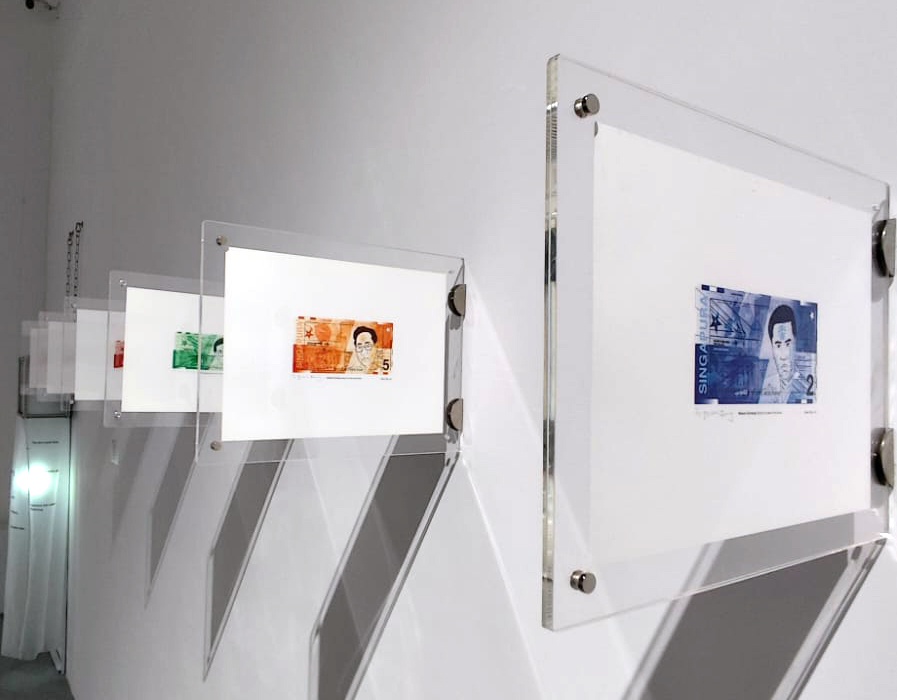
Green Zeng’s Malayan Exchange series reimagined Singapore’s currency notes, inscribing forgotten activists, overlooked histories, and fragments of national identity onto imagined banknotes. I was particularly struck by how the reverse side juxtaposed silhouettes of Lee Kuan Yew with maps of Singapore, a layered reminder of how history is remembered and circulated.
Blue, Orange, Green, Red, Purple, Yellow
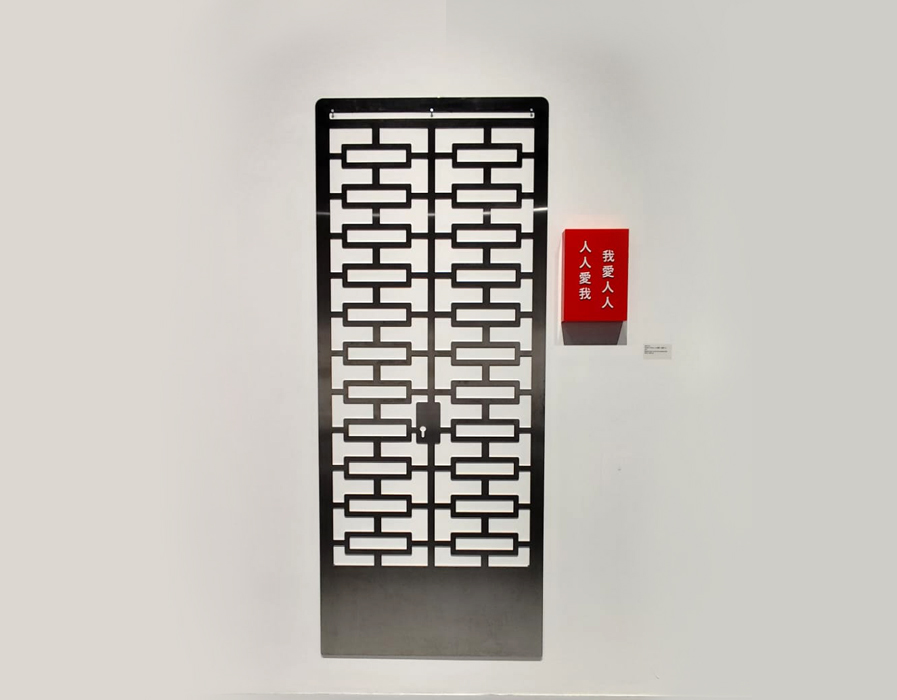
Justin Lee’s Together, Forever brought a burst of brightness and playfulness. Recasting the once-ubiquitous HDB metal gate into a pop-inspired artwork, Lee paid tribute to the heartlands where community, memory, and daily life intertwine. His work felt like a love letter to Singapore’s shared spaces, lighthearted yet deeply rooted.
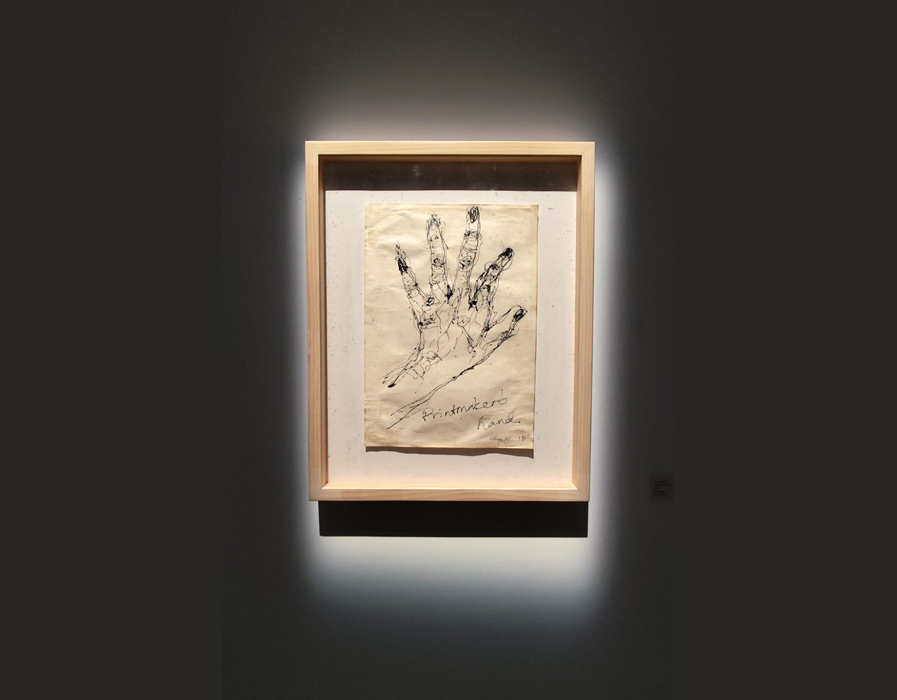
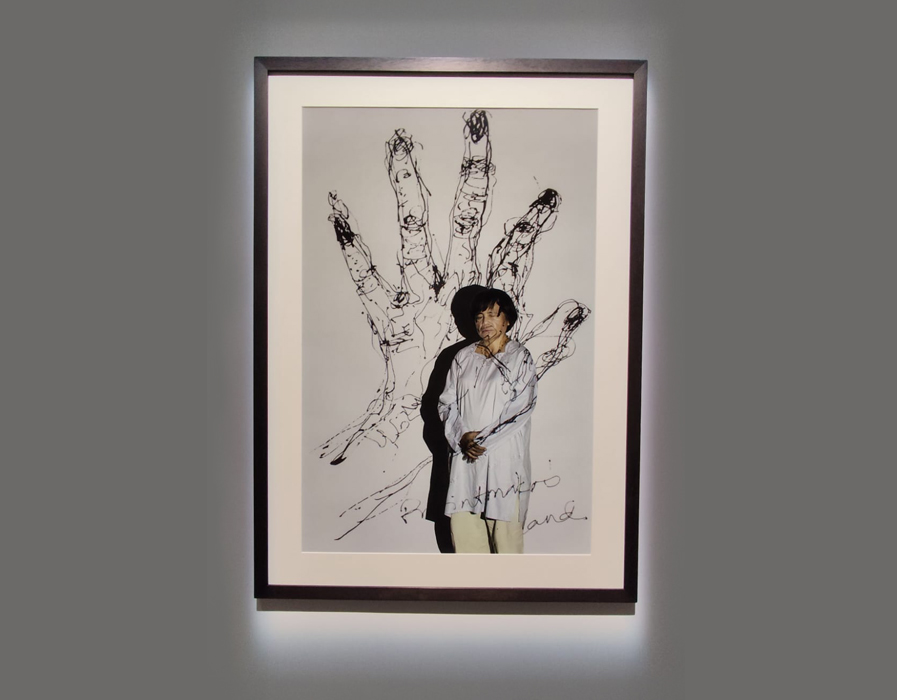
No survey of Singapore art would be complete without honouring pioneers. Sama Sama paid tribute to the late Chng Seok Tin, a visionary printmaker who continued to create even after losing much of her sight. Her Printmaker’s Hand was displayed alongside Tan Ngiap Heng’s poignant portrait of her, in which Chng’s own artwork is projected across her figure, as though enveloping her in the embrace of her practice. The pairing was both tender and powerful, encapsulating how community and art entwine.
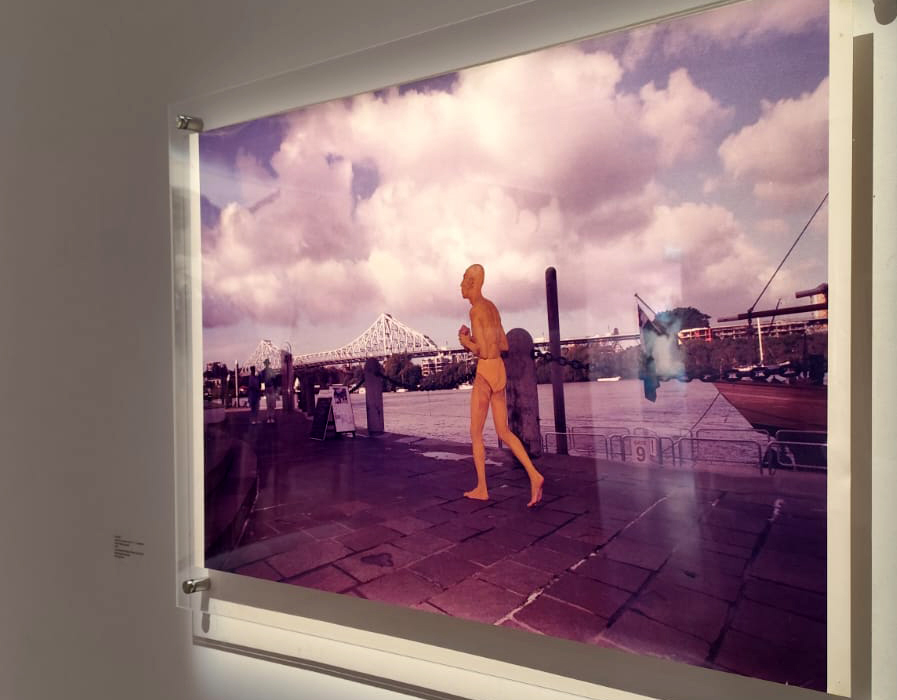
The late Lee Wen was also remembered through his iconic Journey of a Yellow Man. A pioneering performance artist, Lee carried his alter-ego across the world, interrogating identity and belonging with humour and subversion. His enduring presence at Sama Sama reminded us of the importance of questioning, resisting, and imagining anew.
Fragmented bodies/shifting ground
As the night drew to a close, despite Whitestone gallery manager, Priscilla’s playful attempts to usher us out, no one seemed in a hurry to leave. The gallery buzzed with conversations, laughter, and reunions. For me, it was a night not just of art, but of community, a reminder that art is as much about people as it is about objects.
“Sama Sama” runs until 28 September 5 October 2025 at Whitestone Gallery. Take your time to return, wander, and reflect. As Singapore turns 60, this exhibition invites us to remember where we’ve been, to celebrate who we are, and to imagine, together, what comes next.
Address: 39 Keppel Road, #05-03/06 Tanjong Pagar Distripark, Singapore 089065
+65 6223 3090
+65 6223 3657
Opening Hours: 11:00 – 19:00
Monday, Public Holiday