
Singapore Art Museum presents the acclaimed Japanese artist’s first major Southeast Asian survey, tracing five decades of inquiry into time, perception and emptiness.
Perception. Time. Existence. Life. Themes that internationally acclaimed artist Hiroshi Sugimoto has been pondering for over 50 years of his artistic practice. An antique dealer in New York before becoming a full-time photographer and artist, Sugimoto’s work draws from Japanese aesthetics, conceptual photography, and Buddhist philosophical thought, particularly meditations on perception, time, and emptiness. Sugimoto, in fact, wears many hats – Artist, Photographer, Architect, Calligrapher, Theatre Director and Spatial Designer.
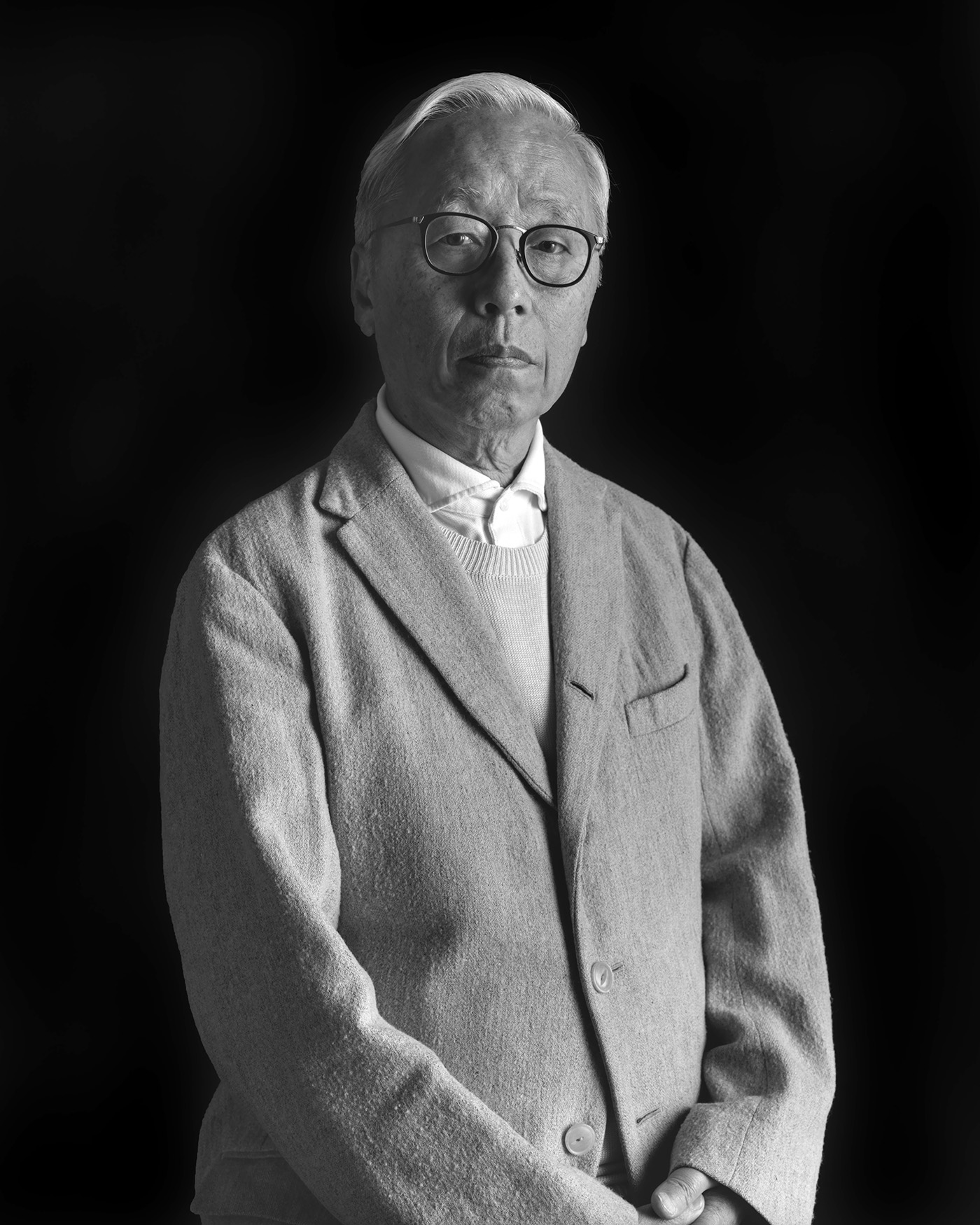
Form Is Emptiness, Sugimoto’s first major show in Southeast Asia, brings together over 60 works spanning five decades of practice. Designed by Sugimoto himself, the exhibition unfolds through a mandala-like spatial layout influenced by Buddhist cosmological thinking. The space is designed to allow viewers to take a more meditative approach to viewing art. Much of Sugimoto’s work rewards attentive and sustained viewing, gradually revealing its conceptual and philosophical depth.
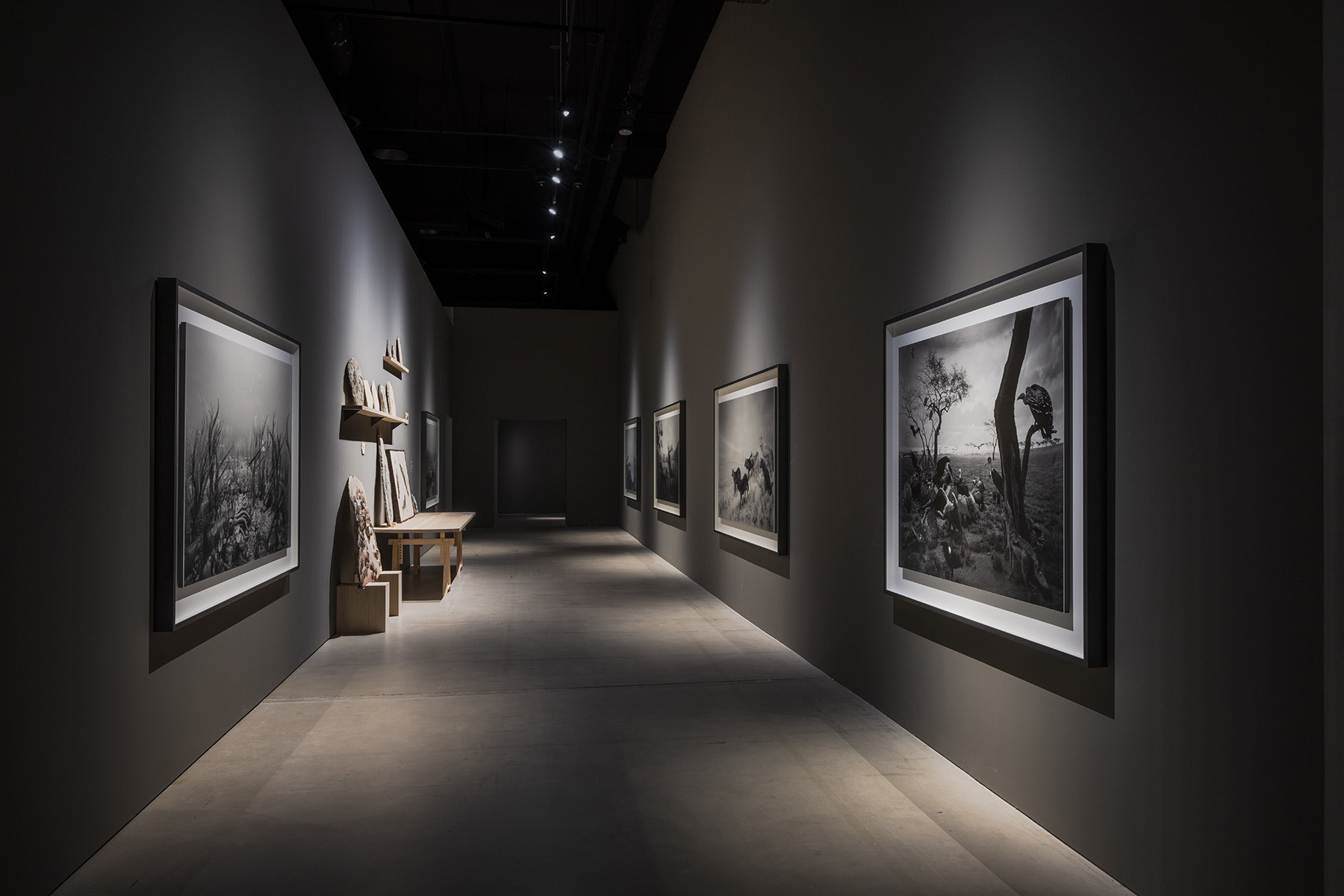
Upon entering the exhibition space at the Singapore Art Museum, you will be greeted by two of Sugimoto’s iconic series, Diorama and Seascape. Diorama (figure 1), Sugimoto’s earlier photographic work, challenges the viewer’s perception of what is real, revealing how photography can render artificial scenes uncannily believable. Alongside the Diorama series, Sugimoto also presents some of his personal fossil collection. Fossils, according to him, are the earliest examples of how time is encapsulated, in this case, in stone. Like photography, fossils become vessels through which time is preserved.
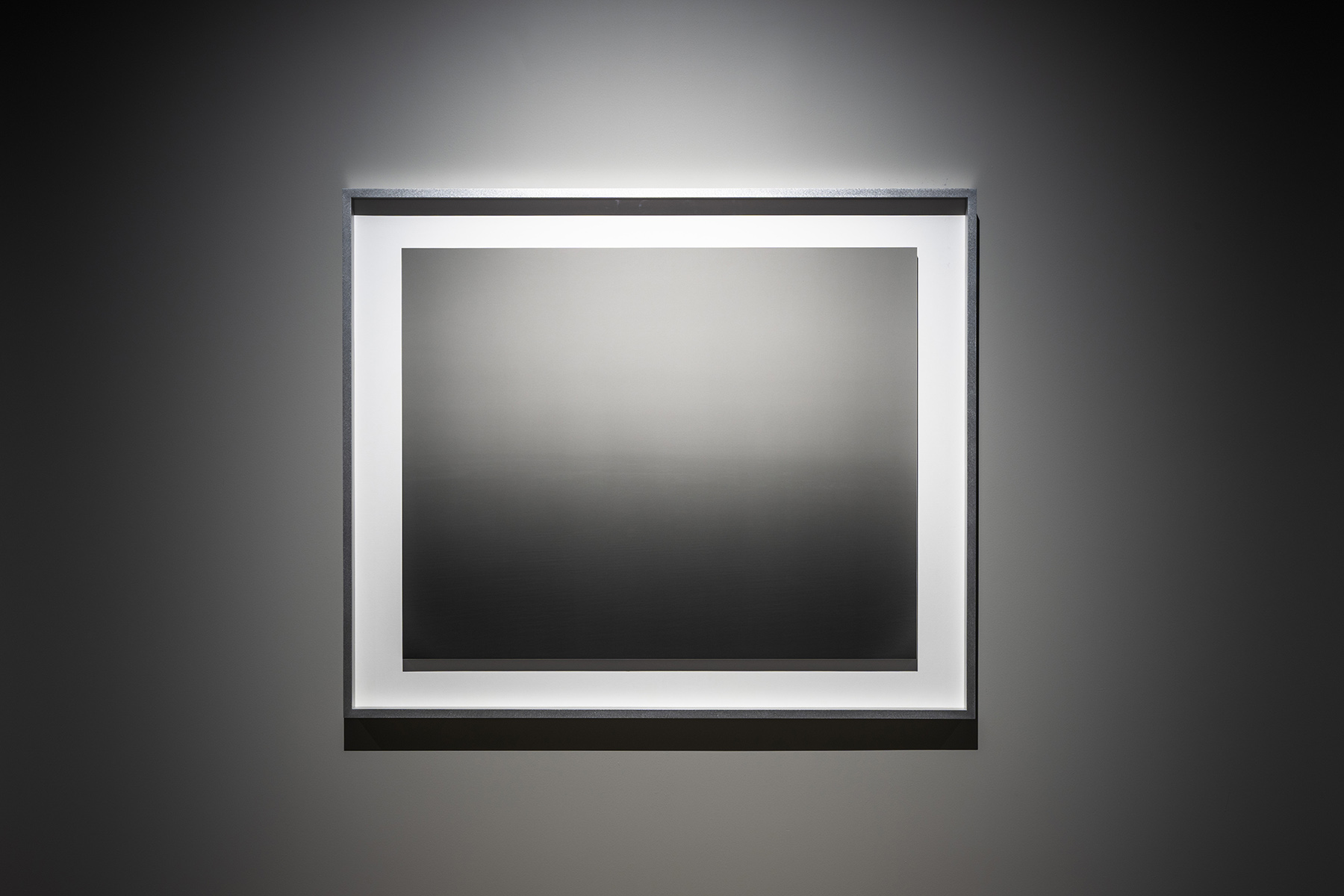
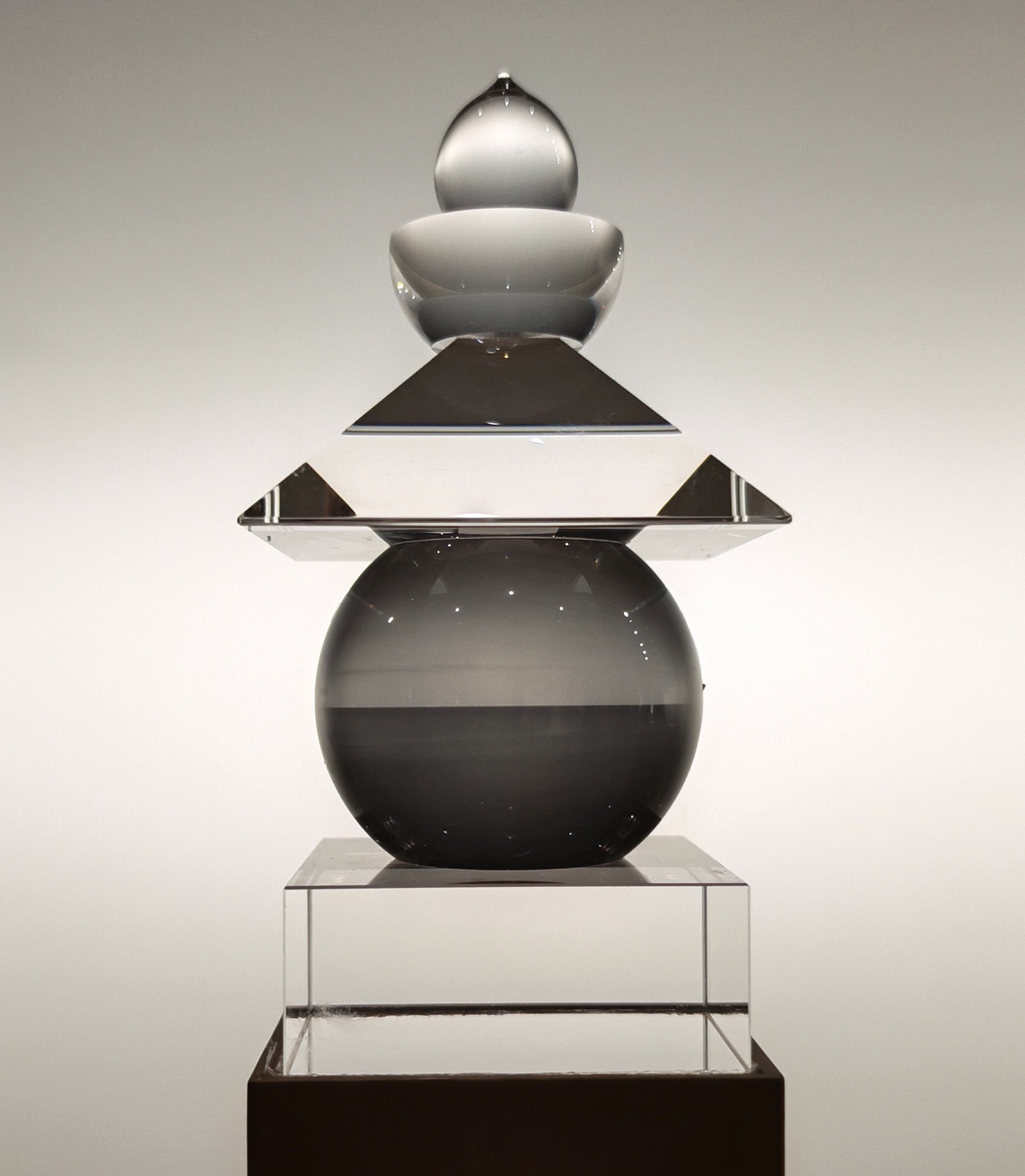
Seascapes (figure 2), another of his earlier iconic works and still ongoing, reflects Sugimoto’s fascination with primordial continuity, presenting views of sea and horizon that ancient humans might once have encountered thousands of years ago. Each photograph presents a quiet, tranquil horizon seemingly untouched by human presence, evoking a sense of deep time. As you progress along the exhibition, you will encounter a series of miniature glass pagodas made with optical glass, titled Five Elements (figure 3). Embedded within each of these pagodas is a photograph from the Seascapes series. In Buddhist traditions, pagodas are used to house relics of the Buddha. In the case of Sugimoto’s glass pagodas, the seascape itself begins to resemble a relic suspended within glass.
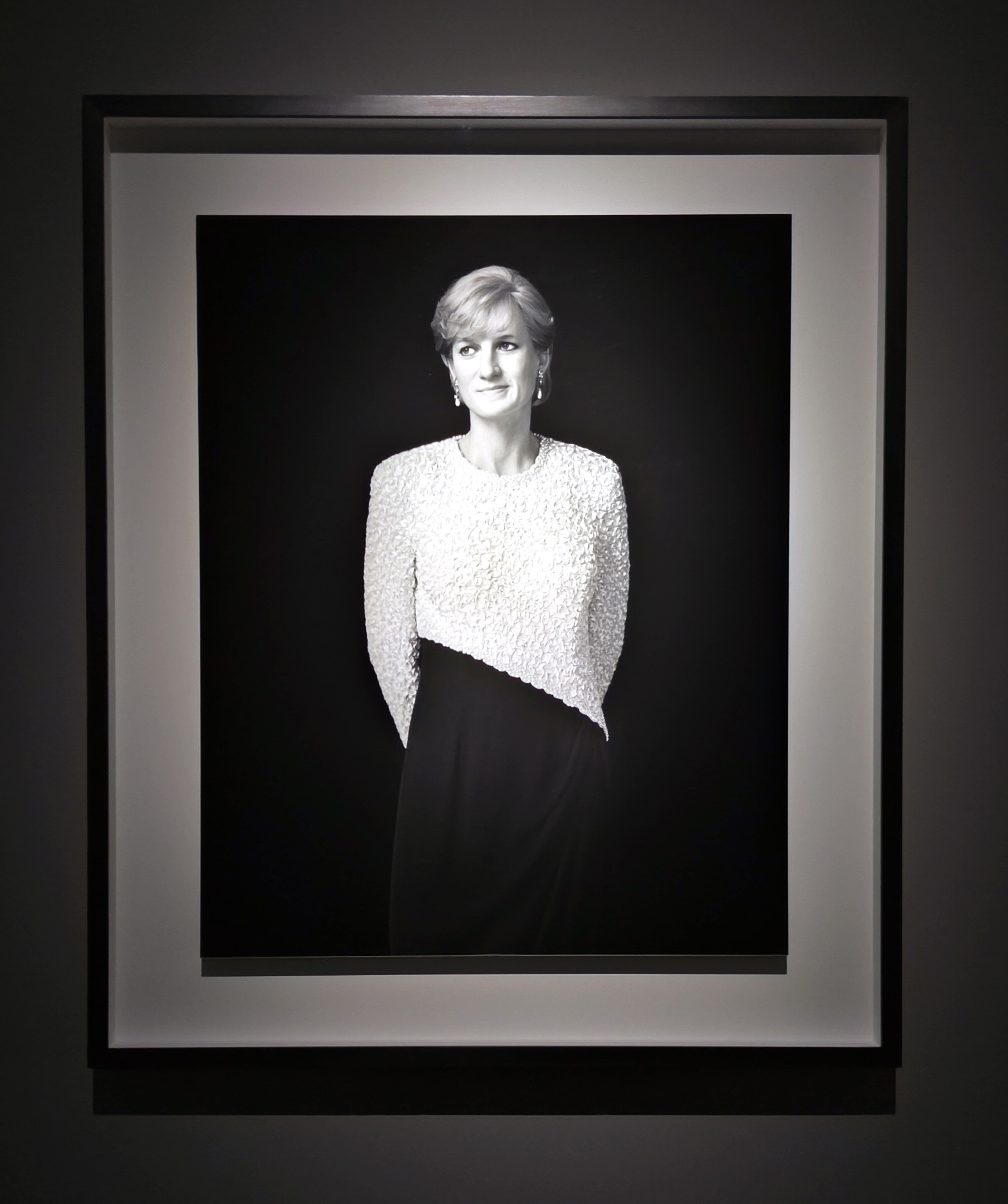
The exhibition also presents his Portraits series (figure 4). What seem to be elegantly photographed portraits of famous people around the world are more than they appear. Upon closer inspection, viewers may begin to notice a strange stillness within the images. These are, in fact, photographs of wax figures from Madame Tussauds, prompting questions about realism, representation, and what constitutes human presence.
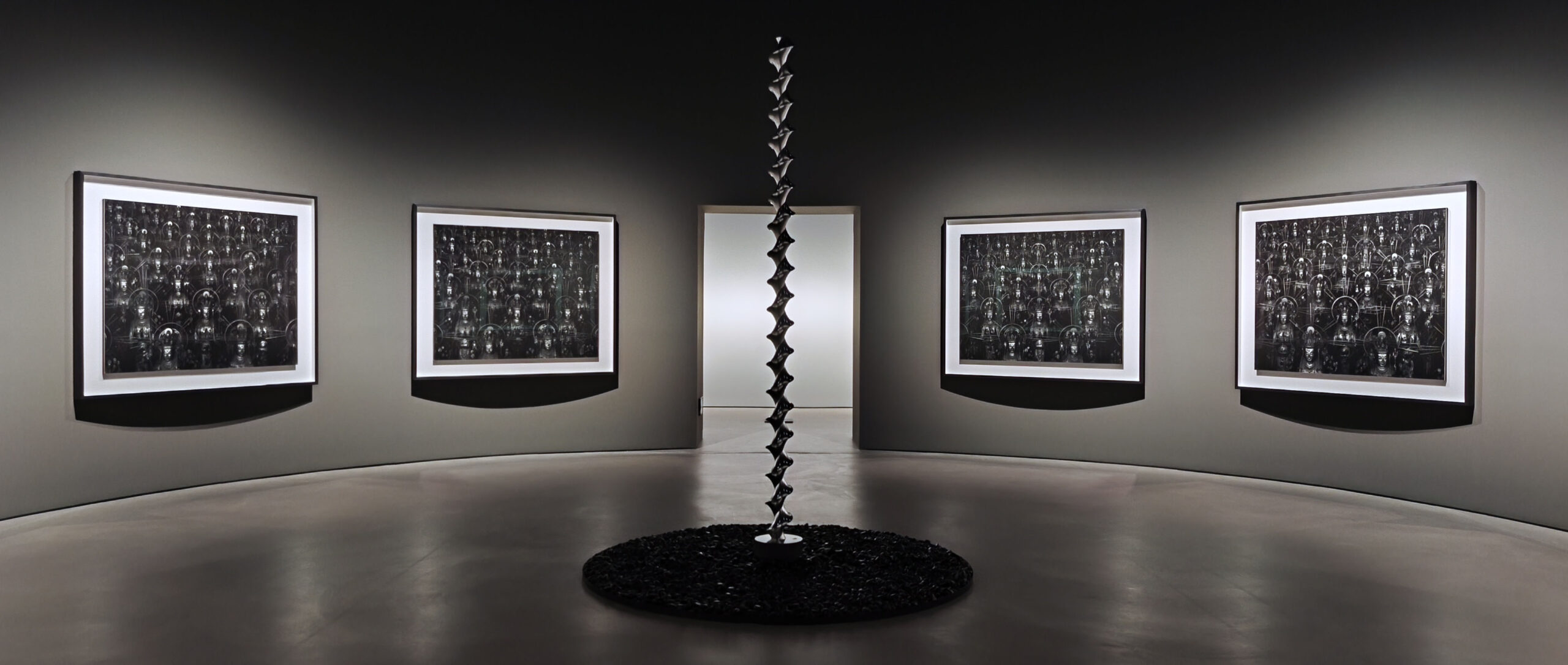
As you approach the centre of the exhibition space, you will be enchanted by the photographs of the ‘Thousand-Armed Bodhisattva Avalokitesvara’, titled Sea of Buddha (figure 5). Sugimoto spent 7 years trying to persuade the temple in Kyoto to allow him to photograph the centuries-old statues of the Bodhisattva. A selection of the photographs is presented in the exhibition. Arranged in a circular formation, surrounding a spiralling sculptural form in the middle of it, the space evokes a sense of contemplation and reflection. Adjacent to this space is Sugimoto’s first video work, Accelerated Buddha, which uses photographs of the Bodhisattva statues appearing in an increasingly rapid sequence until they blur into a vibrating field of motion, collapsing stillness into acceleration and meditation into visual intensity.
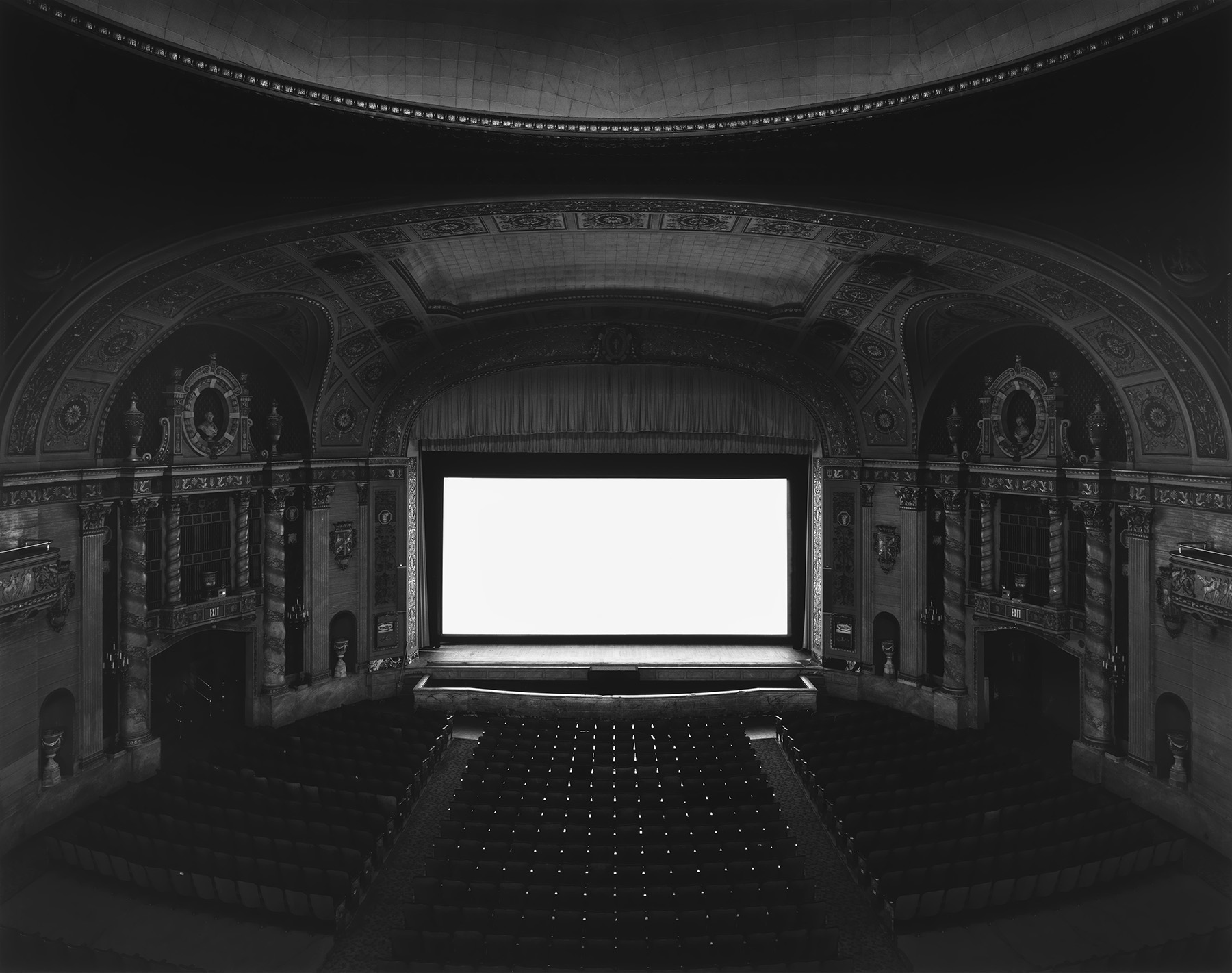
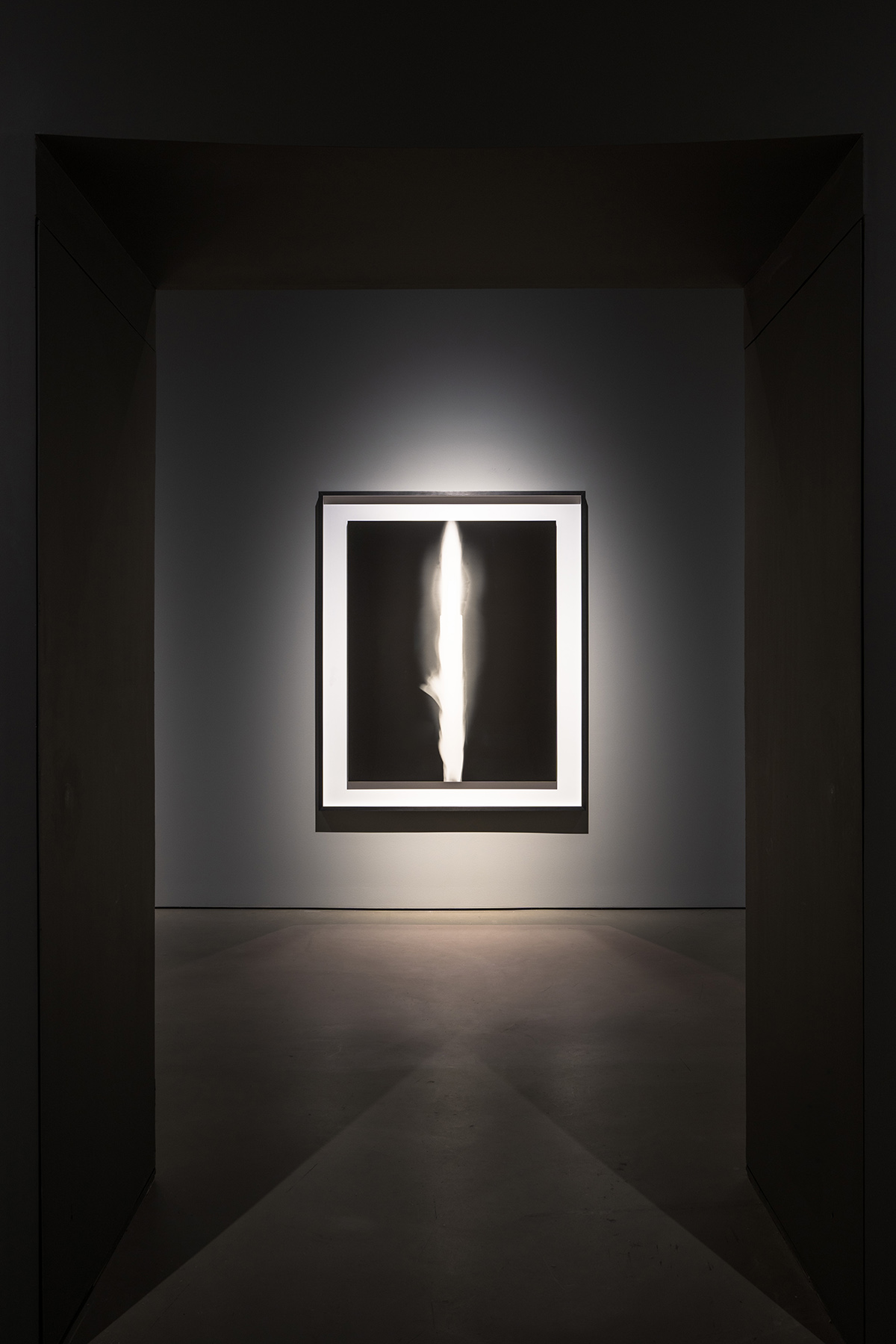
A constant recurring theme in Sugimoto’s work deals with the idea of time, and this can be seen in his Theaters (figure 6) series, in which he compresses the entire duration of a movie into one single photograph, resulting in a luminous white screen suspended within the darkness of the theatre. In his other work, In Praise of Shadows (figure 7), Sugimoto charts the flow of time through a single slow-burning candle, examining the passage of time and the cycle of life and death.
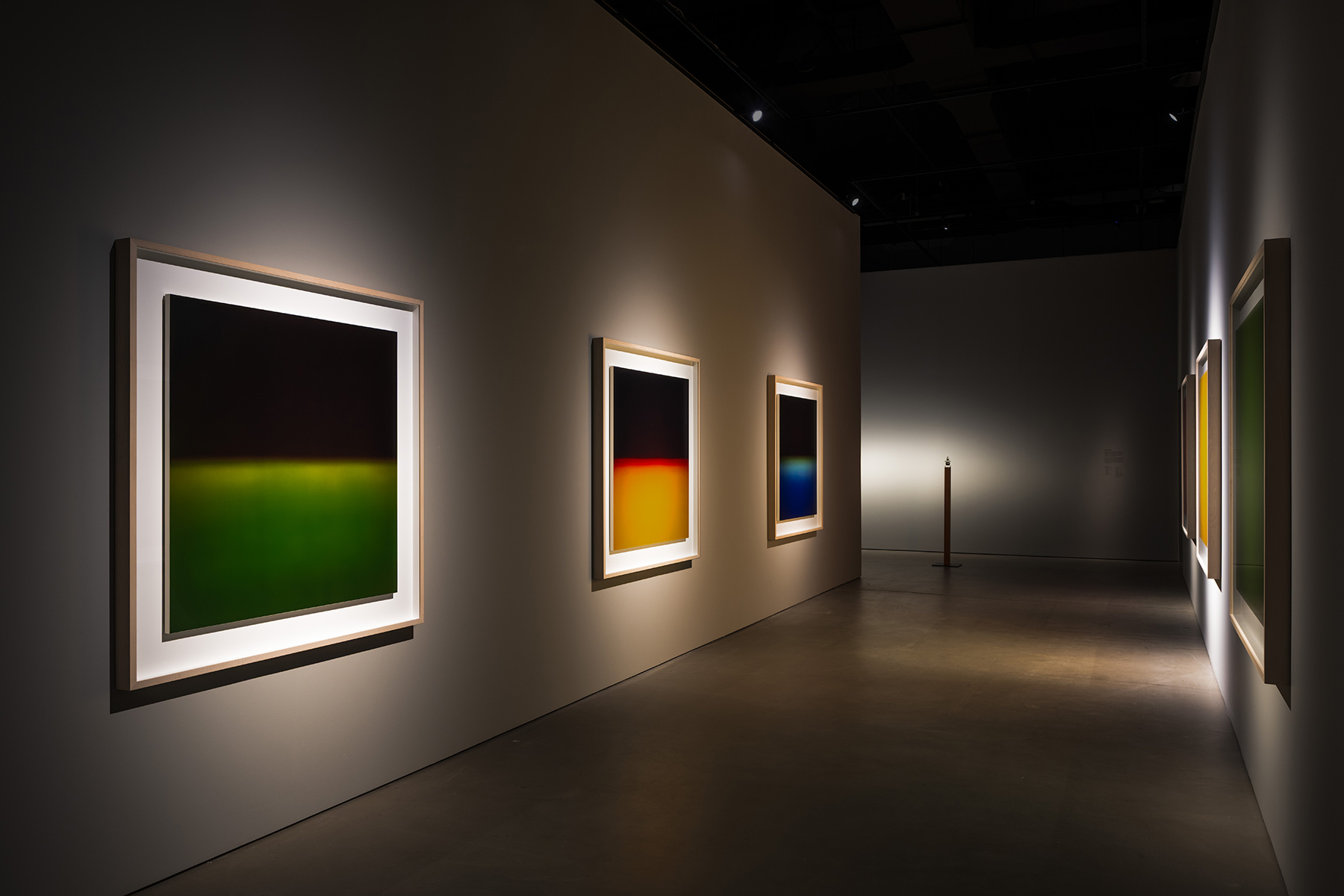
While most of Sugimoto’s signature photographic work is black and white, he experiments with colour by examining the notion of light itself. In his series, Opticks (figure 8), Sugimoto uses a prism to disperse white light, not to examine the familiar seven-colour spectrum, but the subtle gradations that exist between the visible spectrum.
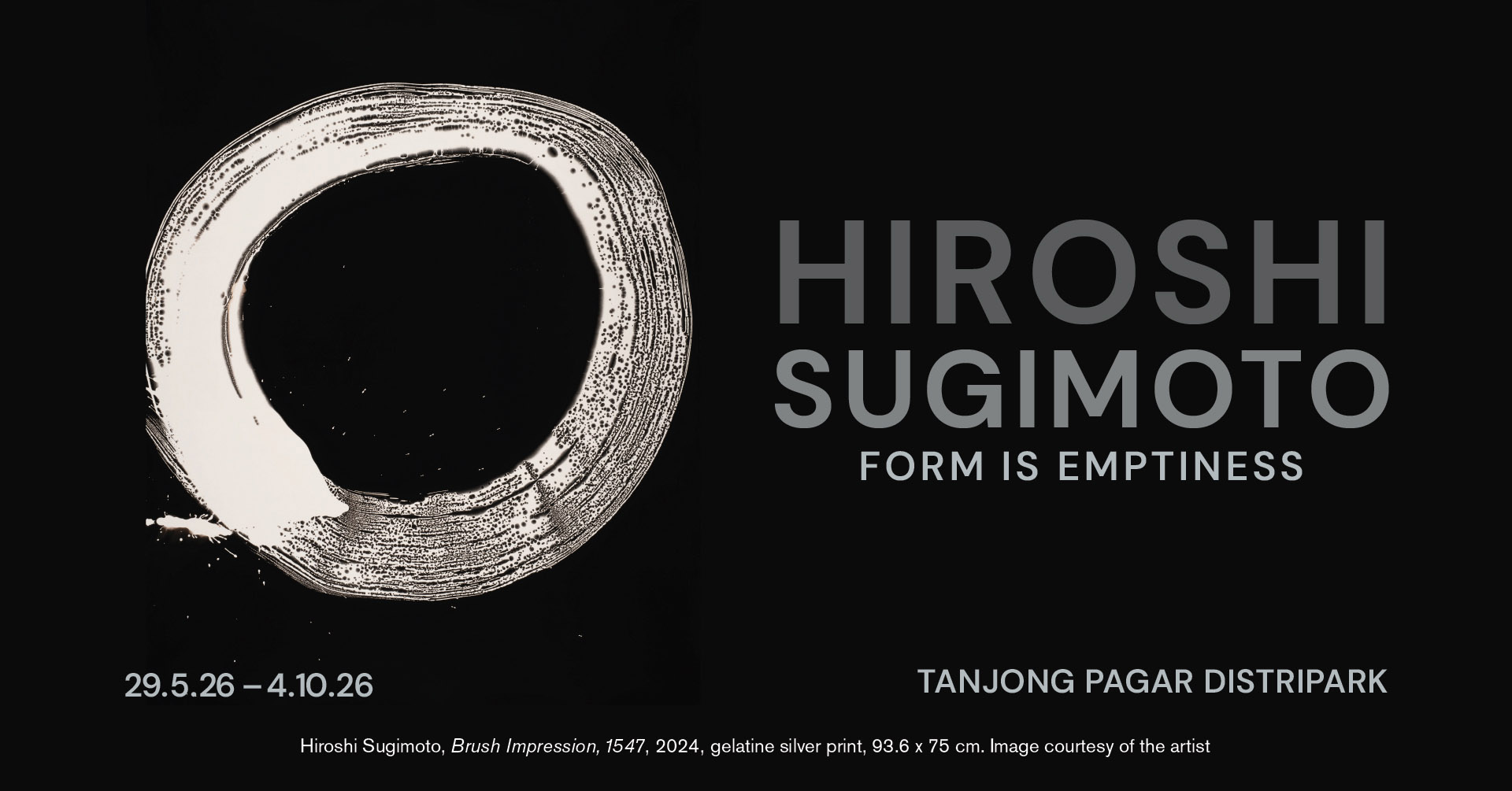
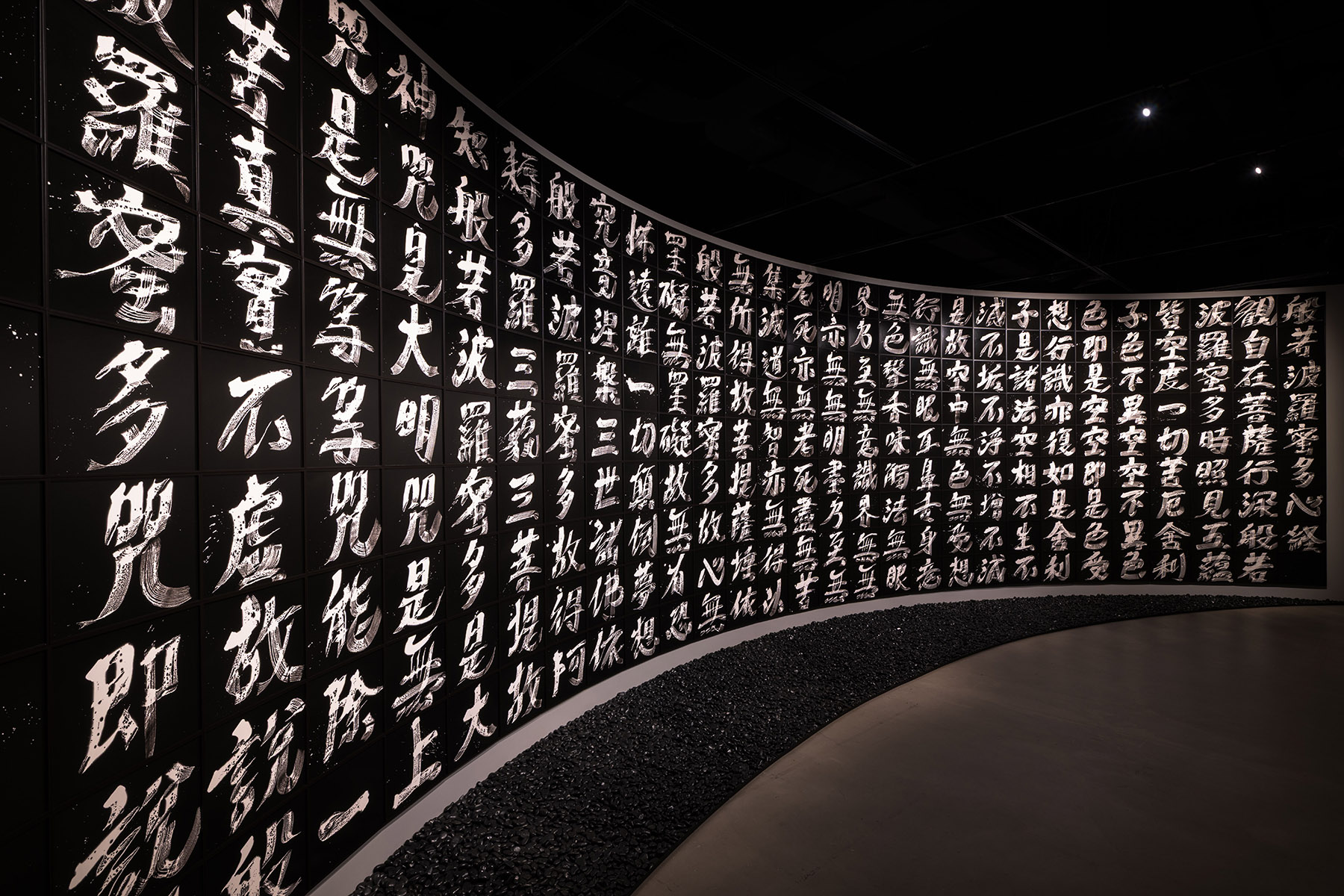
Deep within Sugimoto’s work is his sense of Buddhist philosophy, which can be seen through the exhibition’s most central work, Brush Impression, Heart Sutra (figure 9). This installation of monumental calligraphic works on photographic paper is a spiritual reflection on the meaning of life, time, emptiness and existence.
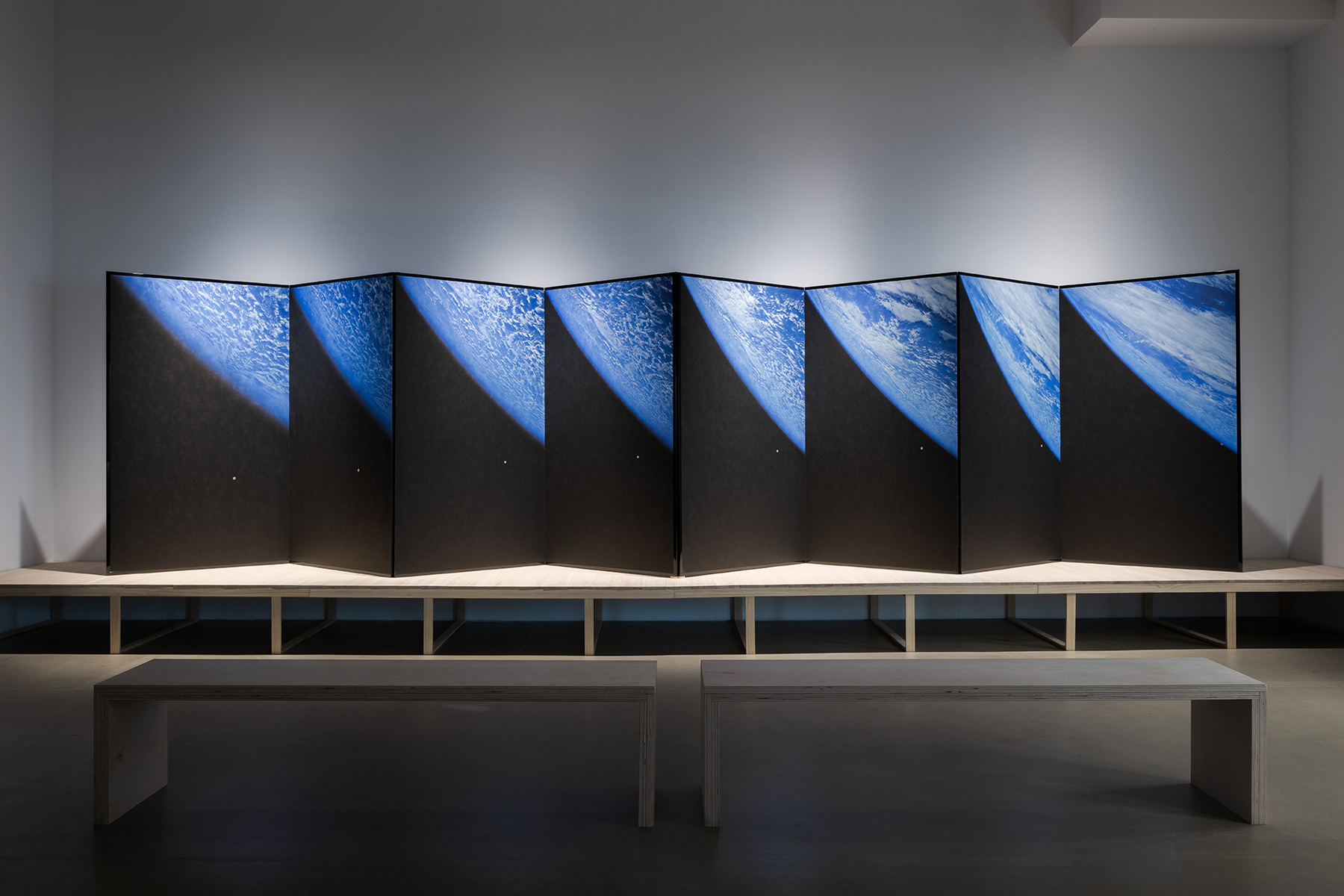
Upon exiting the main exhibition space, at the engine room next door, Sugimoto presents for the first time, his work from space, Spacescape (figure 10). In Seascapes, Sugimoto reflects on Earth’s primordial past through the sea. In Spacescape, he questions our place in this world by looking at Earth from the void.
Hiroshi Sugimoto: Form Is Emptiness is the first major survey exhibition in Southeast Asia by internationally acclaimed artist Hiroshi Sugimoto. Opens from 29 May to 4 October 2026, at the Singapore Art Museum. The exhibition brings together over 60 works across 11 series spanning over five decades of practice, alongside 14 fossil specimens from the artist’s personal collection.
Tickets are priced at $20 ($15 for Singapore Residents and Permanent
Residents). Admission is free for children aged 6 and below, local/locally based students and
teachers, persons with disabilities (PWD) and their caregivers. More information on the exhibition
is available at https://bit.ly/SAMHiroshiSugimoto.
About the author
Born and raised in Singapore, Zhou HanShun is an artist and photographer who sometimes writes as Simond Chew.