Tag: Singapore

  • Through Reverie: Love and Memory | A Duo-Solo Exhibition by Clasutta and C.K. Koh

    Through Reverie: Love and Memory | A Duo-Solo Exhibition by Clasutta and C.K. Koh

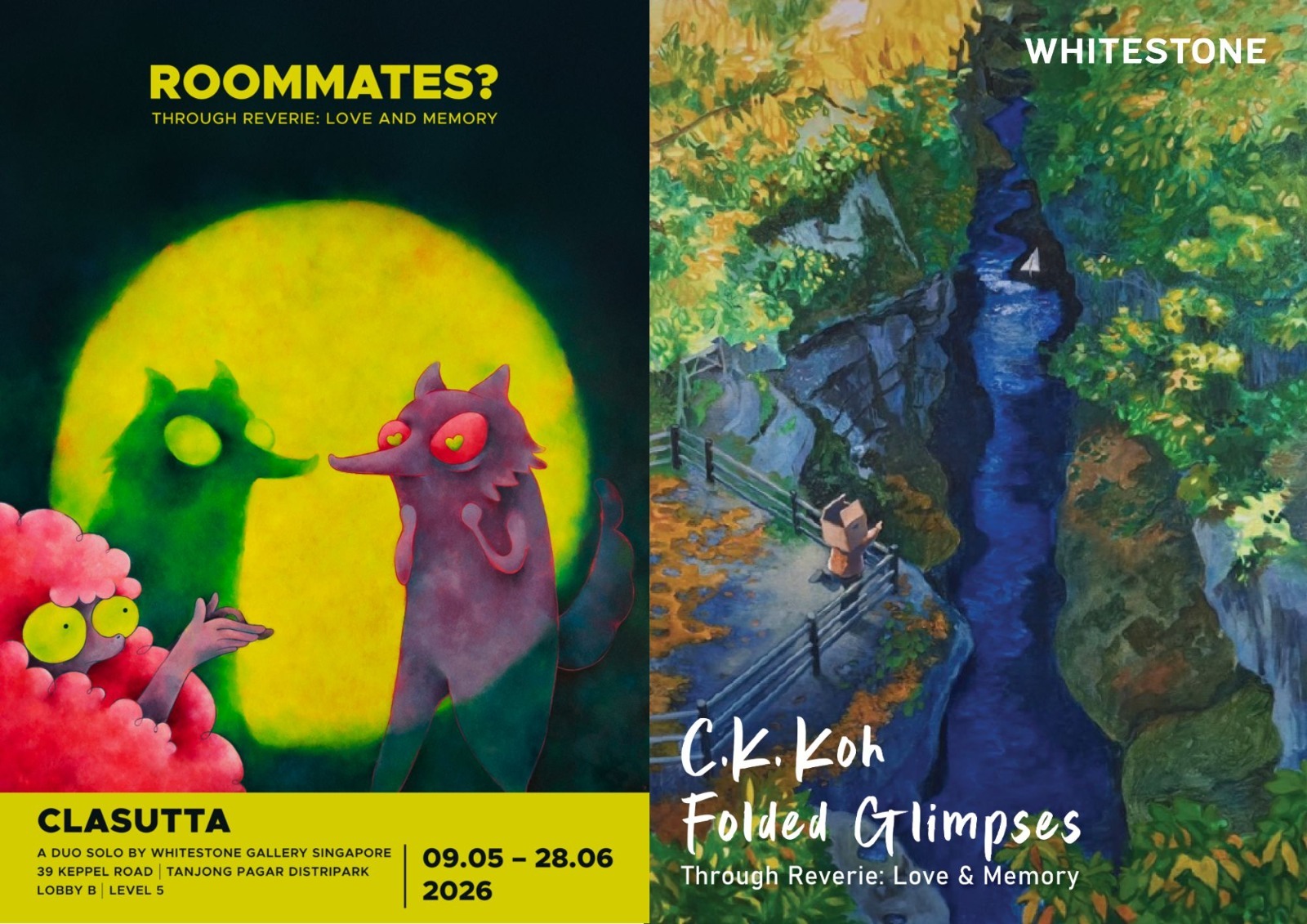
    There is something quietly relatable about Through Reverie: Love and Memory, the current duo-solo exhibition by Clasutta and C.K. Koh at Whitestone Gallery Singapore.

    Although both artists present vastly different visual styles and narratives through their respective solo exhibitions, Roommates? and Folded Glimpses, they are connected by themes that feel deeply human. Love, memory, longing, companionship and the quiet emotions we carry with us through different stages of life.

    I had the chance to meet both artists during the opening reception on 9 May, and hearing them speak about their works added another layer of depth and intimacy to the exhibition experience.
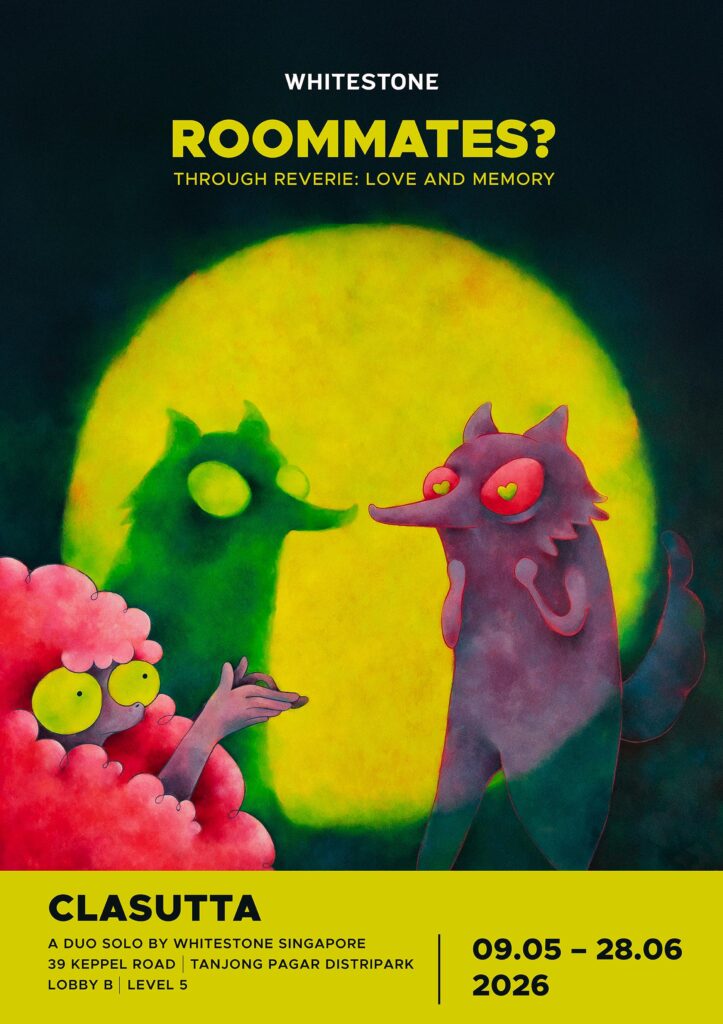
    Roommates? by Clasutta

    Roommates? by Clasutta

    Young Indonesian artist Clasutta, also known as Sutta, is one of the newer emerging names to watch from Jakarta’s contemporary art scene. Originally trained in architecture before transitioning into painting full-time, her practice often explores human behaviour through quirky anthropomorphic animal characters.
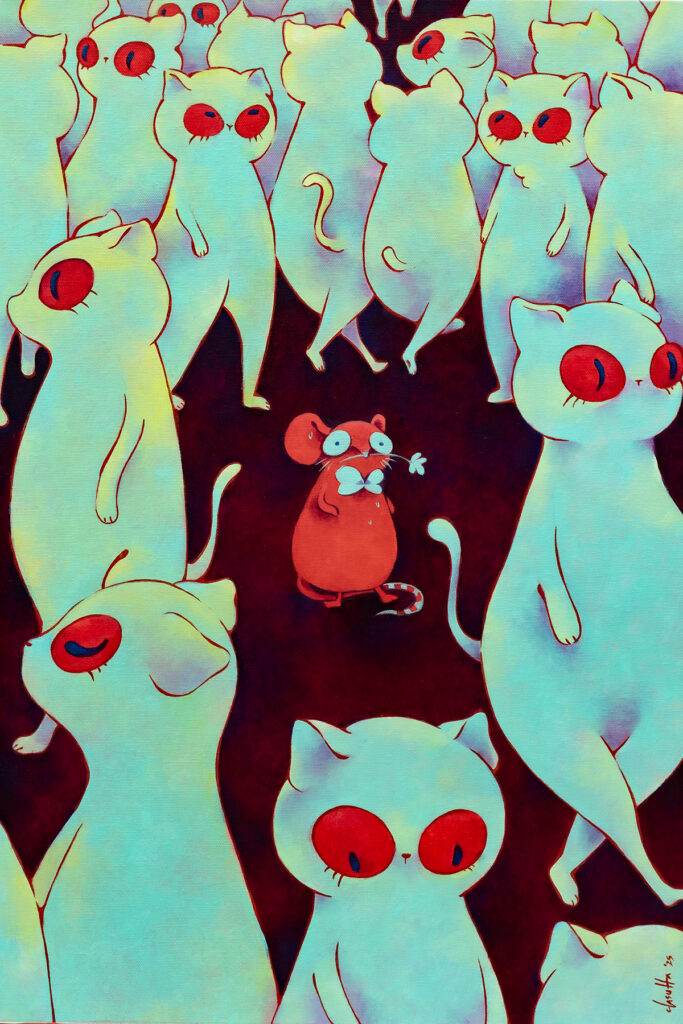
    Hopeless Romantic by Clasutta, 60 x 40 x 5 cm, 2025, Oil on Canvas

    At first glance, her paintings immediately draw viewers in with their bright palettes, whimsical characters and playful compositions. Spread across more than 60 artworks, Roommates? feels cheerful, vibrant and almost deceptively light-hearted.

    But beneath the candy-coloured surfaces lies a surprisingly relatable and observant commentary on love, relationships and human behaviour.

    Through our conversation, Clasutta shared that many of the quirky animal characters and their interactions are inspired by the rituals of courtship and relationships. Using animals as metaphors for human emotions and behaviour, her works cleverly mirror the many stages couples go through, from the excitement and passion of attraction to the routines, negotiations and emotional complexities that emerge over time.
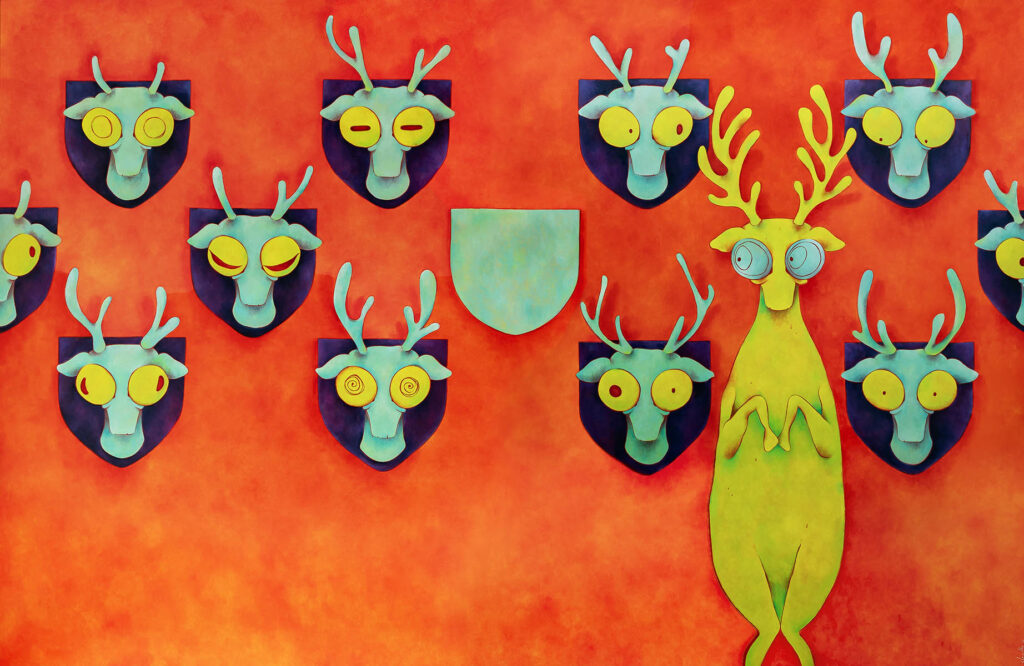
    The Last Hunt by Clasutta, 230 x 150 x 5 cm, 2026, Oil on Canvas
    The Last Hunt by Clasutta, 230 x 150 x 5 cm, 2026, Oil on Canvas

    Whether it is longing, misunderstandings, affection, insecurity or companionship, the narratives in her paintings strike a familiar chord. There is humour in them, but also honesty.

    One of the most engaging aspects of the exhibition is how approachable the works feel. Viewers may initially smile at the amusing expressions and quirky characters, only to later realise how accurately these scenes reflect real relationships and everyday emotional dynamics.
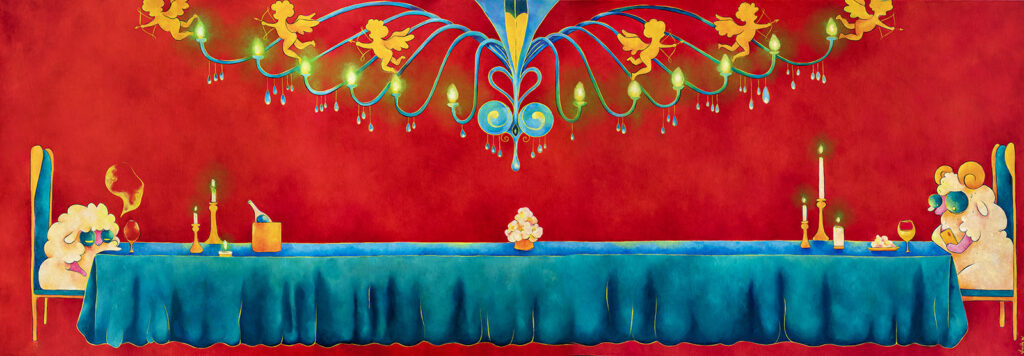
    The Perfect Arrangement by Clasutta, 80 x 230 x 5 cm, 2026, Oil on Canvas

    The press release describes the exhibition as unfolding “the idea of love without clear structure”, where attraction, effort and expectations slowly begin to take shape over time. What starts off feeling effortless gradually becomes something maintained through repetition, routines and emotional negotiation. Love, in this exhibition, is portrayed not as something fixed, but as something that drifts, changes and quietly lingers even in absence.

    Much like her paintings, Clasutta herself radiates a lively and quirky energy. Dressed in bright colours with an effortlessly playful sense of style, the young artist carried the same spirited charm found within her works.
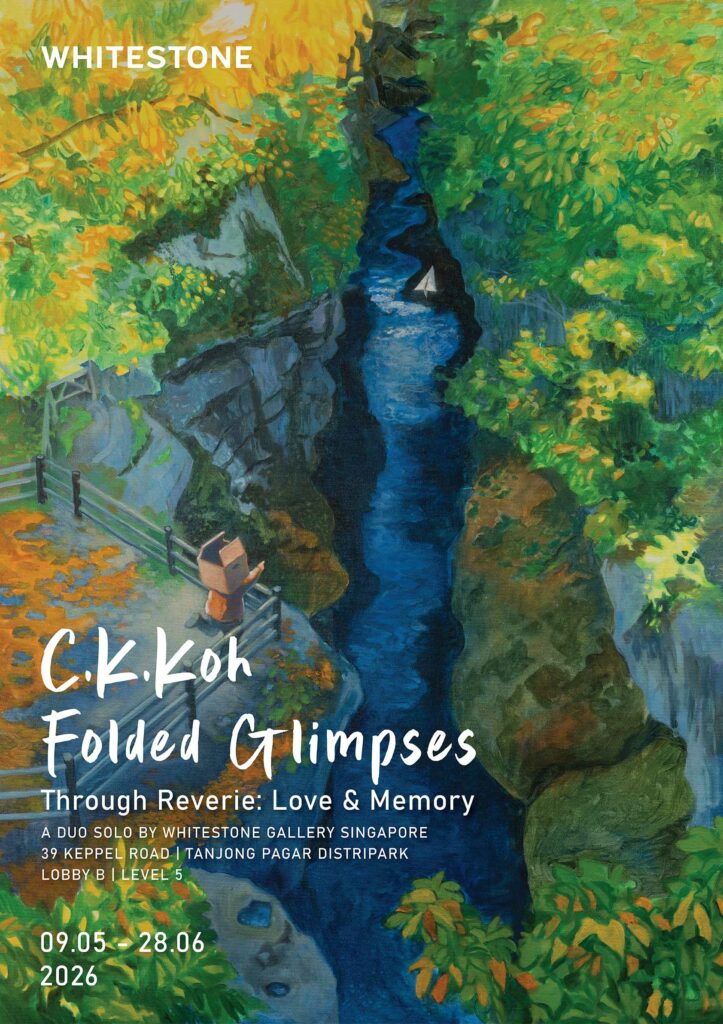
    Folded Glimpses by C.K. Koh

    Folded Glimpses by C.K. Koh

    I first encountered C.K. Koh’s works during his earlier solo exhibition at Art Porters Gallery, where I was introduced to his iconic recurring character, Box Boy.

    Unfortunately, that exhibition took place during the height of the COVID-19 period, so I did not have the opportunity to meet the artist in person then. Hence, I was delighted to finally meet Koh at Whitestone Gallery and hear the stories behind Box Boy and his latest body of works firsthand.

    Ever since, Box Boy has remained a memorable figure, simple yet emotionally evocative.

    Curious about the origins of Box Boy, I asked Koh if the character represented himself. His answer was Box Boy is not just him, but also his son, and in many ways, everyone.
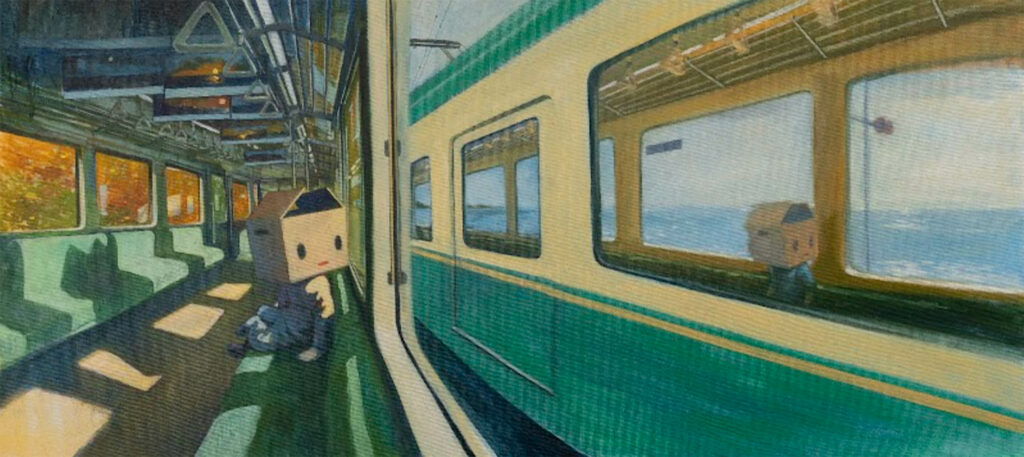
    CK Koh, Crossing-Paths, 2026, 67.5 x 147.0 cm, Oil- on Linen

    The character was conceptualised during a period when Koh was living overseas, away from home. Like many Singaporeans living abroad, he spoke about the anticipation of receiving boxes from family members filled with comfort food, familiar products and small reminders of home. Those care packages became emotional anchors, symbols of warmth, memory and belonging.

    At the same time, the box itself became a powerful metaphor. An open box can contain anything: memories, emotions, experiences, identity and even longing.
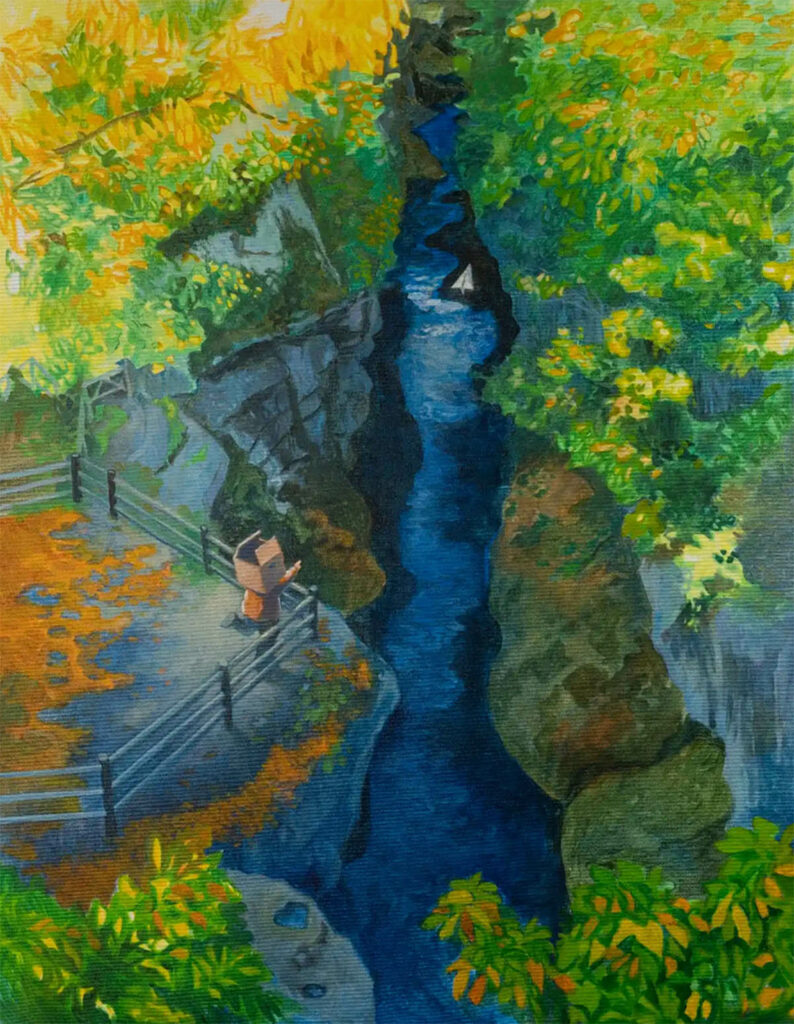
    CK Koh, Raku Raku, 2026, 117.0 x 92.0 cm, Oil on Linen

    Koh also shared about his love for travelling, especially to Japan, which has greatly influenced the dreamy visual atmosphere found throughout Folded Glimpses. Many of the scenes within his paintings reminisce moments and places encountered during his travels, from quiet streets and fleeting landscapes to intimate family moments observed in passing.

    Travelling frequently with his family, the works also quietly document the growth of his son over the years. Through Box Boy, these memories become universal yet deeply personal at the same time.
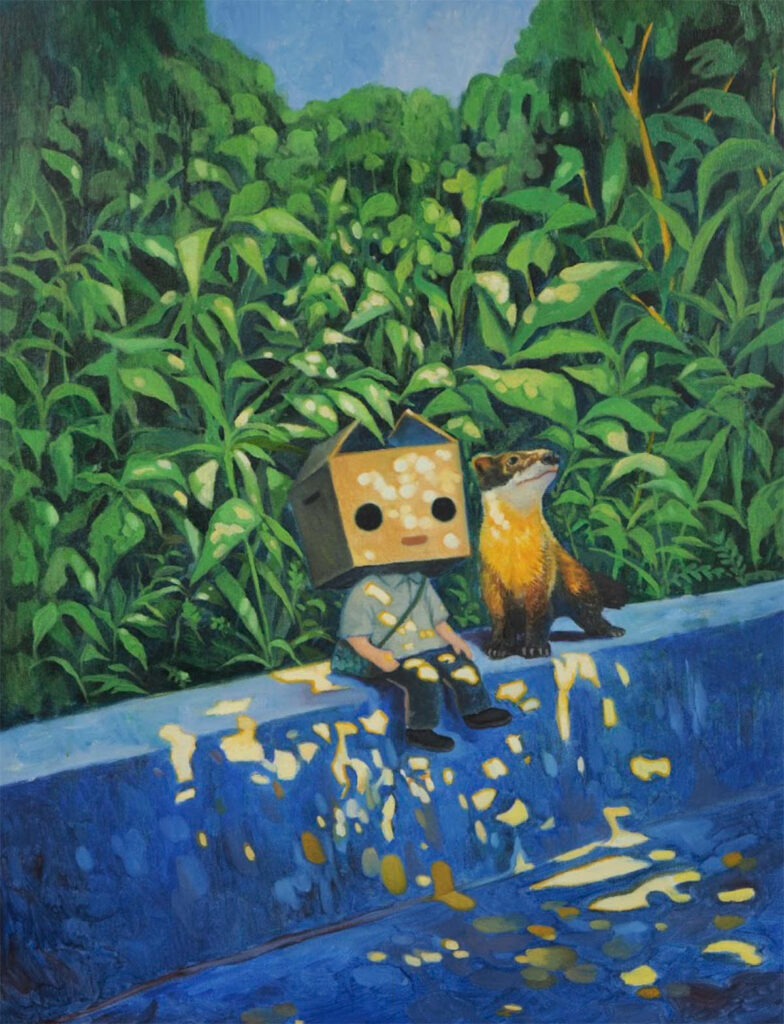
    CK Koh, Perfect Day, 2025, 100.0 x 76.0 cm, Oil on Linen

    In Folded Glimpses, Koh expands on these ideas through paintings inspired by his travels and personal photographic archives. Rather than documenting places literally, the works function more like fragments of memory, fleeting impressions of landscapes, streets, encounters and moments quietly collected over time.

    The exhibition’s press release beautifully describes these works as “moments drawn from his personal photographic archive” that are shaped not by documentary realism, but by memory, atmosphere and emotion. Through the recurring presence of Box Boy, Koh traces continuity between who we were, what we remember and what we continue to carry with us over time.

    Where Love, Memories and Everyday Moments Intersect

    There is a quiet tenderness in Koh’s paintings. Unlike Clasutta’s loud bursts of colour and quirky observations on relationships, Koh’s works invite viewers into slower moments of reflection. Together, they create an interesting contrast within the exhibition, one vibrant and socially observant, the other contemplative and deeply personal.

    Although Roommates? and Folded Glimpses are presented as separate solo exhibitions, they complement one another naturally under the umbrella of Through Reverie: Love and Memory.

    Clasutta’s works examine the emotional theatre of relationships through quirky animal metaphors, while Koh’s paintings quietly archive memories, travels and personal journeys through the symbolic presence of Box Boy.

    Together, the exhibition becomes less about grand narratives and more about small moments, the feelings, memories and emotional traces that linger long after an experience has passed.

    Through Reverie: Love and Memory | A Duo-solo Exhibition by Clasutta and C.K. Koh runs from 9 May to 28 June 2026 at Whitestone Gallery Singapore. The gallery is closed every Monday and Public Holiday.

    For more information, visit Whitestone Gallery Singapore.
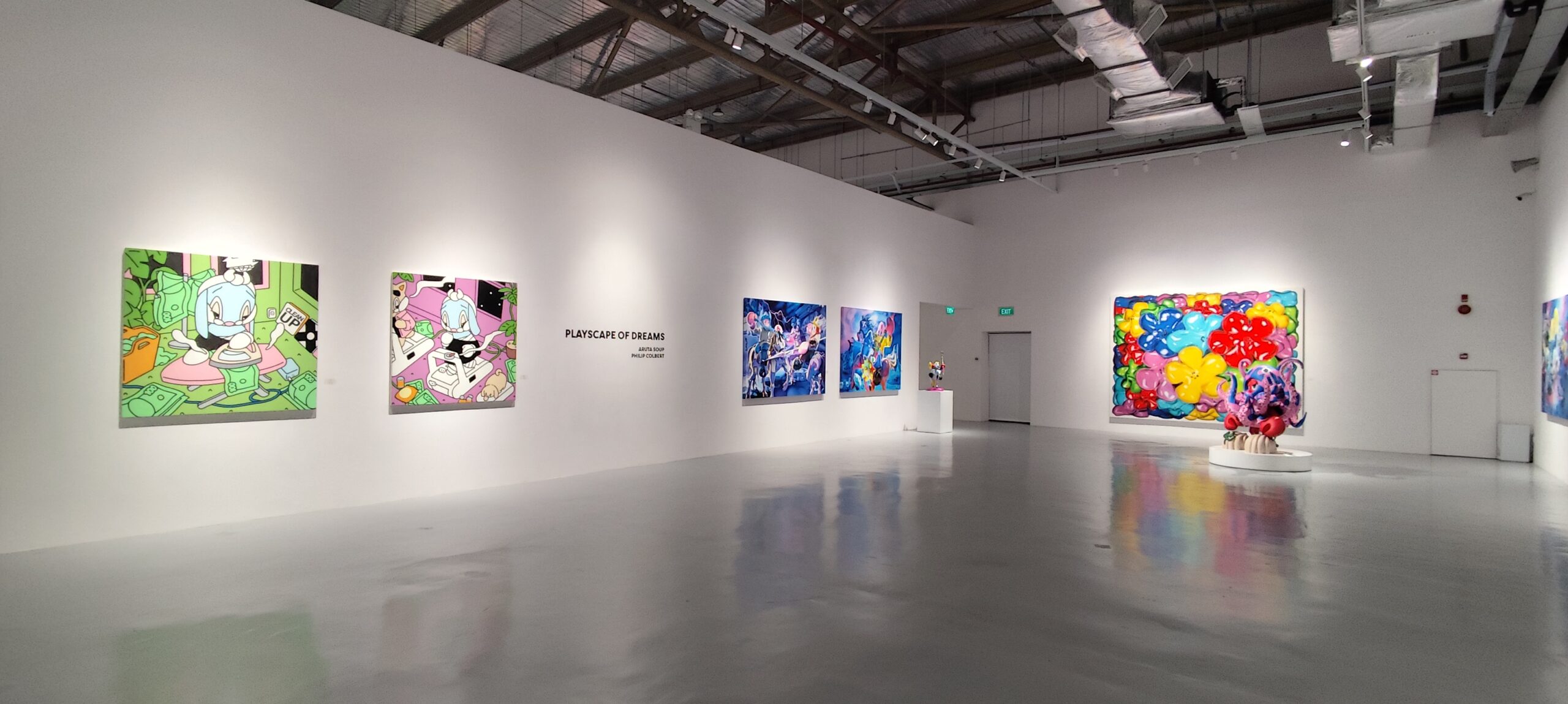
  • Philip Colbert × Aruta Soup: Playscapes of Dreams at Whitestone Gallery Singapore

    Philip Colbert × Aruta Soup: Playscapes of Dreams at Whitestone Gallery Singapore

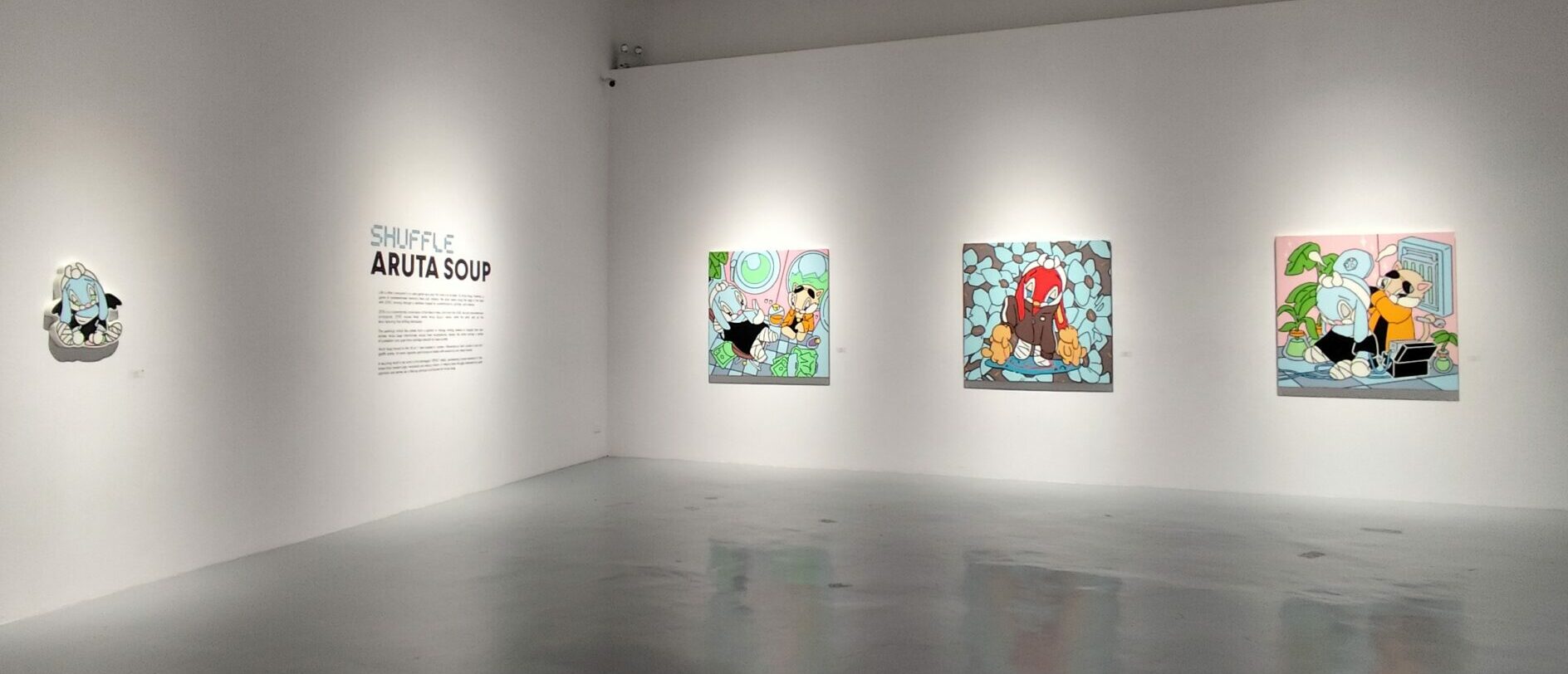
    There is a buoyant energy in Playscapes of Dreams that instantly disarms, a kind of visual lightness that invites curiosity before deeper reflection sets in. On view at Whitestone Gallery Singapore from 24 January to 14 March 2026, this duo exhibition brings together two artists from different cultural contexts, British pop artist Philip Colbert and Japanese contemporary artist Aruta Soup. Despite their distinct visual languages, both share a commitment to play as a way of understanding the world.

    Entering the gallery, visitors are met with Colbert’s hyper-saturated pop imagery alongside Aruta’s whimsical, illustrative works. Each artist inhabits a clearly defined universe, yet their works sit in conversation with one another, creating a space where imagination, humour and reflection coexist. The exhibition unfolds not as a clash of styles, but as a shared terrain shaped by contemporary life and visual culture. Within this curatorial framework, Colbert’s Temple of the Sunflower unfolds as a vibrant, myth-laden universe, while Aruta Soup’s Shuffle introduces a fractured, ever-shifting logic, together forming parallel playscapes that invite viewers to move between spectacle and introspection.

    Aruta Soup and the Bunny That Never Stays Still
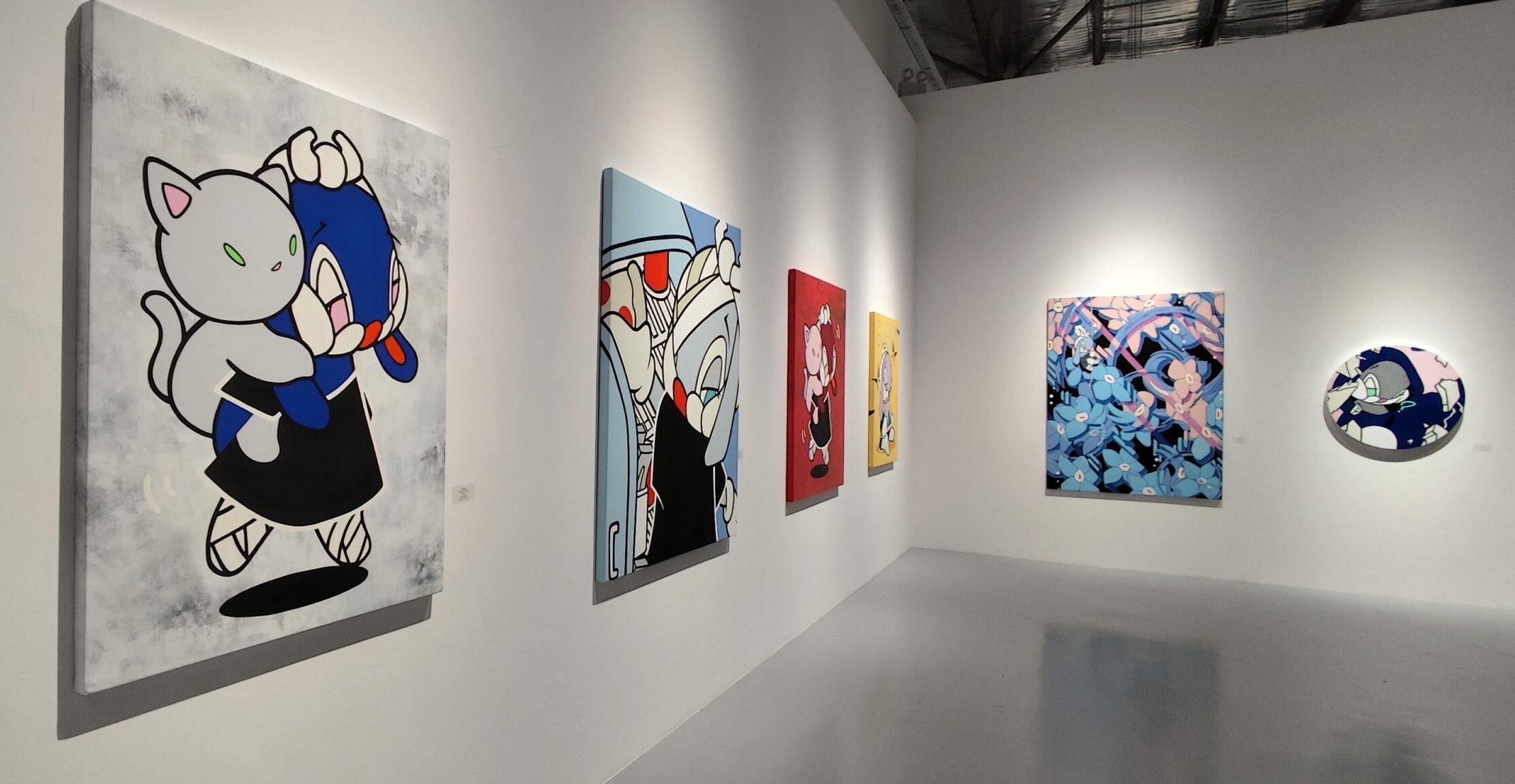
    Aruta Soup’s practice centres around ZERO, a recurring rabbit figure that is at once cheeky and quietly introspective. ZERO is cute but sad, carrying a sense of loneliness that feels deeply familiar. Often appearing alone, the bunny has the presence of a shy, introverted character, observing the world from a gentle distance while continuing to move through it.

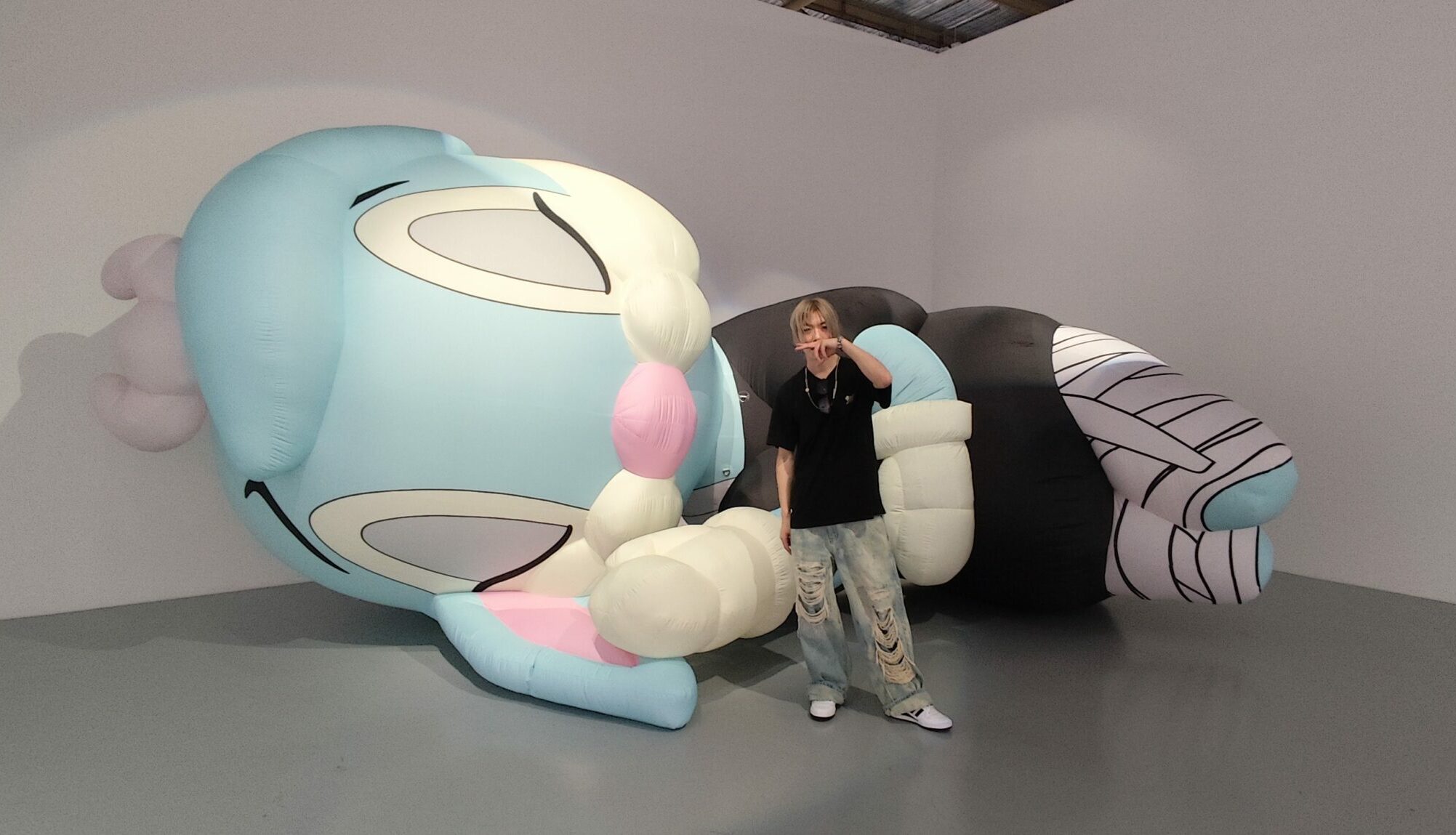
    Aruta Soup’s recurring character, ZERO, similarly embodies endurance and regeneration. Often depicted as a rabbit wrapped in bandages, ZERO emerges from the pressures and contradictions of contemporary society, where individuals are constantly wounded by information overload yet compelled to continue. For Aruta Soup, ZERO represents both vulnerability and optimism, a figure caught in inner conflict but persistently capable of renewal. More than a recurring motif, ZERO functions as a spiritual companion, one that the artist returns to at different stages of his life.

    First encountered during Whitestone Gallery’s presentation at ArtSG during Singapore Art Week, ZERO stood out for its playful charm and emotional resonance. In a chance conversation at the gallery, Aruta shared that the bunny represents him personally. Living with ADHD, he finds it difficult to remain still, constantly moving from one idea to the next. Like a bunny that never stops bouncing, ZERO becomes a quiet self-portrait shaped by motion and restlessness.
    ZERO appears in ordinary, almost mundane situations, ironing clothes, exercising on a treadmill, or navigating domestic routines. These scenes soften the boundary between reality and imagination, revealing a tenderness beneath the humour. Through fluid, hand-drawn lines and sensitive use of colour, Aruta resists the flatness of digital imagery. His works feel tactile and human, grounded in emotional honesty. ZERO may be small and shy, but it carries a quiet resilience that lingers long after the viewer moves on.

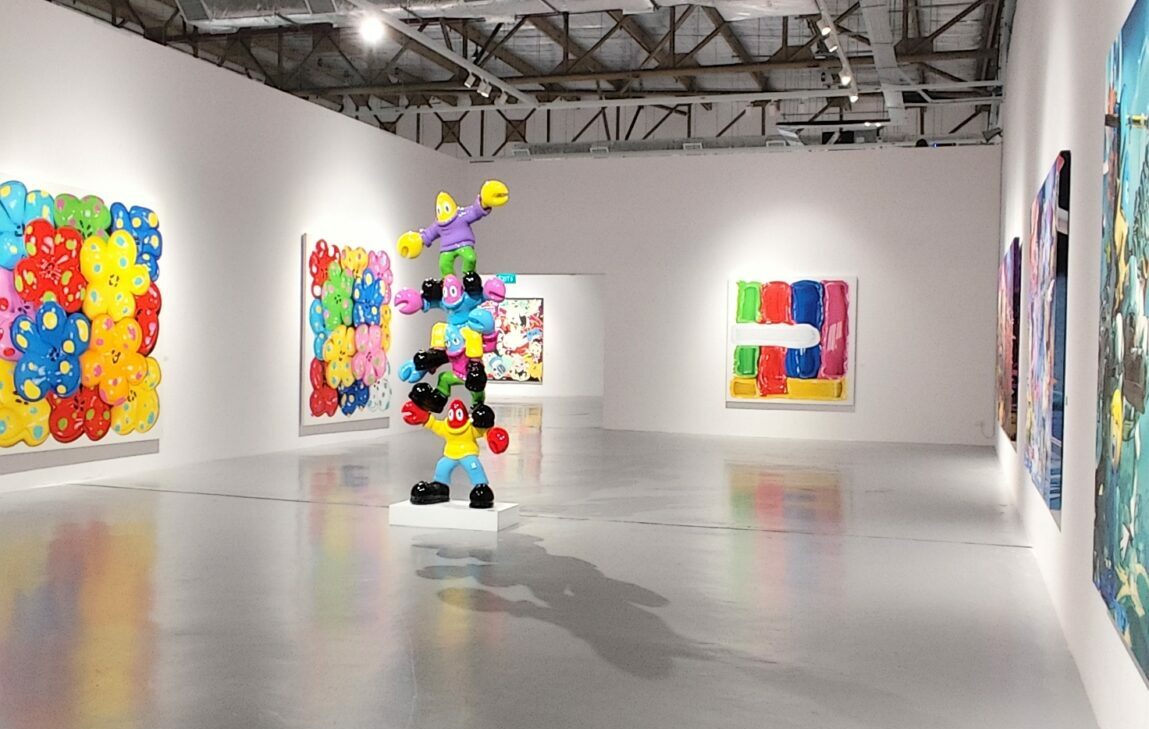
    In the inner rooms of the gallery, an inflatable bunny offers one of the exhibition’s most affecting moments. Much like its character, the work feels quiet and introverted, almost retreating into the space. Yet its softness and cuteness radiate warmth, bringing an unexpected sense of comfort and joy to anyone who encounters it.
    Philip Colbert and the Language of Pop
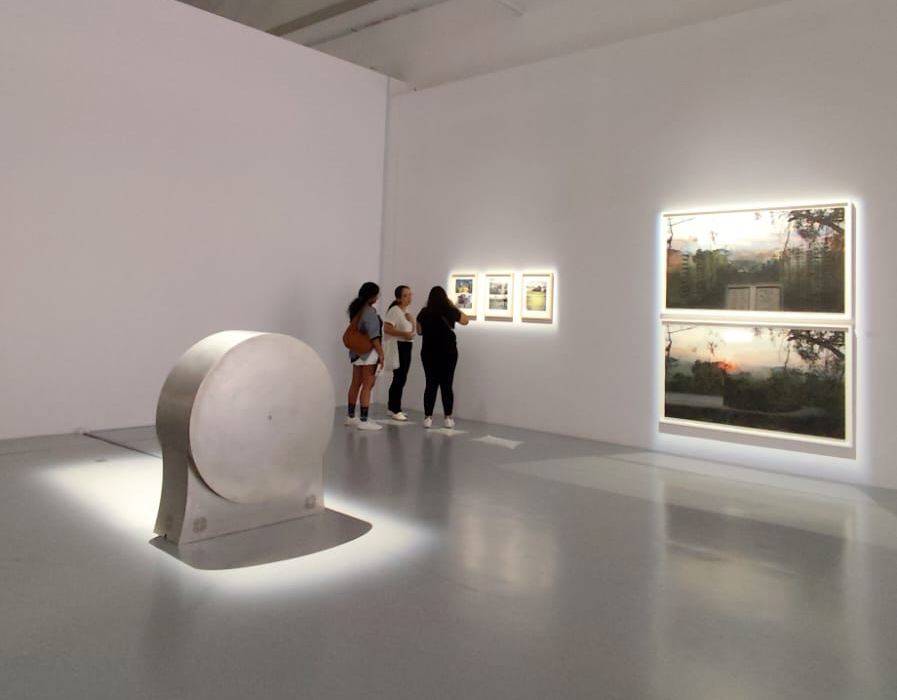
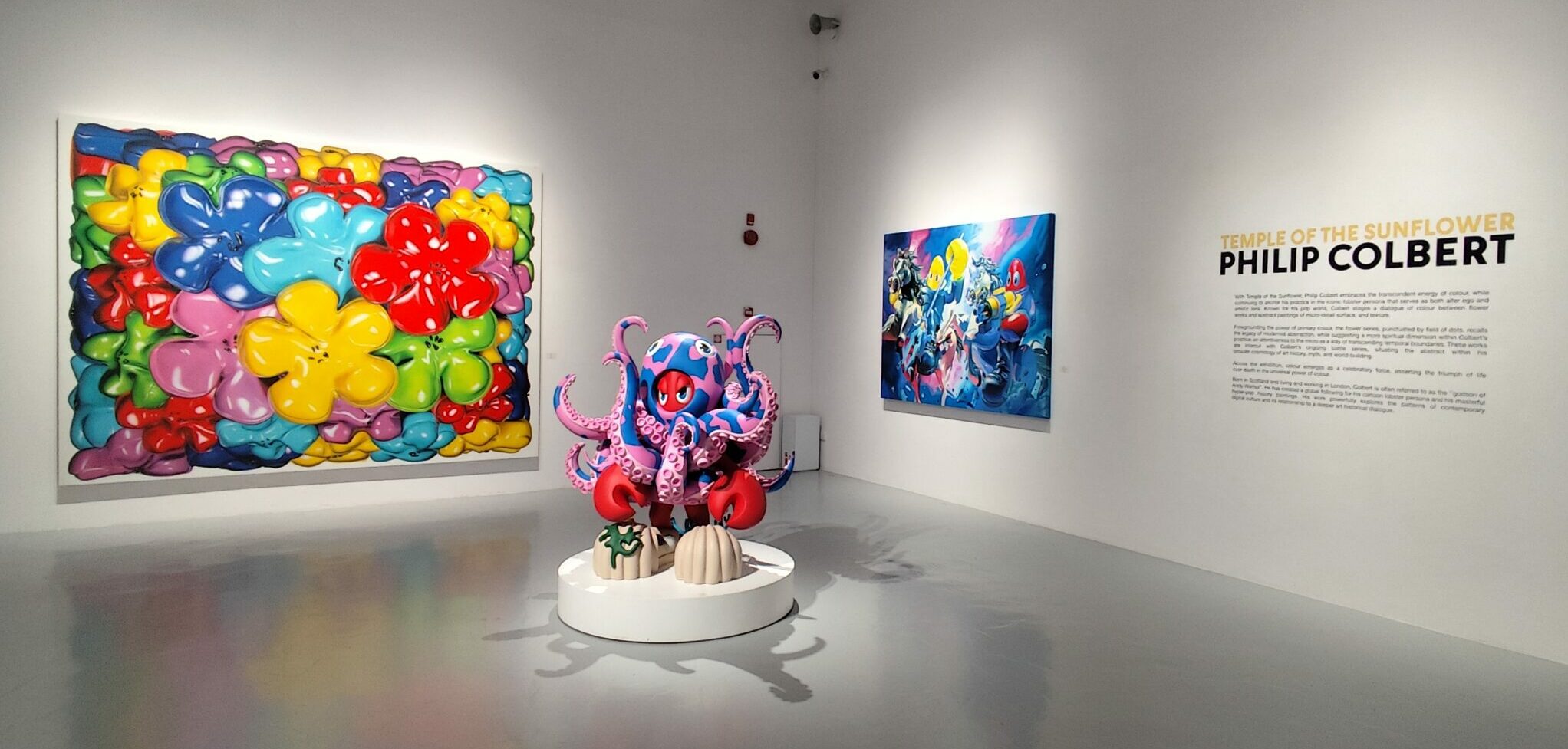
    In contrast, Philip Colbert’s works operate at a higher visual frequency, bold, loud and unapologetically exuberant. Immediately upon entering the gallery, visitors are confronted by Lobstar Octopus ⅓ from 2022, a large painted stainless steel sculpture measuring 145.0 by 95.0 by 130.0 centimetres. Positioned prominently at the entrance, the work is impossible to miss and sets the tone for Colbert’s universe from the very first step inside.

    Central to Colbert’s practice is the lobster, a figure that has become his unmistakable signature. Drawing from Surrealism, Dutch still lifes and classical imagery, Colbert transforms the lobster into a contemporary icon that moves fluidly across time, art history and pop culture. In this exhibition, the lobster appears disguised as an octopus, reinforcing the artist’s fascination with transformation, disguise and the absurdity of modern identity.

    Alongside the sea creatures are Colbert’s brightly coloured, pop-inflected floral paintings. Saturated with colour and visual density, the works reflect the overstimulation of contemporary consumer culture while maintaining a sense of humour and visual pleasure. Colbert has built an international reputation for creating works that are both instantly recognisable and widely collectable, often bridging high art and popular culture with ease.

    Play as a Way of Seeing

    What ultimately unites Colbert and Aruta Soup is not stylistic similarity, but a shared sensibility. Both artists use humour and playfulness as tools for reflection. Their characters, the lobster and the bunny, function as narrative anchors that move through chaos, repetition and uncertainty, mirroring the rhythms of contemporary life.

    Seen together, their works form a gentle dialogue between spectacle and intimacy, excess and restraint. Playscapes of Dreams invites viewers to slow down, look closely and recognise the emotional undercurrents beneath its colourful surfaces. It suggests that play is not an escape from reality, but a way of engaging with it, offering moments of warmth, resilience and imagination in an ever-moving world.

    Visitors are encouraged to experience Playscapes of Dreams in person, to step into these parallel worlds and spend time with the characters that inhabit them.

    Exhibition details
    Exhibition: Philip Colbert × Aruta Soup: Playscapes of Dreams
    Artists: Philip Colbert, Aruta Soup
    Venue: Whitestone Gallery Singapore, 39 Keppel Road #05-03/06, Tanjong Pagar Distripark, Singapore 089065
    Dates: 24 January to 14 March 2026

  • Sama Sama: 60 Years, 60 Voices, One Community

    Sama Sama: 60 Years, 60 Voices, One Community

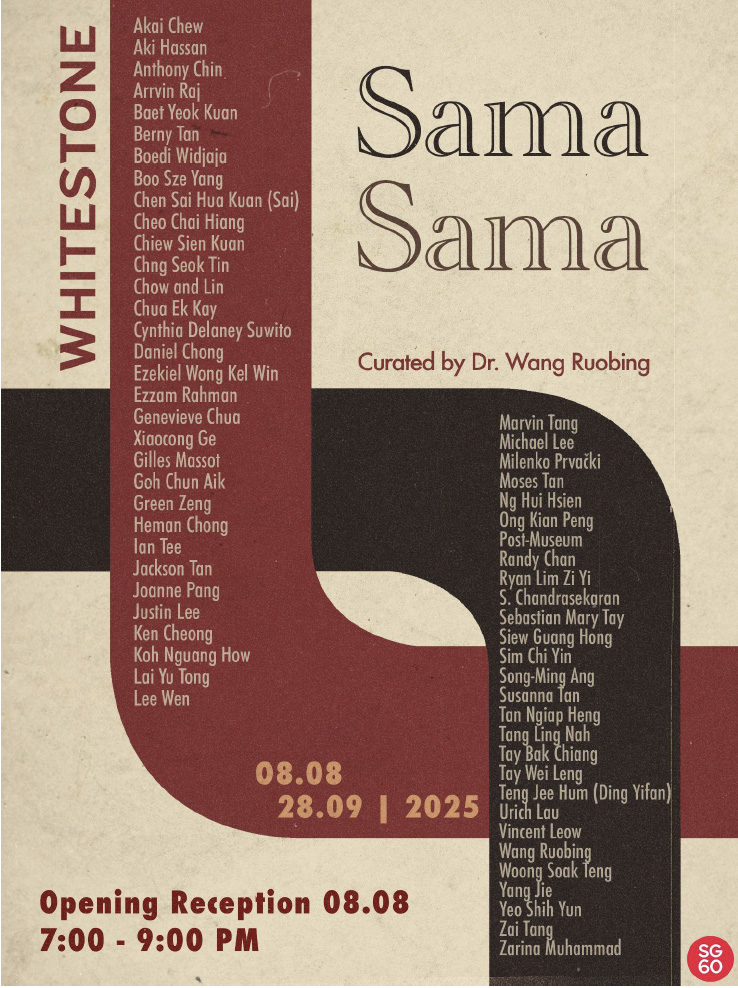
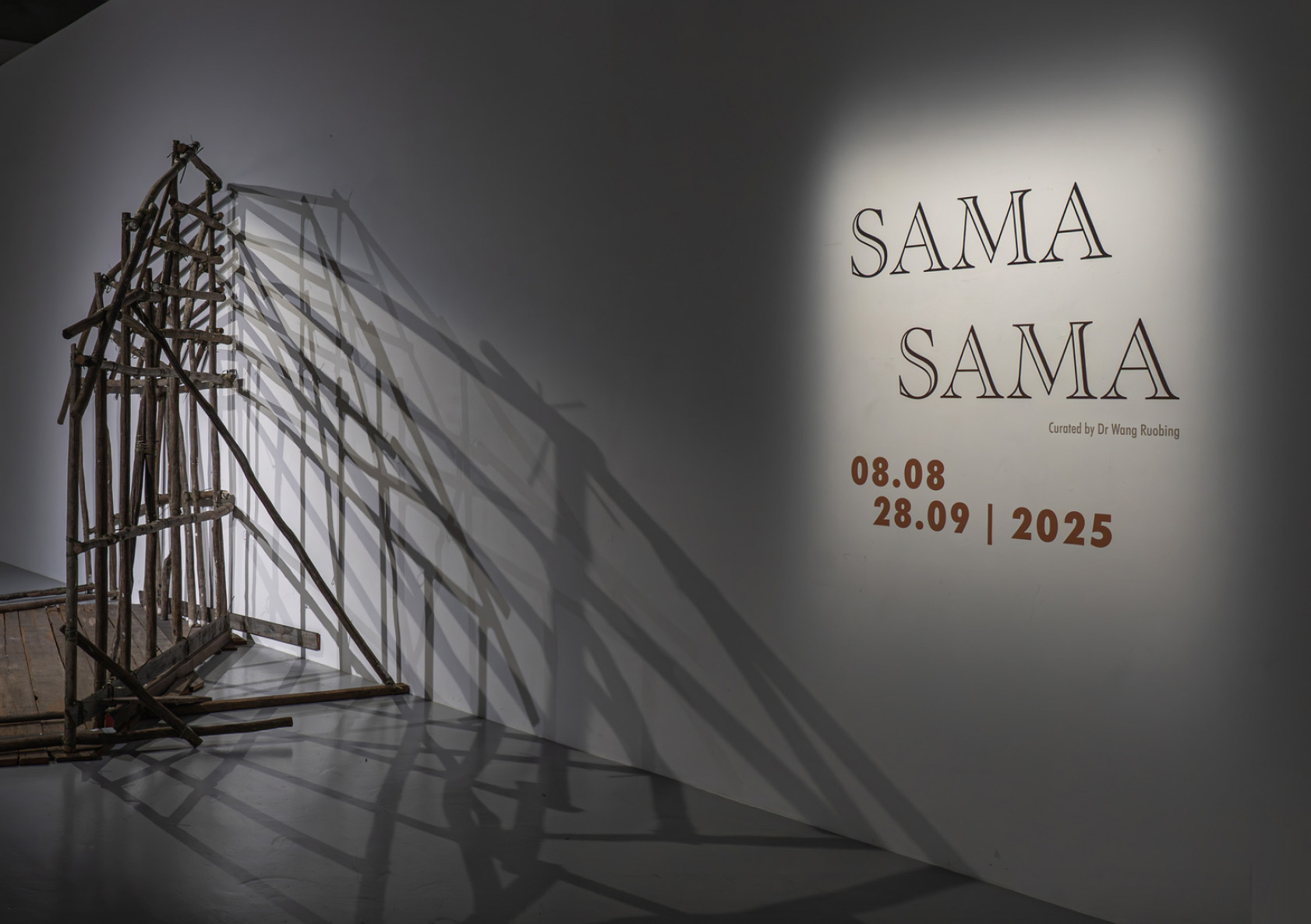
    I had the pleasure of attending the opening reception of Sama Sama on 8 August 2025, an iconic date that seemed fitting for such a landmark exhibition. Held at Whitestone Gallery Singapore, the evening was nothing short of electric: a full-house reception with guests spilling out into the lobby, all gathered to celebrate SG60 with the works of 60 contemporary local artists and collectives. Curated by Dr. Wang Ruobing, Sama Sama captures the spirit of artistic togetherness, threading individual practices into a larger story of Singapore’s evolving cultural journey.

    Sama Sama by Wang Roubing at Whitestone Gallery

    The exhibition’s title, “Sama Sama,” derived from Bahasa Malay, one of Singapore’s official mother tongue languages, and is familiar to many Singaporeans. It means “all together” or “togetherness,” while also carrying connotations of reciprocity (“you’re welcome”) and similarity (“same”). This layered expression frames the curatorial concept, inviting a revisitation of Singapore’s history and cultural trajectory through the collective voices of its contemporary artists. From its humble origins to its transformation into a global city-state, Singapore’s journey has been defined by resilience, imagination, and the unity of its people, values that underpin this exhibition.

    Featuring 60 works spanning generations and practices, Sama Sama brings together names such as Anthony Chin, Boedi Widjaja, Boo Sze Yang, Chow and Lin, Cynthia Delaney Suwito, Heman Chong, Ian Tee, Jackson Tan, Lai Yu Tong, Lee Wen, Milenko Prvački, Ng Hui Hsien, Post-Museum, Dr. S. Chandrasekaran, Sim Chi Yin, and Zarina Muhammad, among many others. The show traverses a wide range of mediums, from painting and printmaking to film, photography, installation, socially engaged practice, and performance, reflecting the diversity and richness of contemporary art in Singapore.

    What struck me most was how the works collectively embody a set of core values: freedom, diversity, inclusiveness, resistance, and imagination. This is not a conventional survey of contemporary art history, but a group show alive with layered interpretations, material experimentation, and poetic connections. Each artwork holds its own narrative, resonating with history while speaking to the urgencies of the present and the uncertainties of the future. Together, these works stand as an artistic statement on 60 years of nation-building, sama-sama in Sama Sama.

    With so many remarkable contributions, it would be impossible to do justice to every artist in a single article. For this feature, I would like to highlight a selection of works that personally stirred deep emotions and prompted reflection, not as a hierarchy, but as glimpses into the profound encounters this exhibition makes possible.

    Randy Chan – In the Shape of Absence

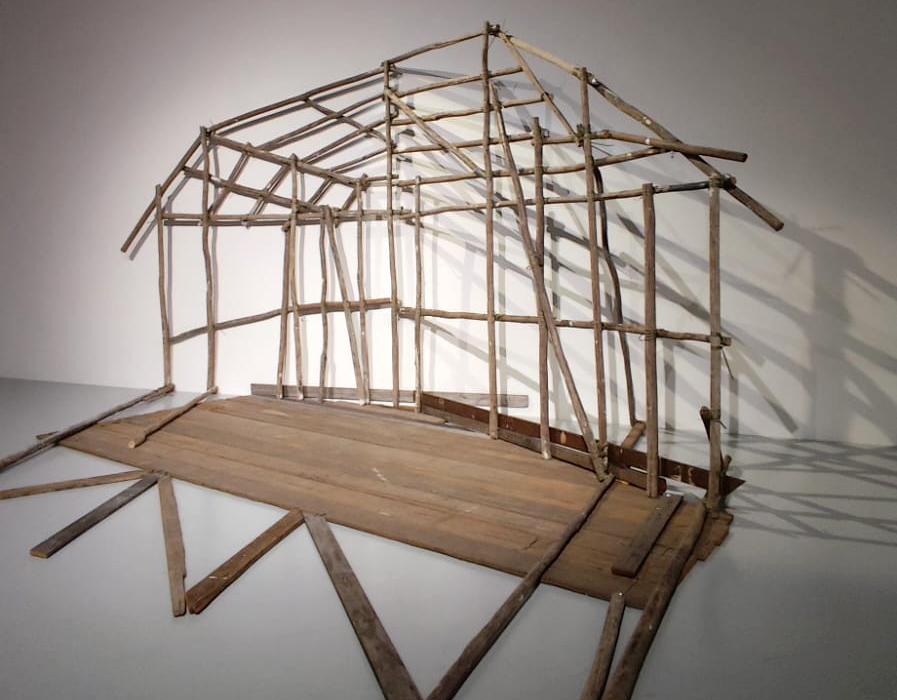
    At the entrance, Randy Chan’s monumental installation In the Shape of Absence commanded attention. Constructed from reclaimed timber, the skeletal frame resembled a house both remembered and lost. It leaned and fractured, an architectural ghost that invited visitors to step inside absence itself, to consider what defines home when its physical structure has disappeared. Known for his boundary-crossing practice between architecture and art, Chan once again demonstrated how space can become both memory and stage.

    Nearby, Anthony Chin’s S$1,996/- S$831.06 was a quieter yet equally provocative reflection. Comprising a precarious pillar of S$1 coins, the work emerged from a failed grant application, a donation drive, and the realities of artistic survival. More than a sculptural object, it stood as a critique of fragility within Singapore’s art ecosystem, questioning the sustainability of creativity in a system where value is often measured in hard currency.

    Anthony Chin – S$1,996/- S$831.06


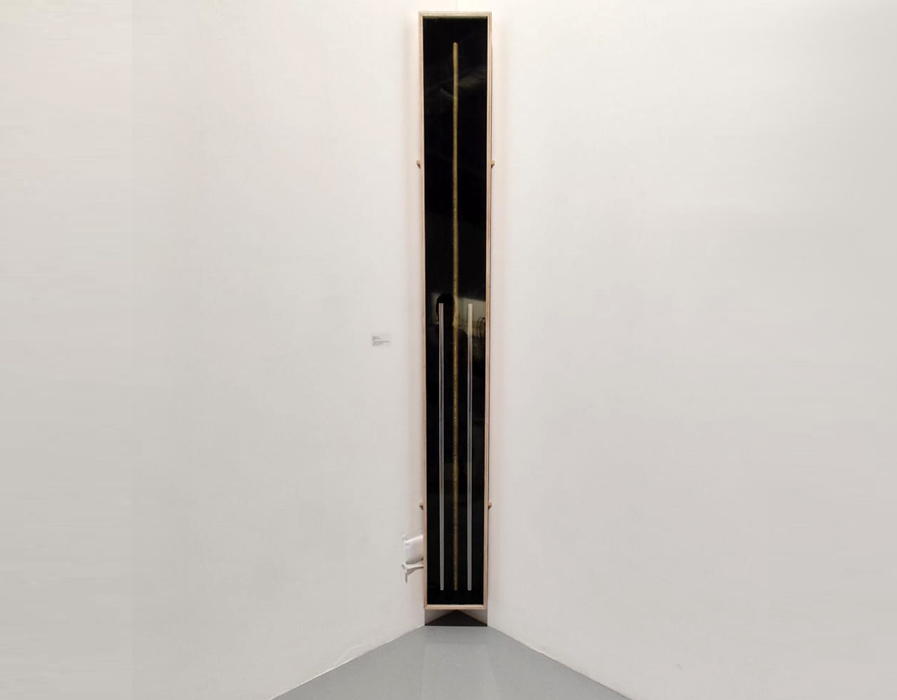
    Boedi Widjaja’s Cosmic Strangers, Cardinal Nodes pulled us into an entirely different dimension. Combining a muon tracker, meteorite fragments, and augmented reality projections of a hypercube, the work shimmered with cosmic temporality. It was both deeply personal and expansively universal, linking Widjaja’s diasporic reflections with the particles that traverse the universe.

    Boedi Widjaja – Cosmic Strangers, Cardinal Nodes


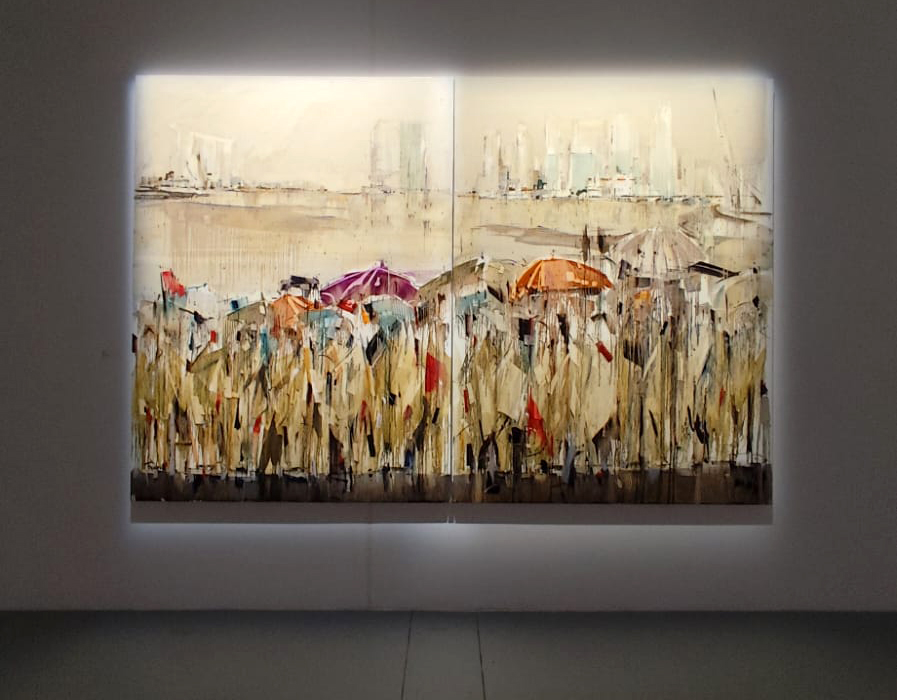
    Emotion ran deep in Boo Sze Yang’s paintings from his 29.03.15 series. Instead of direct portraits of Singapore’s founding father, Lee Kuan Yew, Boo turned his gaze to the citizens who stood in mourning that day. Blurred forms under umbrellas became symbols of quiet resilience, capturing the shared emotional weight of collective memory.

    Boo Sze Yang – 29.03.15 #21


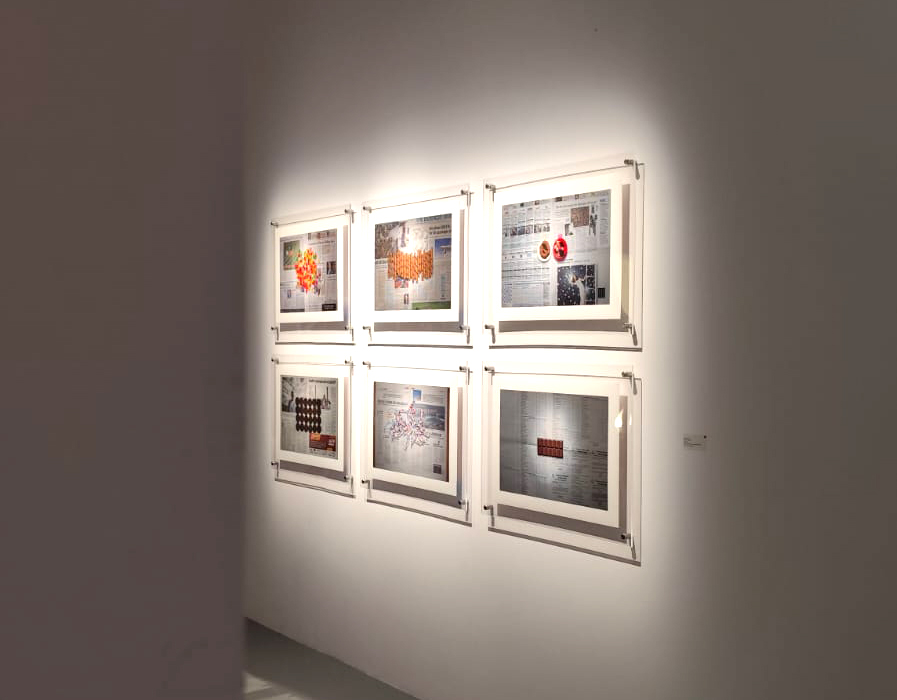
    The collaborative duo Chow & Lin approached the question of humanity through numbers. Their long-term project The Poverty Line used the language of food photography to illustrate what daily sustenance looks like at the poverty line across 38 countries. Displayed as stark still-life compositions, their prints were a sobering reminder that statistics are lived realities.

    Chow and Lin – The Poverty Line (2010 – 2025)


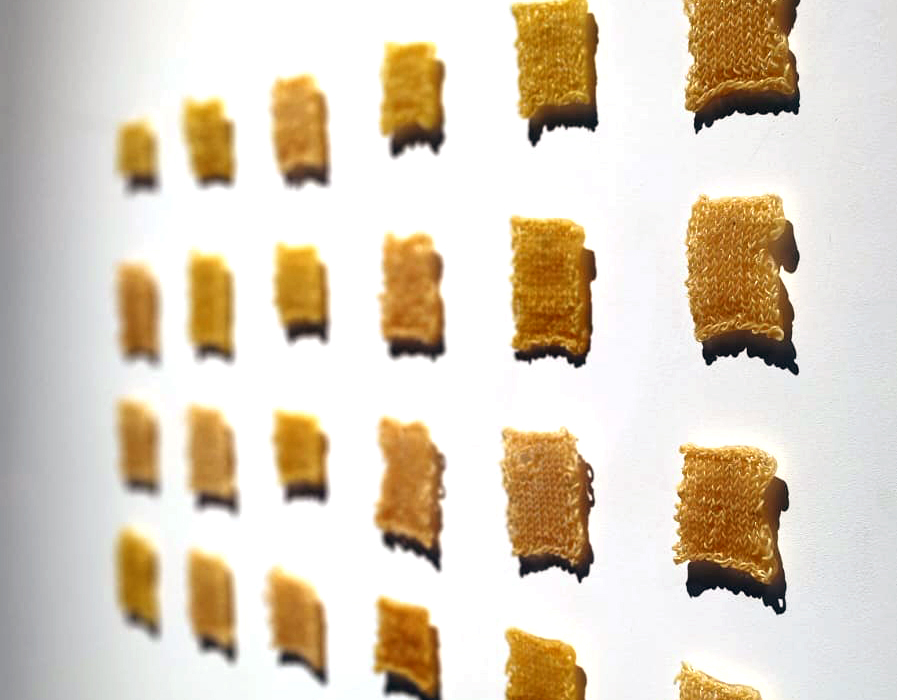
    Meanwhile, Cynthia Delaney Suwito brought a gentle touch of absurdity with her performance Knitting Noodles. Using instant noodles as yarn, she knitted fragile strips that threatened to crumble with each stitch. I had a chance to chat with her during the opening, and she spoke about patience, presence, and the meditative focus required to keep the noodles intact. It was a poetic contradiction, the fast-food symbol of modern life slowed into fragile, time-consuming labour — a lesson in fragility and mindfulness.

    Cynthia Delaney Suwito – Knitting Noodles (24 x 60 minutes), Performance Re-enactment 2025


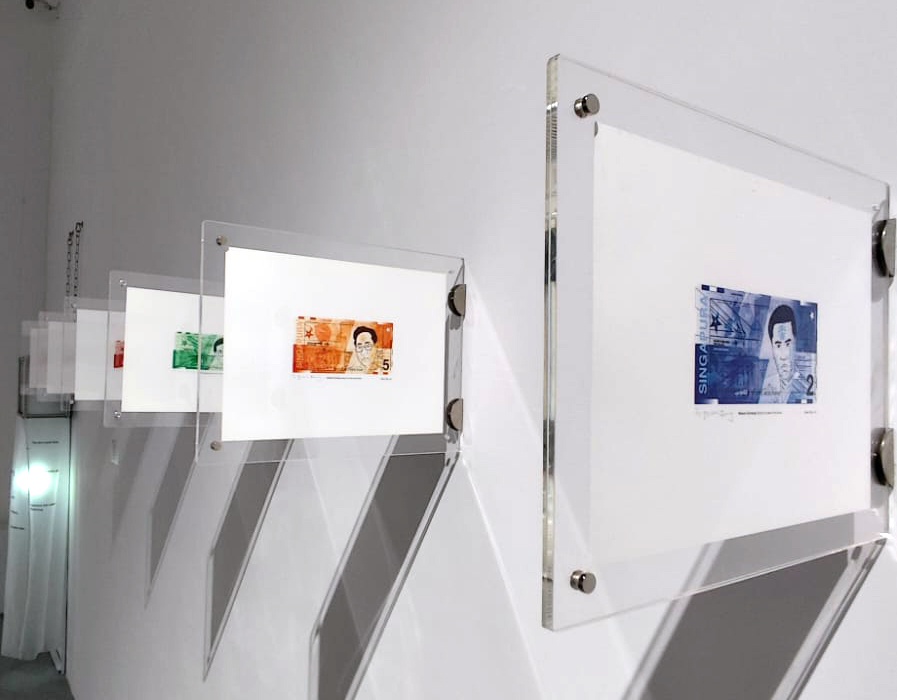
    Green Zeng’s Malayan Exchange series reimagined Singapore’s currency notes, inscribing forgotten activists, overlooked histories, and fragments of national identity onto imagined banknotes. I was particularly struck by how the reverse side juxtaposed silhouettes of Lee Kuan Yew with maps of Singapore, a layered reminder of how history is remembered and circulated.

    Green Zeng – Malayan Exchange (Study of a Note of the Future)
    Blue, Orange, Green, Red, Purple, Yellow


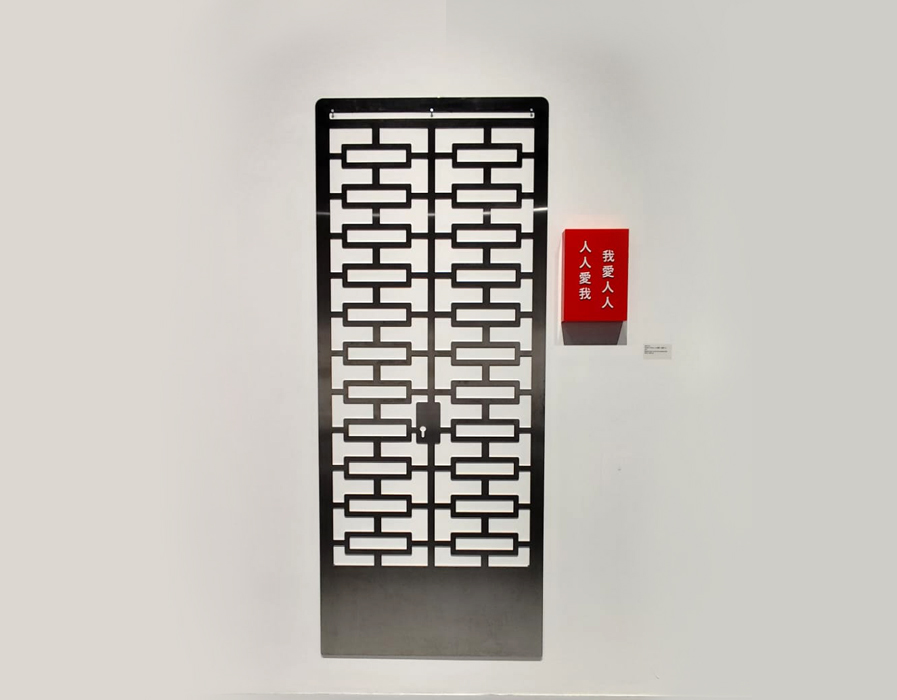
    Justin Lee’s Together, Forever brought a burst of brightness and playfulness. Recasting the once-ubiquitous HDB metal gate into a pop-inspired artwork, Lee paid tribute to the heartlands where community, memory, and daily life intertwine. His work felt like a love letter to Singapore’s shared spaces, lighthearted yet deeply rooted.

    Justin Lee – Together, Forever. 人人愛我,我愛人人


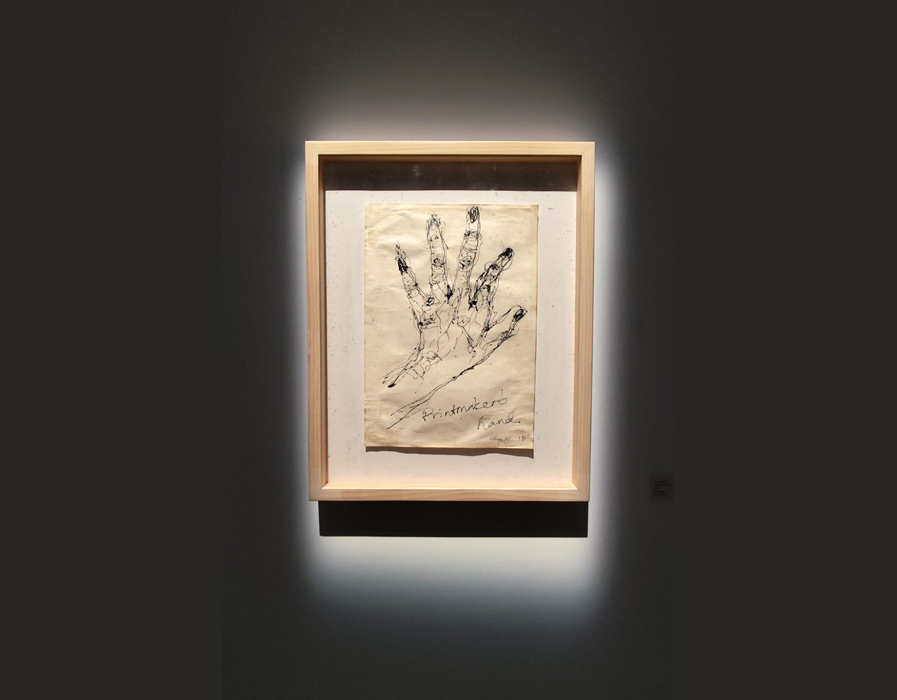
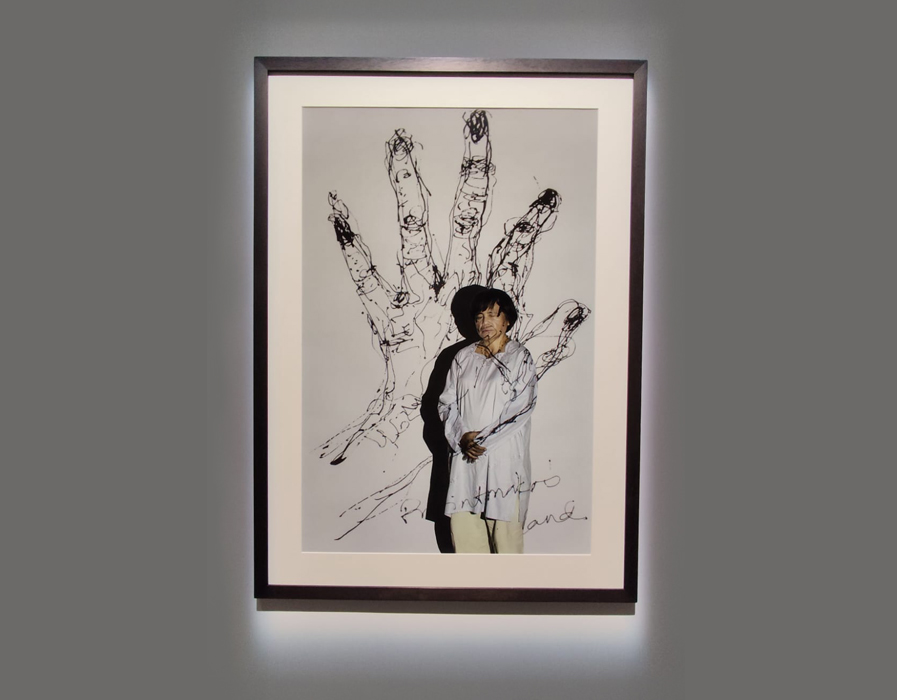
    No survey of Singapore art would be complete without honouring pioneers. Sama Sama paid tribute to the late Chng Seok Tin, a visionary printmaker who continued to create even after losing much of her sight. Her Printmaker’s Hand was displayed alongside Tan Ngiap Heng’s poignant portrait of her, in which Chng’s own artwork is projected across her figure, as though enveloping her in the embrace of her practice. The pairing was both tender and powerful, encapsulating how community and art entwine.

    Chng Seok Tin – Printmaker’s Hand (Tien Wei Woon’s Collection)


    Tan Ngiap Heng – portraits of Chng Seok Tin

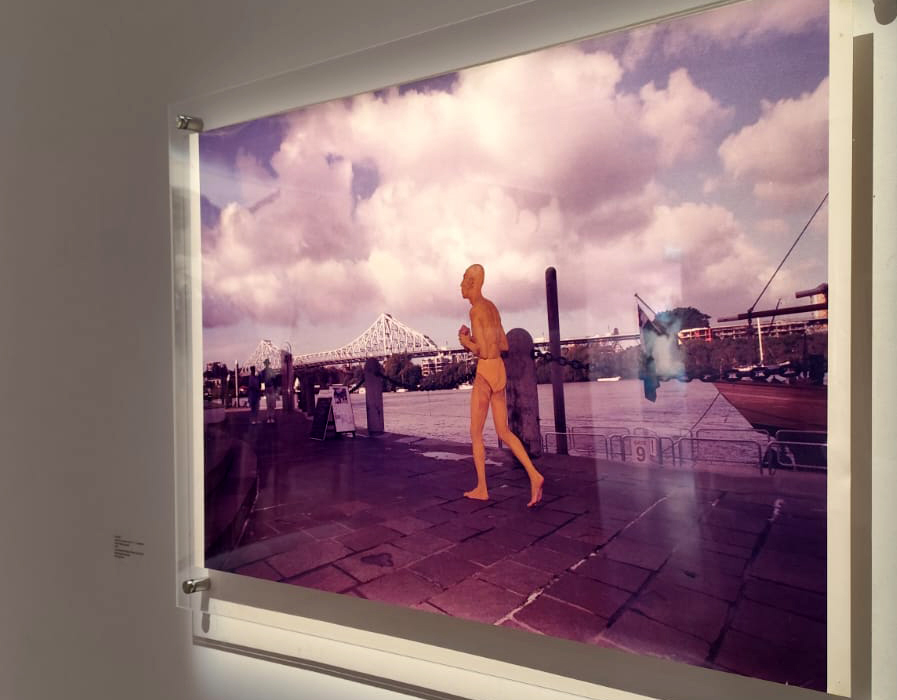
    The late Lee Wen was also remembered through his iconic Journey of a Yellow Man. A pioneering performance artist, Lee carried his alter-ego across the world, interrogating identity and belonging with humour and subversion. His enduring presence at Sama Sama reminded us of the importance of questioning, resisting, and imagining anew.

    Lee Wen – Journey of a yellow man no. 13:
    Fragmented bodies/shifting ground

    As the night drew to a close, despite Whitestone gallery manager, Priscilla’s playful attempts to usher us out, no one seemed in a hurry to leave. The gallery buzzed with conversations, laughter, and reunions. For me, it was a night not just of art, but of community, a reminder that art is as much about people as it is about objects.

    “Sama Sama” runs until 28 September 5 October 2025 at Whitestone Gallery. Take your time to return, wander, and reflect. As Singapore turns 60, this exhibition invites us to remember where we’ve been, to celebrate who we are, and to imagine, together, what comes next.

    Address: 39 Keppel Road, #05-03/06 Tanjong Pagar Distripark, Singapore 089065
    +65 6223 3090
    +65 6223 3657
    Opening Hours: 11:00 – 19:00
    Monday, Public Holiday